

Waze's Latest Update Adds A Useful Feature That's Been Missing For Far Too Long
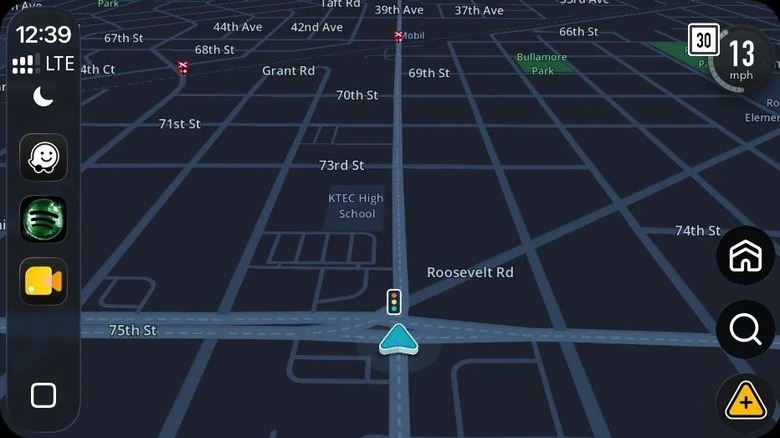
While Google owns two popular navigation apps for iPhone and Android, the Waze and Google Maps experiences aren't identical. Waze offers a simpler navigation user interface that focuses on community-driven information, with incident reports used to improve navigation in real time. Google Maps is more complex, featuring more detailed maps, as well as several features that allow users to discover nearby places of interest, and Gemini AI integration. Over time, Google has brought Waze's incident reports to Google Maps, without turning Waze into a Google Maps replica. But Google has been working to bring one useful navigation feature available in Google Maps to Waze: support for traffic lights, a feature that some Waze users have started noticing in the app.
Redditor yayoshorti posted the following screenshot on the social platform in early June 2026, showing the presence of traffic lights on the map. The user asked the community when Waze added the feature, with some other users responding that the feature had been available for them in the app for weeks. But the rollout isn't complete — not all Waze users see traffic lights during navigation, including users who are Waze editors, according to the responses on the thread. On the other hand, some Waze users confirmed that support for traffic lights has been in testing for a while in various markets, part of Waze's beta testing.
Separately, 9to5Google noted that the feature had been in testing since December 2025, but more Waze users are starting to see it in the app. It's unclear when Waze will release the feature more widely.
Why do we need traffic lights in Waze and Google Maps?
Google Maps wasn't even the first popular mobile navigation app to get traffic lights. Apple Maps rolled out the feature in early 2020, part of the iOS 13 update for the iPhone. Google started testing traffic lights for Google Maps in July 2020, when some Android users spotted traffic lights and stop signs in the app. However, it took over a year for Google to actually roll out the feature, with Google releasing a richer map design in April 2022 that included stop signs and traffic lights.
The purpose of having traffic lights in navigation maps isn't about speeding up the navigation experience. You can't set a course from point A to point B and direct the app to avoid all traffic lights like you can with other route options, including tolls and highways. It may be impossible to plan such routes, as traffic lights are frequent, especially in large cities. But there's a navigation-related reason for traffic lights appearing in Apple Maps, Google Maps, and Waze. These road elements can improve navigation by offering drivers more contextual information about their route.
Traffic lights can be used as landmarks during navigation. For example, Apple insisted on more natural navigation experiences in Apple Maps. Instead of Siri directing users to turn left in 500 meters, it might tell them to turn left at the next traffic light. Google explained in 2022 that a more detailed road design in Google Maps can make the driving experience on unfamiliar roads less stressful. Traffic lights, stop signs, and the actual shape of the road can inform drivers about what's ahead and make the driving experience safer, as drivers may make fewer last-minute lane changes to ensure they don't miss the correct turn.
Why hasn't Google added traffic lights to Waze already?
Google was quick to follow Apple's lead with traffic lights in Google Maps. The early 2022 redesign offered users more detailed maps meant to improve the navigation experience by featuring a more accurate road representation than before. Traffic lights were part of the rich Google Maps experience, alongside key road details, like the shape and width of the road, with Google including the medians and islands you might see while driving. Also, the Google Maps update included "enhanced details like building outlines and areas of interest." The update was bigger than showing traffic lights and stop signs. But Google Maps isn't used only for driving. You can navigate a known or foreign city with Google Maps while walking or using public transit. Google Maps also allows the quick discovery of restaurants, shops, and other businesses along the way.
Since Google combined its Google Maps and Waze teams in late 2022, Google Maps and Waze users may have expected a more cohesive experience between the two applications. However, Waze remains a standalone app that offers a more barebones navigation experience with the focus on efficiency. The crowdsourced incident reports are Waze's signature feature, one that users loved as it allowed them to save time by routing around traffic more quickly than Google Maps and other apps. The visual appearance of the maps in Waze doesn't seem to be as important as Google Maps. That's all speculation based on what Google did in recent years with Google Maps and Waze, however.
Also important is the involvement of the Waze community in rolling out support for traffic lights. A Waze post from February 2026 indicates that Waze editors who are level 3 or higher can add traffic lights to maps.