

Thin-Film Vs. Monocrystalline Solar Panels: Which Lasts Longer?
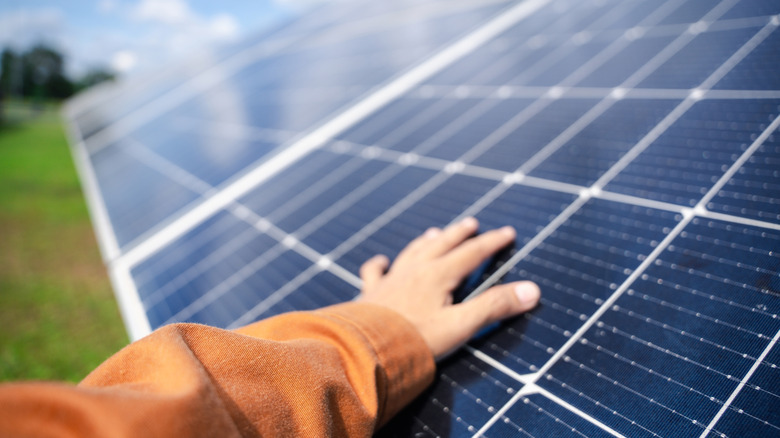
You want your solar investment to reap energy benefits for as long as possible. So, when tasked with deciding between thin-film vs. monocrystalline solar panels, you'll want to choose the latter. Historically, monocrystalline lasts longer than its thin-film alternative, and operates more efficiently, too. It's not uncommon for manufacturers of these panels to back their products with 25- to 40-year performance warranties, giving you the confidence that your system is going to operate efficiently for years to come.
As it relates to the blue or black solar panel conversation, monocrystalline panels are renowned for a sleek, near-black appearance and are made from a single piece of silicon. This engineering method results in purer conduction across the panel, allowing it to convert sunlight more efficiently. Not only are mono panels designed for the long haul, they also generate more energy than thin-film panels and degrade more slowly. One of the few drawbacks of monocrystalline technology is the upfront cost.
Thanks to the performance you can expect from monocrystalline solar panels, there's a good chance you won't have to buy as many panels either. For those with minimal roof space to work with, monocrystalline offers a significant advantage over thin-film, because you won't need as many panels to generate the same amount of power. If it's starting to sound like thin-film panels aren't a "good" option, that couldn't be less true. But monocrystalline solar panels do last longer.
The portability of thin-film solar panels
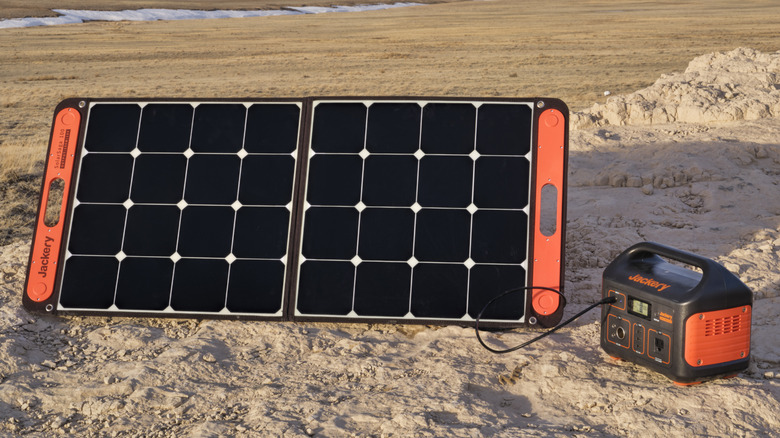
One of the chief benefits of using thin-film solar panels is portability. Unlike monocrystalline, thin-film panels utilize photovoltaic materials that can be laid across plastic, metal, or glass, which allows manufacturers to build panels that are lighter and more flexible. This is why thin-film technology is ideal for on-the-go solar charging; oftentimes, these panels can be stowed for travel, and the flexible design allows for set up in just a few minutes.
Thin-film also does a better job at creating energy under low-light conditions. Ideal for camping and RV excursions, modern thin-film panels may come with a 25-year performance warranty. Here's something else you'll want to keep in mind, though: Thin-film panels require a greater surface area to generate the same amount of energy that its monocrystalline cousins can produce. So, unless you have devices that can be powered by portable solar panels, monocrystalline is likely the better option.
Choosing between monocrystalline and thin-film technology isn't the only thing that matters when evaluating solar panels. You should also look to reputable manufacturers that ideally offer delivery and installation, depending on your application. Fortunately, most of the best solar panels you can buy don't require much in the way of maintenance. That said, keeping these sun collectors clean can improve their performance and lifespan.