

Why Do DVDs Have Region Codes?

In their heyday, DVDs and Blu-Ray discs had region codes that would only allow them to play in devices from the specific region where they were distributed and purchased. That was a bummer, because if you were on vacation in another country and found a cheap or rare DVD or Blu-Ray, you couldn't just bring it home to watch. Where the DVD format had regional code separations of up to eight areas, today's Blu-Rays have only three regions when it's relevant — most 4K UHD Blu-Rays are actually region-free. It makes one wonder why these codes even existed? The region codes largely applied during a time global theatrical releases were staggered and digital media wasn't accessible. The regional codes ensured parity for new movie and media access, and essentially, were designed to protect movie distributor and publisher rights from those staggered release schedules.
Let's look at a brief scenario. In Canada, Movie A has already screened and is scheduled to release to DVD in August. However, due to distribution timelines, Movie A won't be screening in European theaters until November. That also means the European DVD release will come much later. To prevent box office sales from plummeting in Europe — because people could get the DVD early — and to subsequently prevent losses in European DVD sales later, the region codes stop unauthorized and early exports from regions where Movie A is available, like Canada.
Movie premieres are not as staggered now, and media releases, physical and digital, happen much faster the world over, too. Yet, this concept has remained on some level, with geo-restrictions for streaming apps and access. It doesn't work the same, but media companies can still control where select streaming platforms are accessible.
How do the restrictions work?
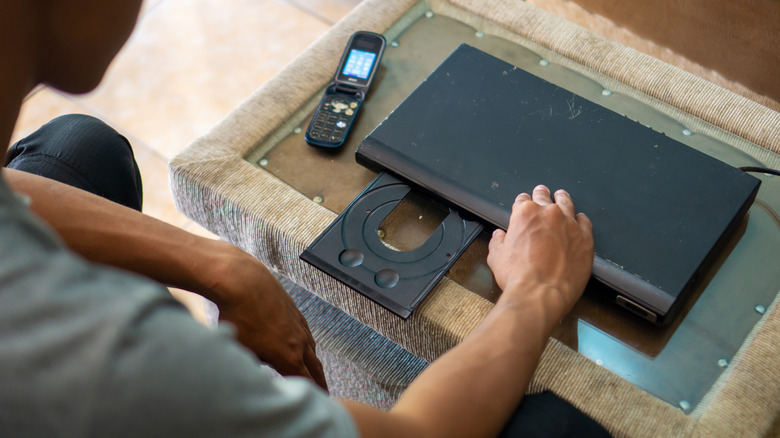
Both discs and players can be region-locked. You can find multi-region players, as well, but it's important to note that most of these have been made region-free by hacking and aren't officially endorsed by the manufacturer.
A player will identify the region code for the disc(s) and allow or prevent access. So, if you take a DVD from Region 3 and try to play it in a DVD player from Region 1, it'll return an error. You'll see something like "Error: Playing of this disc is prohibited in your region." This matters for anyone looking to ditch streaming for physical media in the modern age. You'll want to pay attention to the region numbers on DVDs you buy from private sellers, online, and at retailers.
As for how countries are organized: Region 1 is USA and Canada, Region 2 includes Japan, Europe, South Africa, Middle East and Greenland, and Region 3 covers South Korea, Taiwan, Hong Kong, and Southeast Asia. From there, under the Region 4 umbrella is Australia, New Zealand, Latin America, and Mexico, while Region 5 is Eastern Europe, Russia, India, and Africa, and finally Region 6 is China. Regions 7 and 8 are for special use cases. To avoid problems, don't mix and match regions between discs and players, or just use a region-free player. Blu-Ray region coding is simpler, with only Region A, Region B, and Region C. A covers North America, South America, U.S. Territories, Japan, South Korea, Taiwan, and Southeast Asia, B includes Europe, Africa, Middle East, Australia, and New Zealand, while Central and South Asia (including China, India, and Russia) fall under C.
Region codes still exist (kind of)

Media companies and publishers utilize similar forms of access control for online media. The geo-restrictions for streaming access are a perfect example. Geo-blocking restricts access to online content or media based on the user's geographical location, which is discerned through their currently assigned IP address. A service detects your location from your IP and then blocks access, whether to the platform in question like Netflix or Hulu, or by simply preventing access to the specific movie, show, or media.
That's why one of the clever ways to use a VPN, of which there are many, is to mask your original IP so you can get around some of these geo-locked restrictions. Although, you should know that some websites and services are still able to detect you're using one, and may block VPN access entirely until you disable it.
As for modern 4K UHD discs, you don't generally have to worry about region codes when purchasing. Do note that standard Blu-Rays still use them, which means you can encounter regional restrictions if you're buying or acquiring media from other locations other than where you live. If you're living abroad for a time and plan to return home, you may want to hold off on building your physical media collection unless you search exclusively for region-free media. That also makes the hunt for those truly rare Blu-Rays and DVDs much more challenging.