

What Makes Japanese Nintendo Switch 2 Consoles Different From American Ones?
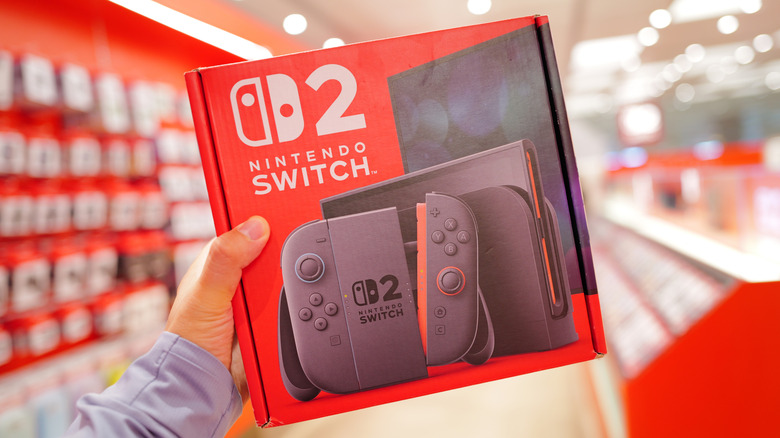
There was effectively no difference between the Nintendo Switch you could buy in America and the one you'd find in Japan when Nintendo first released the console in 2017. This isn't the case with the Nintendo Switch 2, which has two distinct versions, separated by region.
There's one version of the handheld made exclusively for Japanese buyers that is only available for purchase in Japan, and another that's available in all other regions. The American Nintendo Switch 2 is the same as the global version, the one that's available in all non-Japanese countries. The Japanese Nintendo Switch 2 and the American one have largely the same hardware and software as one another, and neither is superior to the other in performance. Where the two versions differ is in what languages they support, the eShops you have access to, what payment methods and Nintendo accounts you can use, and the price.
Apart from the Japan-exclusive Switch 2 that only uses Japanese as its system language and the global version that's also sold in America, there's also the multi-language model of the Switch 2 that you can buy in Japan. This is the exact same model as the global Switch 2, with the only real difference being that it's bought in Japan. Soon, there's also going to be a difference between the Switch 2 consoles sold in countries in the EU and those sold elsewhere — including both America and Japan — as EU-based Nintendo Switches will get replaceable batteries to comply with regulations.
What differentiates the Japanese Nintendo Switch 2 from the one available globally?
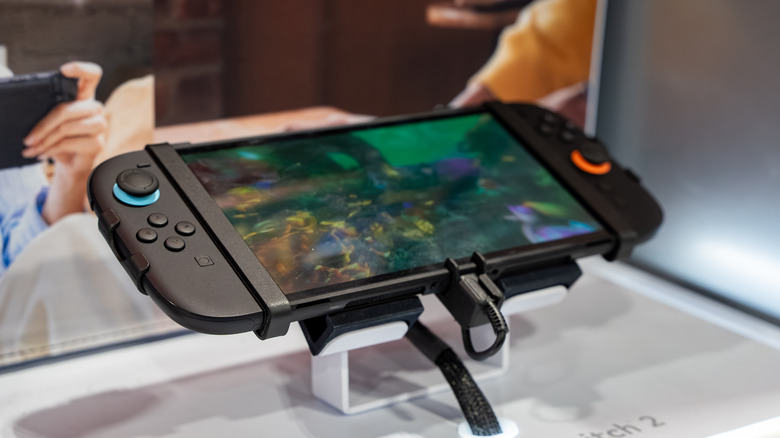
You can only use the Japanese Nintendo Switch 2 in Japanese, as that's the only system language that is allowed on the console. There's no option to switch to a different language like there is on the international model (which lets you use Japanese as well) or like there was on the original Nintendo Switch. Since most games rely on your system language (including most first-party Nintendo titles), this means you'll be playing your favorite Nintendo games in Japanese if you get this version of the handheld — though there may be third-party games that allow you to change the language.
Region-locking is another important difference. You can only use a Nintendo account regionally bound to Japan on a Japanese Switch 2, whereas you can use one from any region on the international and multi-language models. Similarly, you can only buy items from the Japanese Nintendo eShop if you have the Japanese variant. You're also not allowed to use international payment methods such as bank accounts or PayPal from outside Japan to pay on the Japan-bound model. You can, however, use cartridges not made in Japan. The multi-language version of the handheld, like the one available for purchase globally, does not have any of these restrictions.
Why are there two different versions of the Nintendo Switch 2?
Nintendo's decision to push out two different versions of the same console might seem odd, especially since the company didn't do this with the original Switch. However, this makes sense when you consider the yen being currently weak against the U.S. dollar globally and the effect that international scalpers have on Japanese buyers.
The Switch 2 is cheaper than a Steam Deck. While there are handheld consoles cheaper than the Nintendo Switch 2, its relatively decent price is one of its selling points. The Japanese version of the handheld is even cheaper, as Nintendo wants to give its Japanese buyers affordable prices. On the official Nintendo U.S. online store, the handheld is available for $450 . This is a similar price to the multi-language model made primarily for non-Japanese speakers, which is sold for roughly $430 (69,989 yen) in Japan. The Japanese-only Switch 2 is much cheaper, costing only approximately $370 (59,980 yen). The hundred-dollar difference exists because of the yen's currently weak position — the prices that Nintendo gives its Japanese buyers are cheap for international buyers, but not for those in Japan.
If there were just one version of the Switch 2, Nintendo would not be as poised to succeed in the global market. However, if it set different prices in Japan and overseas, scalpers would buy out the cheaper versions in Japan and then sell them elsewhere for a profit, hurting the Japanese economy and Japanese buyers' ability to get their hands on the console. The company couldn't simply price the console in regard to international rates either, as that would make it harder for Japanese civilians to buy it.