

Shelfy 2 Review: Can This Actually Reduce Food Waste?
We may receive a commission on purchases made from links.
The average American family of four throws away up to $2,275 worth of food every year, or around 20 pounds a month. Forgotten leftovers, fruit that's ripened too fast, and vegetables that have turned slimy — all in the trash. In aggregate, just less than 40% of the entire food chain is lost to waste, and a significant part of that occurs at home. So anything that can help reduce the amount of food we're throwing away is a boon for both your wallet and the environment.
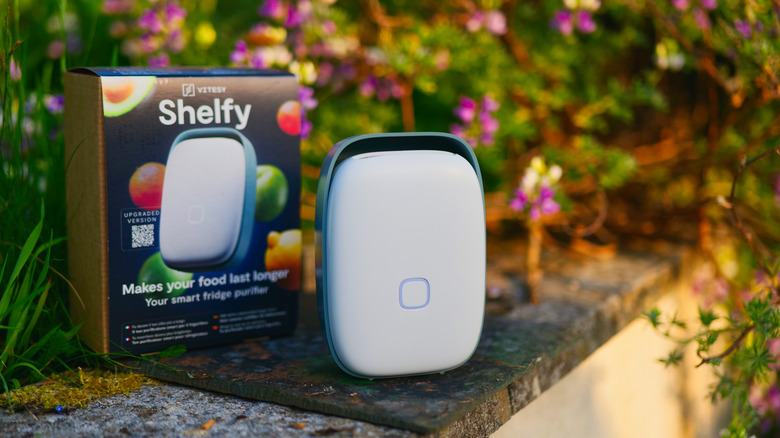
At $144.99, the Vitesy Shelfy 2 promises to do just that — and remove unwanted odors from your refrigerator in the process. Best of all, unlike existing deodorizers and ethylene removal products, there's no ongoing subscription cost or consumables, and the filter is fully washable. The only ongoing cost is the effort of recharging it about once a week. We spent some time testing it to see whether or not it lives up to its promise.
Inside the science and technology
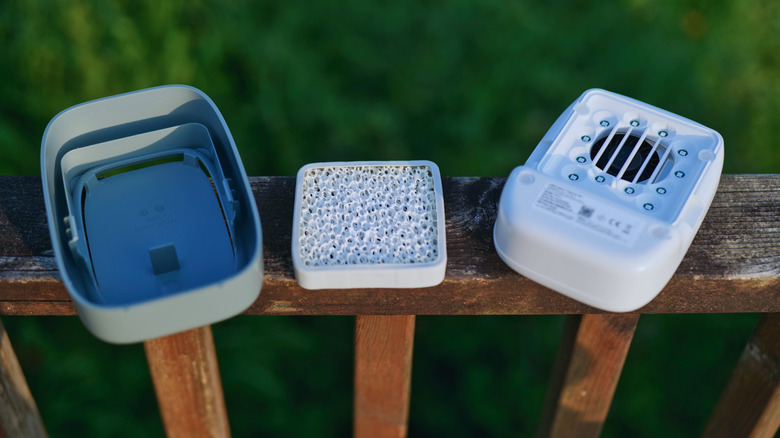
Shelfy is built on three key pillars: a photocatalytic filter, ethylene reduction, and killing bacteria. The ceramic filter inside the Shelfy is coated with nanoparticles that capture bacteria and pollutants, with a set of LEDs to neutralize them in a process similar to photosynthesis. No ozone is produced in the process, and the filter isn't consumed in the reaction.
This reduces the presence of both ethylene and bacteria, which are what cause the premature ripening and spoilage of fresh produce. Within 14 hours, Shelfy claims it can reduce the amount of ethylene gas in your refrigerator by 56%, while just ten minutes is needed to kill 99% of the bacterial load. Vitesy says this combination of tech has been shown to increase the shelf life of certain goods and vegetables by up to 12 days.
The Shelfy device also houses some smart sensors, which report back to the Vitesy Hub app over Bluetooth. While a smart refridgerator might not be worth it for you, there are some real benefits to having some of that smart data they would provide. At least until we can get our hands on Dreame's smart fridge with a robotic sorting arm, Google Gemini, biometric cameras, and built-in food preservation tech (I wouldn't hold your breathe, though).
Design and maintenance
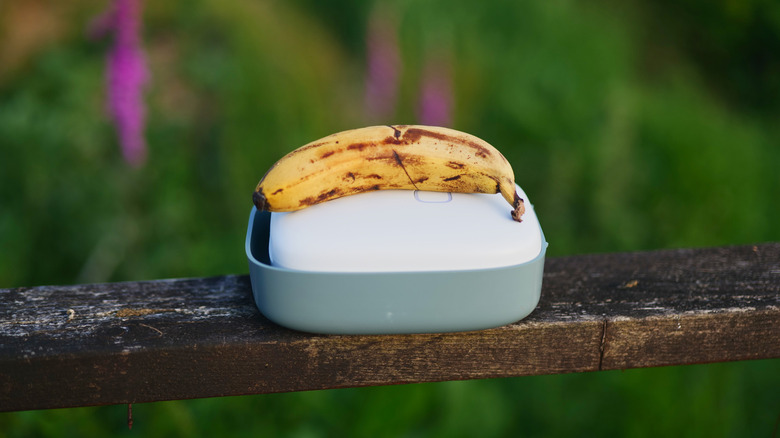
Inside the box are a USB-C charging cable and the Shelfy itself, which is much bulkier than I expected. There's a quick start guide and a veritable tome of safety warnings, which looks intimidating until you realize it covers every language under the sun. The Shelfy is bigger than I expected; using the international standardized measurement system, it's approximately one small banana on the longest side — or 6.6 inches long, 4.5 inches wide, and 2.6 inches tall. A large chunk of that is a gray, plastic case. The white part is where the magic happens, housing the fan and set of 11 cleansing blue LEDs.
For maintenance, just pry the white plastic part away from the grey exterior. You'll also need to do this to charge, as the USB-C port can be found on the side of this main white section. From there, you can pull out the curious ceramic filter piece for washing when the Shelfy instructs you to. No screws or tools required.
After opening the shell, a few small pieces of the filter broke away. Be careful when handling this — I suspect dropping it on a tiled floor would shatter it completely. It also has a slightly funny odor out of the box; it reminds me of a swimming pool.
Using the Vitesy Hub app
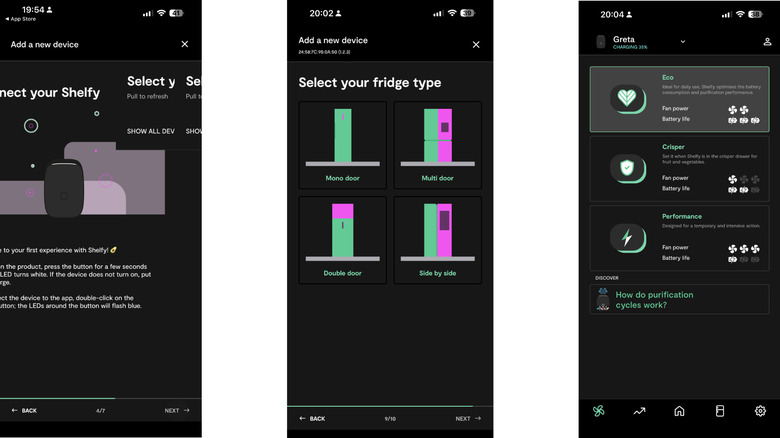
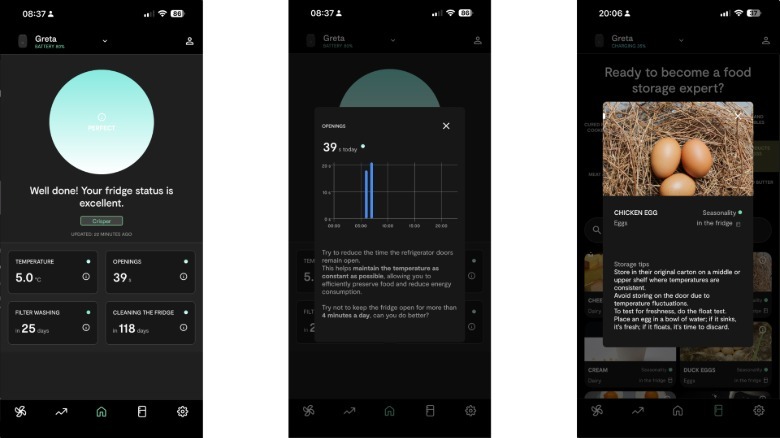
You'll need to download the Vitesy Hub app to configure the Shelfy — or any other Vitesy product (the company also makes a range of air purifiers). Sadly, the onboarding process was mired with bugs. It doesn't seem to use a standard Apple UI kit, and on my first attempt, I was left hanging between two screens. After restarting and trying again, it was also unable to detect my Wi-Fi during the first scan. On the second refresh, it found it, but refused to connect. Eventually, I got there.
The Shelfy has three operating modes which control the fan cycles and therefore the amount of battery life. Eco mode is for a half empty fridge or general shelf use; this will likely be the most common use case, and should last for around three weeks. Crisper mode is slightly more active, designed to sit inside your fresh fruit and vegetable drawers, and it should last up to two weeks. Performance mode is the most active for an immediate clean and deodorize, but will only last around five days before needing to recharge.
 James Bruce / BGR
The Vitesy Hub includes a handy food refrigeration expert guide, though I immediately distrust it when it says you should store all kinds of eggs in the fridge. This might be true in the US where eggs have been washed and refrigerated first, removing their natural protective layer — but it's not true here in the UK, so it would be nice to use the location information I provided during setup to customize this. We regularly eat chicken, duck, and goose eggs that have sat on the countertop for weeks without issue.
Testing the claims
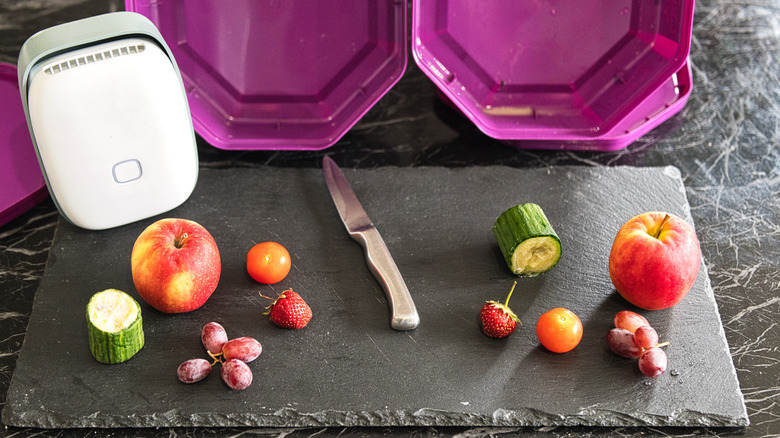
To test the claims of Shelfy as scientifically as possible, I used two sealed containers; one as a control, and one with the Shelfy inside. I chose a selection of fresh produce: an apple, a tomato, slices of cucumber, freshly picked strawberries, and some red grapes. I set the Shelfy to "Crisper" mode, which is designed for confined spaces and runs in minimal cycles, and left it for two weeks. When I opened it up again, there was a clear difference — but not for everything.
 James Bruce / BGR
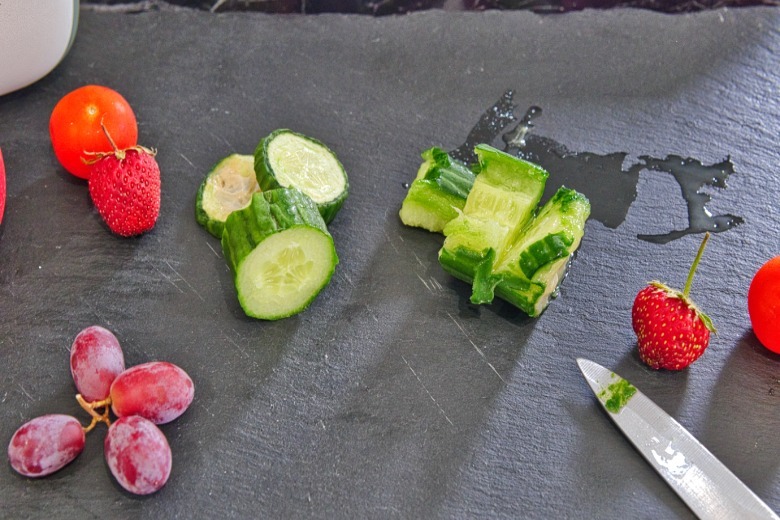
In both cases, the sliced cucumber didn't appear edible, but the Shelfy seemed to have sucked moisture out or changed the decomposition process to be less messy. The control cucumber looked better at first glance, but had leaked foul juice into the container. Had this been the actual crisper drawer, everything would have been spoiled and we'd pulling it out for a thorough clean. After cutting off the spoiled ends and looking inside, it was clear the Shelfy had slowed down the process of decomposition — somehow. The control slice collapsed into a squishy mess. While I wouldn't be comfortable eating either after two weeks, the slice with Shelfy had clearly kept for longer. For cucumber at least, I'd call this a success.
 James Bruce / BGR
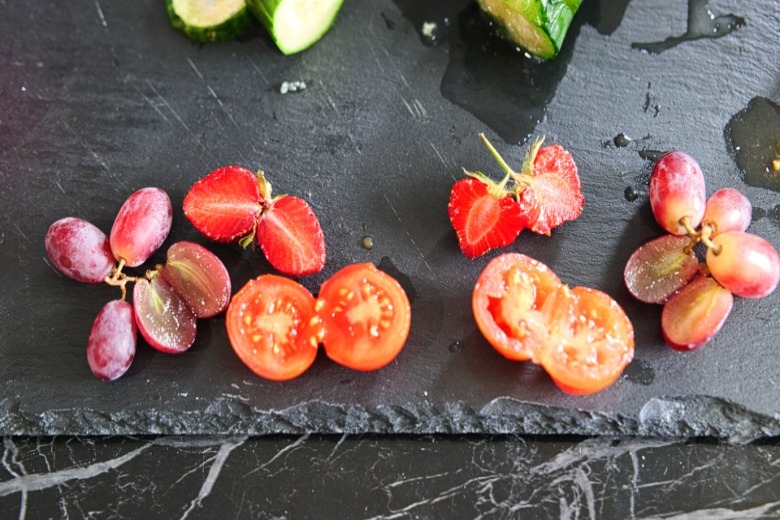
The apple and grapes seemed unaffected in both cases, as did the strawberries, all still perfectly edible. The tomatoes both looked similar at first glance, but again, the one with Shelfy remained firmer to the touch. Neither of the containers had much of a smell.
Eliminating odors
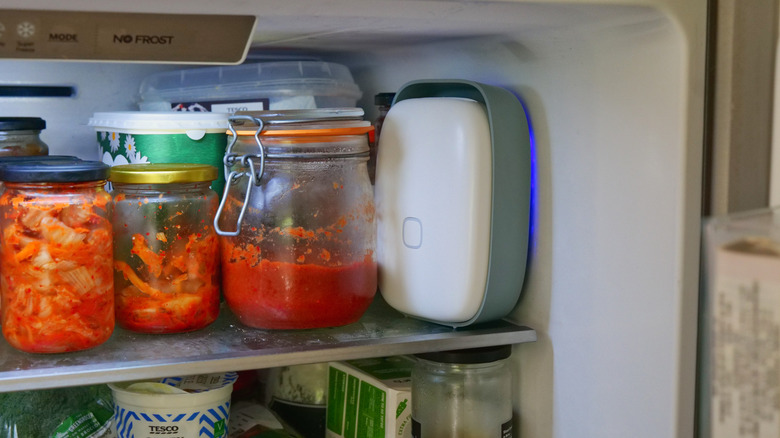
Shelfy doesn't just remove viruses from the air as it cycles through the filters; it should also reduce odors and volatile organic compounds (VOCs). This won't make your food last longer, but it will prevent odors from cross-contaminating other foods. This is anecdotal, of course, but my wife makes her own kimchi, so our fridge is regularly stocked with at least ten jars of pungent, fermenting cabbage. Try to imagine the smell as they all need to be regularly "burped" while they're off-gassing, and the lid stays only loosely attached, lest they explode. Our fridge is quite the experience.
Suffice to say, Shelfy has done an admirable job of protecting our olfactory senses from an onslaught when a fresh batch is made. I'm also fond of stinky French cheese, and I don't remember the last time I smelled that since installing the Shelfy. Vitesy claims 80% odor reduction, and given that I don't have a smell-measurement device other than my nose, I can only anecdotally say that tracks.
Conclusions
My basic testing of the Shelfy showed that it does slow down food ripening to some degree. It's difficult to quantify fully, but the science is sound. How many years it will take you to save $145 worth of produce is impossible to judge. As a family, we tend to ignore use-by dates anyway, instead opting for the more reliable sniff test. For us, the Shelfy makes perfect sense, especially as our fridge is often bursting with freshly-picked produce from the homestead and all manner of pungent jars. If you regularly throw away food purely because it's past an arbitrary date, you're unlikely to benefit as much. You don't need another gadget; you need a change of habit first.
I wouldn't underestimate the value of the sensor data that Shelfy provides, however. Smart fridges are a waste of money, but the Shelfy has some genuinely useful smart sensors. Although it doesn't measure air quality or particulate matter like a household air purifier might, it does record how long and when your fridge is opened, as well as temperature fluctuations — the one thing scientists say you should absolutely be measuring. You may be able to identify a problem user in the household or find out that someone is doing a midnight snack run. Shelfy will tell you if the fridge isn't cold enough so you can adjust. It might even identify more serious problems, such as a malfunctioning fridge that spikes the temperature overnight.
There are no real alternatives to the Vitesy Shelfy. You'll find standard fridge deodorizers, but those won't extend the shelf life of fresh produce. For that, you'll need ethylene absorbers, like the Bluapple, which is a consumable that'll cost around $60 per year. As a chunk of disposable plastic, they're also not very eco-friendly. In the context of deodorizing, extending the shelf life, and as a smart sensor, the Vitesy Shelfy starts to look like an essential, great value gadget for any family.