

MemoMind One Review: Are These The First Smart Glasses You'll Actually Want To Wear?
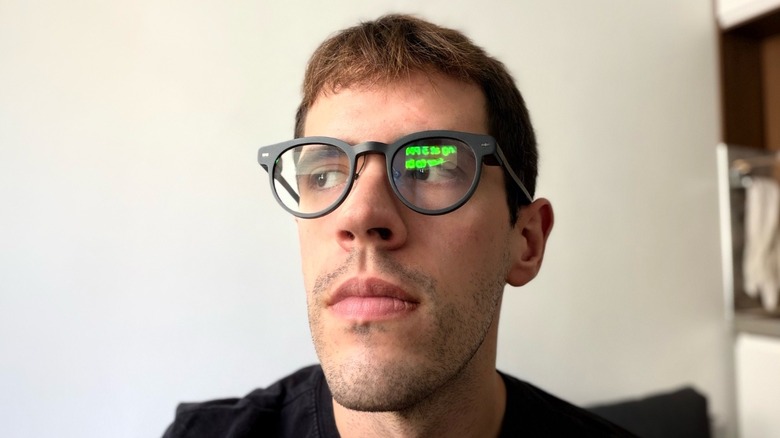
First announced during CES 2026, XGIMI's new brand MemoMind has been highly anticipated, as the company teased its AR glasses at MWC 2026 and later in New York City. Now, after some wait, XGIMI is officially launching the MemoMind glasses with its first One model. There are at least two options coming in the near future, and BGR was granted an exclusive first look at the MemoMind One AR glasses. I've been testing them for the past month.
In this period, not only was I able to have an in-depth look at these camera-less smart glasses, but I also got to experience what it was like to use AR glasses in 2026 with friends, on the street, and even traveling all the way to China, where the live-translation feature was very handy. As companies explore new ways for us to get rid of the phone, seeing the projector brand XGIMI taking a chance on smart glasses has been an interesting surprise. The company uses its proprietary lenses for the built-in displays, and it continues to partner with Harman Kardon for a great audio experience when using these glasses.
In this review, we'll see what it's like to use AR glasses, even when you don't have prescription lenses, how weird/innovative it's been, and whether this is a device that could revamp how I interact with other technologies, like my Apple Watch, AirPods, and so on. This is our first in-depth look at XGIMI's first AR glasses.
Regular glasses with a twist
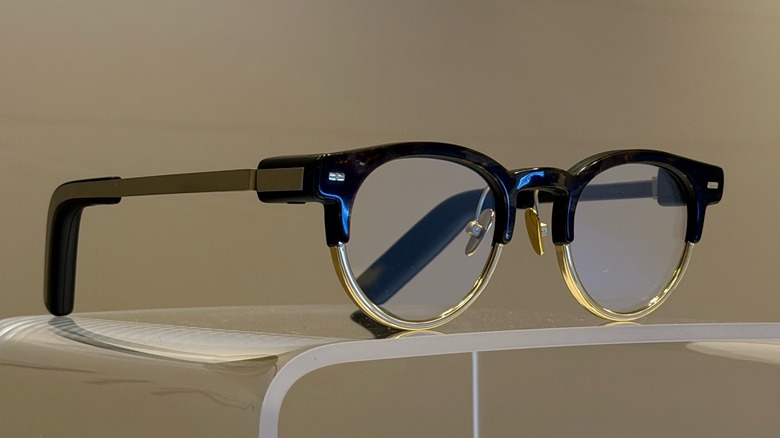
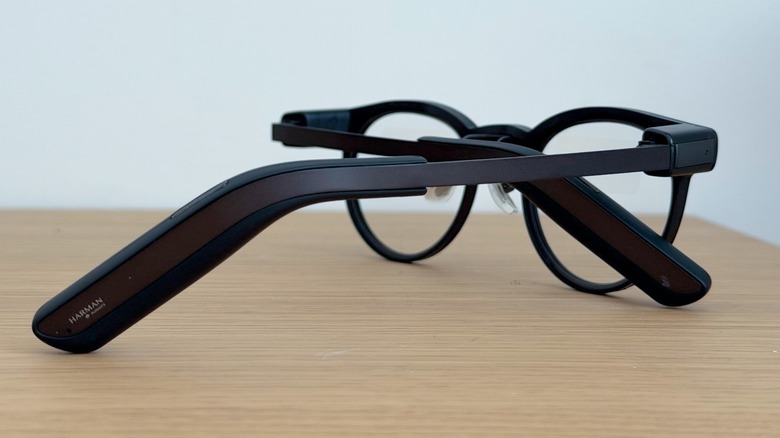
What I like the most about MemoMind smart glasses is that they look like regular ones. With three different frame styles, XGIMI's main concern is how good they look on people's faces. As a result, wearing MemoMind One feels like choosing a cool frame that happens to have AI and AR capabilities. Available in titanium, magnesium-aluminum, or acetate, there's something for everybody.
At this moment, XGIMI focuses on traditional aesthetics, but as the company gets confident about the product, it will get new colors and frame options. When it was announced at CES, the company said it would have eight different frame styles and five interchangeable temple designs.
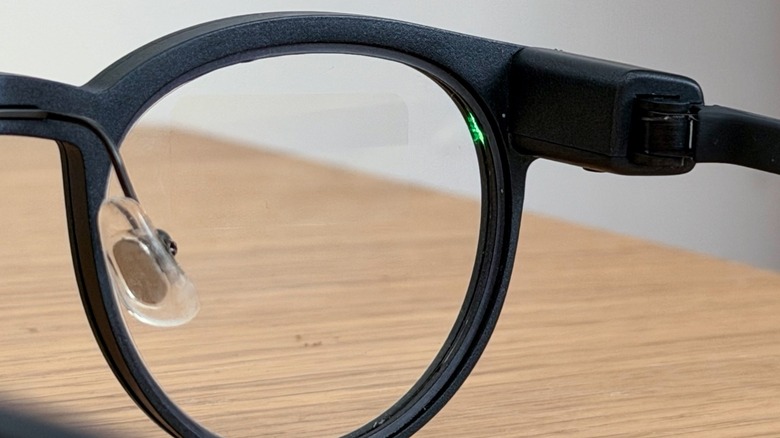
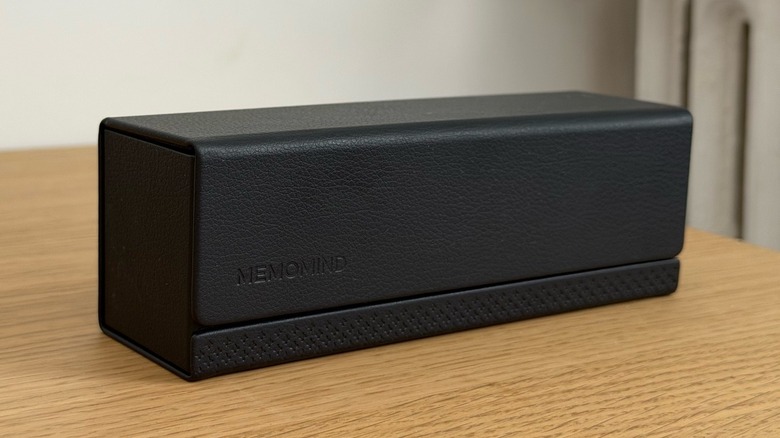
MemoMind's One glasses feel relatively light at 46.6g, and they were still comfortable after a few hours of use. I also didn't have issues with the glasses getting warm, nor did they hurt my nose. When the inner displays are turned off, MemoMind feels like regular glasses, and when they're on, there's an inner green light from one of the sides that projects the image in front of you. The arms are thicker due to the battery and the Harman Kardon speaker, but, in general, everything feels really premium. The glasses come with a carrying case, but it's a shame that XGIMI doesn't offer a charging case. The accessory is only made to carry the glasses around.
Looking at and through MemoMind One
Before talking about its many AI and AR features, I think it's important to address what it's like to wear the MemoMind One. XGIMI partnered with ZEISS to offer prescription lenses, which ensures that users will have a perfect view whenever they have these smart glasses on. As I don't use prescriptions, it felt a bit weird to have regular transparent lenses, and it might feel like an odd experience to anyone else who isn't a regular glasses-wearer.
While XGIMI plans to release add-on sunglasses, which might be a great way to lure more customers into the smart glasses world, it's important to note that this is something Meta has been doing very well with its own frames. Still, I didn't feel dizzy, nor did my eyes hurt after wearing it for a few hours with the display off. Besides that, I feel like XGIMI's glasses looked really good on my face, and they were pleasant to wear.
On the other hand, whenever I was using the AR display for too long, such as following a conversation or trying to read through my notifications, I'd eventually feel fatigued and a bit dizzy, probably due to the focal distance. While my eyes didn't cross thanks to the dual-display design, it was also hard to read the inner screens in outdoor environments, since the dual micro-LED display with 2,000 nits is still not enough when the sun is out and the sky is blue. The glasses are better suited for indoor environments or in spaces that aren't exceedingly bright.
Smart glasses features can be handy, but there are concerns
XGIMI is proud to say that it doesn't have cameras on the MemoMind, but wearing them in China made me realize that I'd use them the most with live translation. Since not every conversation in Mandarin was directed to me, it felt like eavesdropping on people when they were talking with each other, and I was reading conversations I wasn't supposed to hear. Since live translation records the conversation, it's weird that there's no light (for example, an orange one) to indicate that something is happening on my glasses. While people looking at me could see a green light in the corner of the accessory, which is the reflection of the inner display, they couldn't tell what I was doing. With mounting privacy concerns around smart glasses, I think XGIMI should tweak this for a future iteration.
Besides that, XGIMI offers a few more features, such as a hands-free assistant, an AI recorder (which was useful for meetings), a live AI translator with 26+ languages, and an AI teleprompter, which, even though I'm not doing speeches, I found to be a handy feature. I could also look at my notifications from a few supported apps, like Messages and WhatsApp, and I could listen to music on Apple Music, even if MemoMind couldn't display the lyrics for me.
There's no AI subscription required
MemoMind One offers eight AI features without caps or a need for an upgrade, and those include Memo AI, AI translator, recorder, captions, and teleprompter; there are also map, calendar, and idea notes functions. With a MemoAI+ membership, which costs $19.99/month, users have access to Moments, which is a daily AI that creates an illustrated journal of your day, what's up next in your day, such as to-do texts, and things it captured from your chats. You also get Memo AI+, which XGIMI describes as an AI that knows you, not just answers you.
As I've been testing this device ahead of the proper release, I got access to Memo AI+, which I must say is not a life-changing subscription, and it probably isn't worth it. The recommendations, obviously, are made based on the things you asked or it recorded, but they are just a fraction of what my day represents. I've also seen the illustrated journal function in other AI products, and this one is not as impressive.
But the company offers so many important features for free that not having a cap for translations or recordings is what actually sets this device apart. The features that matter most are always available to users, and if they want a little extra flair, then they can pay for the upgrade.
Battery and general experience
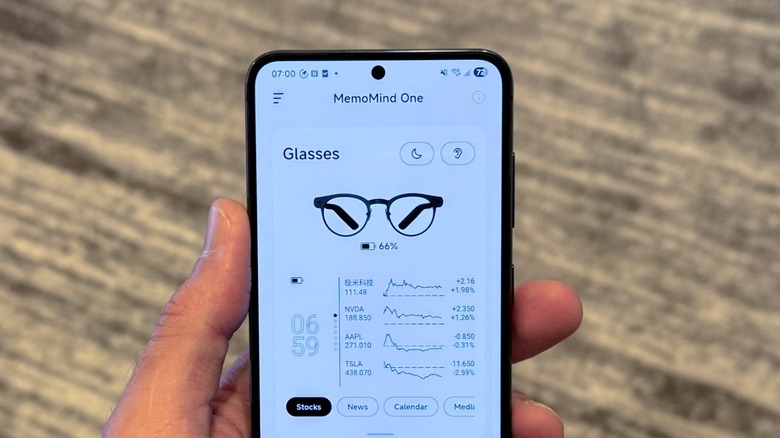
XGIMI promises up to 16 hours of battery life in mixed use. In real life usage, I got multiple days of battery life as I would put the glasses on to use some live translation, then take advantage of the AI recorder during an interview or meeting, or using the map navigation to go somewhere. When I was surrounded by other people but still wanted to take a second for myself, I would listen to songs through the glasses, as it wasn't too loud and I could still be present in whatever else I was doing.
The glasses can be navigated and customized through the single physical button, which lets you tap through pre-selected widgets, through voice control (by long-pressing this button), or with the MemoMind app. It's through the app that I can tweak my experience, such as what I want to see at a glance and what my interface looks like. The app also allows me to check some tasks and see the live translation transcription. Some functions, like map navigation, can only be started from the app.
Price and final thoughts

With the MemoMind One glasses now available on Kickstarter, the project is already approaching half a million dollars of investment. With an MSRP of $599, MemoMind One can be acquired for $399, with the first batch shipping in late August for early supporters. While the glasses have already evolved a lot in the past month, it feels like customers will get a more refined experience once the device starts shipping to the masses.
Even though AR glasses in general aren't as life-altering as one would think, I've been having a lot of fun experimenting with XGIMI's out-of-the-box product. The goal is to eventually barely rely on my phone, but at this moment, MemoMind's AI can't do much, especially on a strict system like the iPhone. It can answer questions, but it can't go through Apple's own apps, where I store most of my data. It's not quite a smartphone replacement, but maybe someday.
Still, this is a nice glimpse of the future, and XGIMI seems to have nailed most smart glasses requirements on its first try: it sports a beautiful design, an effortless experience, and reliable features. More importantly, the company understood that it needs to offer good glasses that can be smart when users need them, and not the other way around.