

5 Of The Most Reliable Self-Driving Car Modes, According To Users
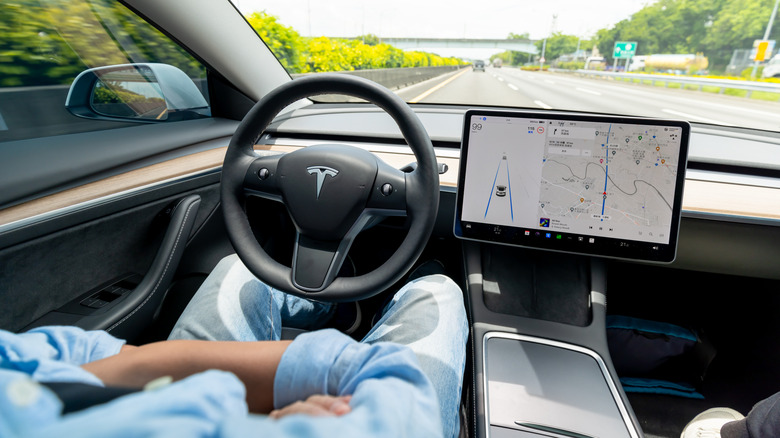
Although far from the autonomous cars of science fiction, self-driving car modes have evolved a lot in recent years, already offering satisfactory results for drivers on highways or in heavy traffic. Tesla, General Motors, Ford, Mercedes-Benz and BMW are among a handful of automakers trying to make this technology real, each in its own way. Newcomers such as Nvidia are entering the self-driving race to challenge Tesla head-on. Some manufacturers rely solely on cameras, while others use radar and high-res mapping to reassure drivers. The result is a market with vastly different safety and function experiences.
The best self-driving car modes are usually the ones users have tried and reported positive experiences with. But no matter how reliable, these systems may still be subject to failure while driving, so paying attention to traffic remains important. That's why we put together this selection of cars with self-driving modes that come most recommended by users for anyone who wants access to this technology.
GM Super Cruise
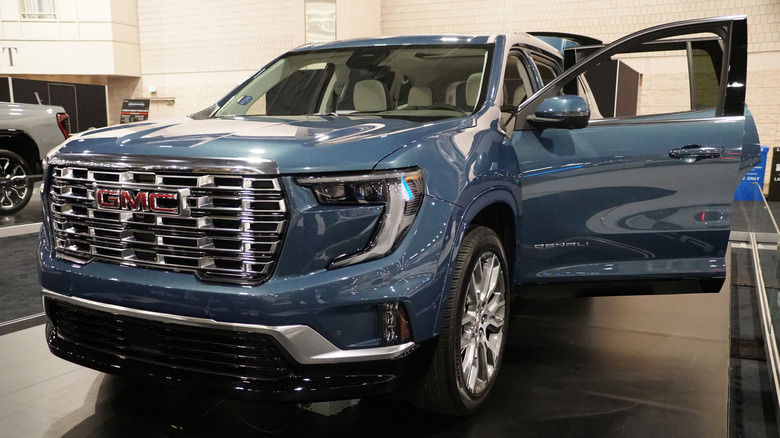
GM Super Cruise is one of the most reliable self-driving car modes you can find in a vehicle and is available on Cadillac, Chevrolet, GMC and Buick models. That's because it employs cameras, radar and LiDAR mapping to enable hands-free driving on Super Cruise's 750,000-mile highway network. A blue light on the steering wheel tells the driver to stay in the middle of the lane, and it turns green when the system takes over. If it's flashing, the driver needs to pay more attention.
Users of this self-driving mode also report that the system is reliable, with one owner accumulating around 15 thousand miles on interstates, highways, and state roads. Consumer Reports also recognizes the system as a benchmark, saying it sits far above the competition among the systems they tested.
However, even though Super Cruise is reliable, it still has some problems. According to some users, sudden acceleration can occur when the car enters a free lane after following a slower vehicle, with the driver pressing hard on the accelerator to reach the set speed. It also struggles in construction zones, as the system does not disengage even after the driver presses the button.
Mercedes-Benz Drive Pilot
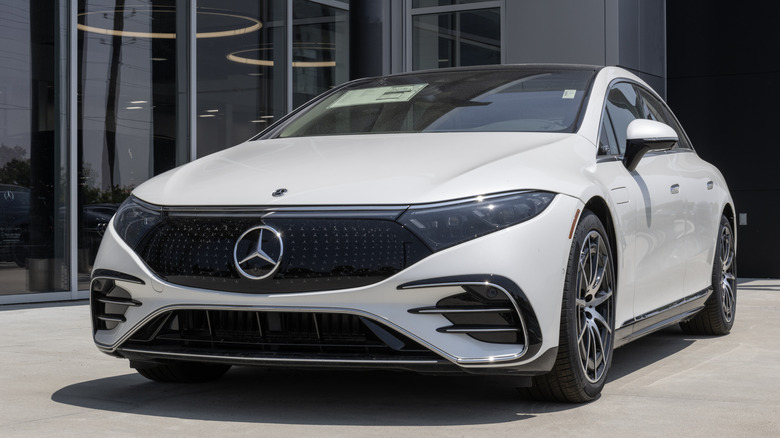
To start, one of the major advantages of this self-driving service offered by Mercedes-Benz is that it's one of the few in the United States with a level 3 system. Unlike other popular systems, which remain at level 2, Drive Pilot lets the driver take their hands off the wheel and eyes off the road while the car handles the driving task. Mercedes-Benz itself takes legal responsibility for any accident that occurs when the system is active, in some cases.
This technology has redundancy in steering, braking, and wheel-speed sensors, plus greater computing and sensor capacity. The Drive Pilot is so reliable that some users even say Drive Pilot is incredibly boring, but in a good way, since it maintains a safety zone in traffic without any command from the driver.
But working this way has some limitations. It only works on some highways mapped by high-precision GPS, with well-marked lanes, and it's available in a few vehicles. To use it, you need a company S-Class or an EQS Sedan. In addition, the cost is high, around $2500 per year. Mercedes-Benz is also expanding into advanced level 2++ technology for newer models, offering drivers a more flexible experience.
Tesla Full Self-Driving Supervised
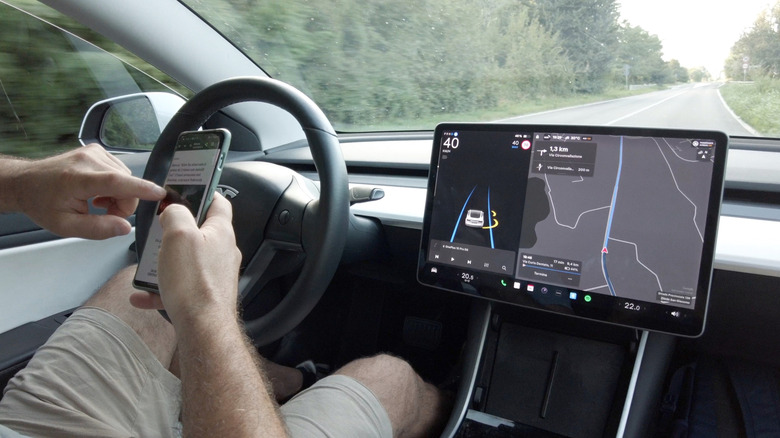
Tesla also makes a reliable self-driving car mode: Full Self-Driving Supervised. Unlike systems that only work on highways, it can operate on almost any road. According to some users, in a test of more than 500 km in Australia, the system behaved like an adapted pilot with lane centering on any road. Since it's not level 3, it still requires the driver's full attention.
Users who own the car have described the latest versions, such as 13.2, as "good", with some mentioning it was the biggest quality leap from one version to another. One user also highlighted the feeling of safety inside the car, saying it gave more confidence than many real drivers. However, even though it works well, version 13 of Tesla's self-driving still has inconsistent speed detection, one of several common Tesla Model Y problems, and a tendency to follow the behavior of other vehicles incorrectly.
Ford BlueCruise
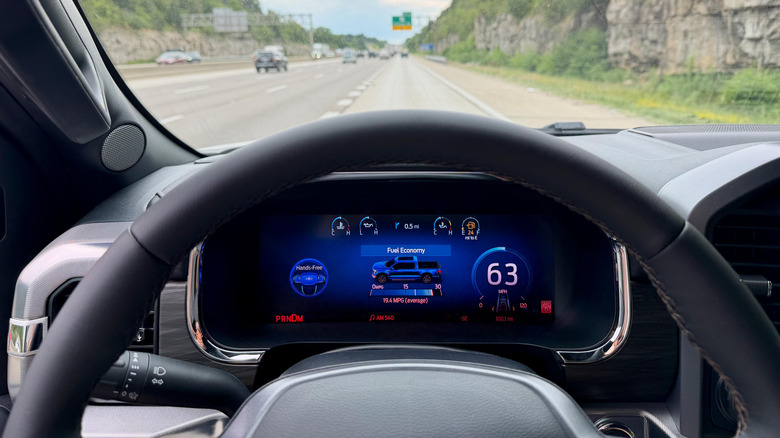
Ford is one of the most reliable EV brands and also has a great self-driving car mode, according to users. Called BlueCruise, you'll find it in models like the Mustang Mach-E, F-150, F-150 Lightning, Expedition and Explorer, and in some recent Lincoln versions. The system integrates with adaptive cruise control and offers hands-free driving on 97% of controlled-access highways in the USA and Canada, covering more than 130 thousand miles.
One of the points users mentioned most was the improvements that self-driving received in newer updates. In version 1.5, for example, some owners report that lane centering became more similar to Tesla's, with few disengagements throughout the trip. For another driver, even in the previous version, 1.4, tapping the turn signal was enough for the car to change lanes, without needing to hold the wheel as usually happened in previous versions.
So, BlueCruise reliability largely depends on the version your vehicle has, since drivers on version 1.0 still complain about confusing behavior at unmarked forks. In fact, they need to brake manually to avoid system errors. Another point that bothers users is the speed limit, since some report that BlueCruise does not engage above 80 mph.
BMW Driving Assistant Professional
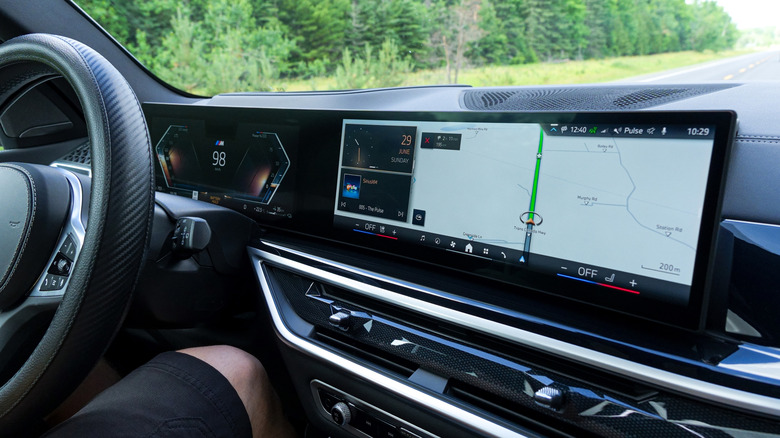
The BMW Driving Assistant Professional package is another level 2 self-driving system that requires the driver to pay full attention when the car is in this mode. It comes on models like the BMW iX and i5, both of which recently landed among the most satisfying EVs according to users. But the carmaker also has an upgrade called Highway Assistant, which allows the driver to drive hands-free at up to 85 mph on compatible roads. But you have to keep your eyes on the road, even if your hands remain off the wheel during that time. It also works well on long trips, as it can keep up with the pace of the drive and reduce fatigue.
On the other hand, one of the biggest problems is the inconsistent quality of the self-driving mode across models, markets, and years. In some BMW models, the package delivers an experience very close to hands-free driving on highways; in others, it stays more limited to heavy traffic. Some owners also complain about deactivations on poorly marked roads and interventions that can seem excessive. Still, it stands out among level 2 systems.
How we chose the most reliable self-driving car modes
To choose the cars with the most reliable autopilot systems, our main focus was on the opinions of users. So, we searched forums and other places where users shared positive and negative experiences to understand how these systems behave in daily use and outside tests controlled by automakers. We also prioritized reports of long-term use, longer trips, and other traffic situations that most drivers face.
To complement this list with additional opinions, we also sought specialized reviews of vehicles and autonomous driving systems. Several sites, such as Consumer Reports, test these features, which helps confirm what users report. So, by cross-checking both sources, it is possible to build a more complete list about the reliability of each service. Then, even if they have the same level of autonomy, except for Mercedes-Benz's system, they still operate differently on the road.