

A Common Cleaning Method May Actually Damage Your Phone Screen
We may receive a commission on purchases made from links.
It may not occur to you, but phones are actually incredibly filthy devices. In fact, scientists at the University of Arizona discovered that cell phones may be coated with up to 10 times more bacteria than a common toilet seat. Just hearing this, you likely got the urge to deep clean your iPhone or read up on how often you should sanitize it. But before you start scrubbing, be aware that some cleaning methods can do more harm than good.
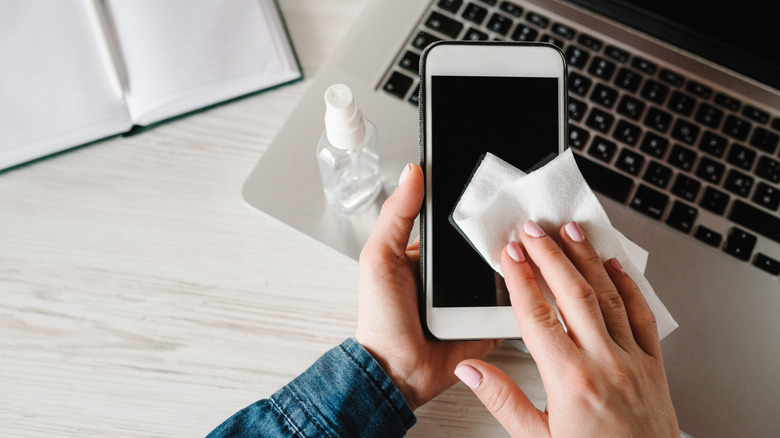
Using harsh chemicals like bleach, ammonia, or high-concentration alcohol (or disinfectant wipes that contain them) can damage your phone or screen protector over time. The issue is the oleophobic coating applied to nearly all modern cell phone screens and protectors. This oleophobic coating repels oil, including skin oils from your fingertips, to keep your screen clean. We recommend against buying any screen protector that doesn't have this coating. Harsh chemicals and other abrasives can erode this coating over time, leaving your phone more vulnerable to smudging and streaking.
How should I clean my phone?
So what wipes are safe to use on touchscreens? Official Federal Communications Commission (FCC) guidance notes that any wipes containing alcohol, bleach, or vinegar may damage your device's display. The same page advises that if you do use alcohol wipes despite this, they should contain at least 70% alcohol. You'd be safer just using a microfiber cloth with a little soap and water, as there's no risk of damaging your display. If you do use cleaning alcohol, be sure to apply it only to the cloth and never directly to your device.
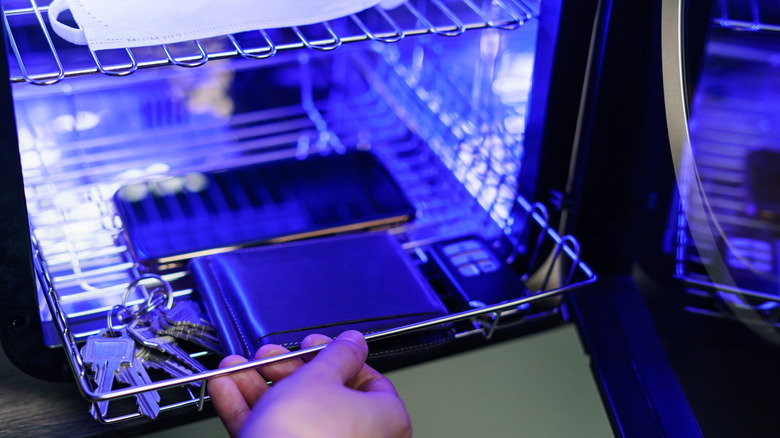
A much safer, and still extremely effective, cleaning method involves using ultraviolet (UV) light. Manufacturers like Phone Soap sell light sanitizing boxes that you can place a smartphone into and bathe it in UV light, effectively killing 99.99% of germs. These machines do actually work, but you need to ensure you use a reputable machine that emits the correct wavelength of UV light. To ensure your phone is clean, we suggest you use a microfiber cloth as described above to remove any smudges or other blemishes, and then use a UV device to fully sanitize and disinfect it, without any risk to your screen's oleophobic coating.