

How Long Do Solar Panels Last With Proper Maintenance?
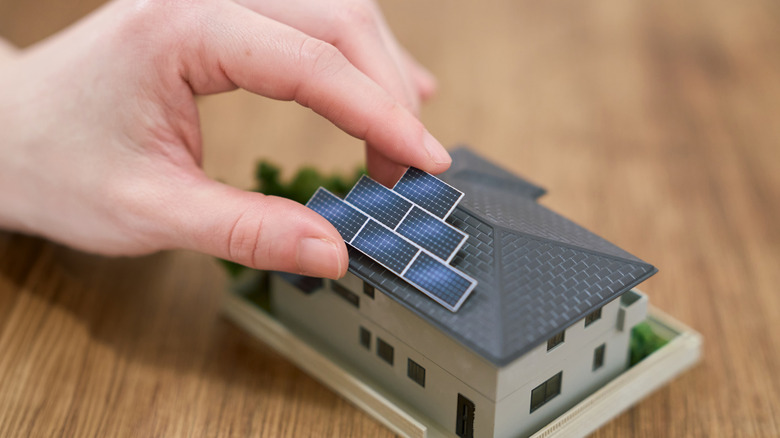
Solar panels for your home are a fairly costly investment upfront. In fact, one of the many things you should know about solar systems before installation is that while they can save you money, it may take years to break even financially. Knowing that, you may be wondering how long solar panels last on average. If they're just going to break or malfunction after a few years, well, that changes the perspective, doesn't it? The good news is that the United States EPA (Environmental Protection Agency) says that, with the proper care, a quality set of solar panels has a useful lifespan of 25 years or more. That gives you time to recoup costs and even save some money before you need to make any replacements or upgrades.
Keep in mind, though, that a solar panel's lifespan depends on a few factors. The most pertinent is the type of panel — silicon solar with mono- and poly-crystalline cells should last the full 25 years or longer. Thin-film panels last about 10 to 20 years, according to EcoFlow, but that's improving with modern innovations. Despite the discrepancy in longevity, you should understand the difference between thin-film and monocrystalline before deciding which is better for you.
Something else to note is that solar panels don't usually just stop working. Instead, they can operate at peak efficiency and technological relevance over a period of years, which EcoFlow calls the "useful life." At that point, it may be more beneficial to upgrade for practical and financial reasons, but not necessarily because the panels themselves stop producing electricity completely. Panels slowly degrade over time, but in an array with multiple panels working collectively, that's not as big a deal, at least not until it reaches a point where it is — hence the lifespan estimate ranges.
How fast do solar panels degrade?
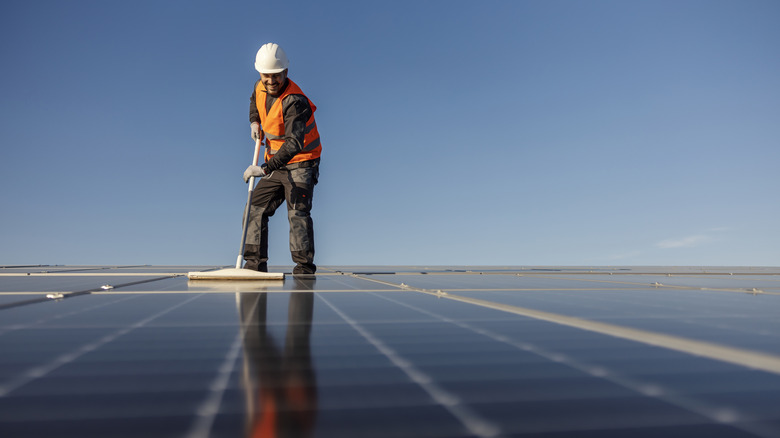
Researchers from the National Laboratory of the Rockies (NLR), formerly the National Renewable Energy Laboratory (NREL), analyzed data from a large grouping of photovoltaic (PV) systems across the United States to understand degradation and found a median performance loss of 0.75% per year. The researchers also discovered that in hotter temperature zones or climates, the efficiency loss was doubled. So the installation location, average temperatures, and climate can all impact lifespan, in addition to the type of panels or materials used.
What does this actually mean for residential systems, though? To put it more simply, every year your panels lose 0.75% of their efficiency, on average, producing that much less electricity. So, at year one, they would produce 100%; by year two, they would produce 99.25%; by year five, they would produce 96.25%, and by year 30, they'd be at under 80% efficiency. Remember that degradation can be higher or lower depending on climate and panel quality. In some areas, and with higher quality panels, for example, the degradation rate could be as low as 0.30% per year, which would keep the operating efficiency well over 90% even 25 years after installation. You can also help boost the overall usefulness of your system over time by adhering to the 20% rule for solar panels you have installed.
What kind of maintenance and care is required?
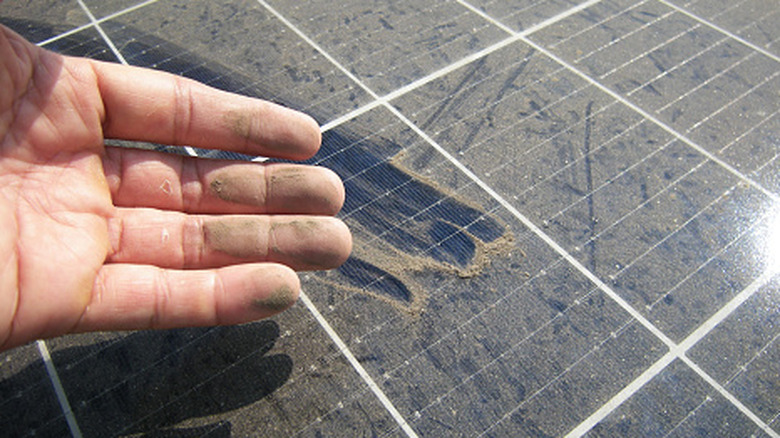
Solar panels are fairly low-maintenance investments overall, but that doesn't mean you should neglect or ignore them, especially if you want to keep them operating at peak efficiency. Generally speaking, you should clean your panels between two and four times per year. It depends on the season, debris that might be in the area (like buildup from lots of tree cover or pollen), and how and where the panels are installed. If they're tilted, for example, rainfall can help clear debris naturally, but if they're resting flat, more filth may accumulate on top. There are a lot of mistakes homeowners make with solar panels, but not scheduling regular cleanings is a big one.
Many solar panel companies do not recommend cleaning the panels yourself. It's dangerous if they're mounted on a roof, and if you're doing it from the ground with tools, there's always the chance you could damage the panels. Damage from botched solar panel maintenance and cleaning isn't usually covered under limited warranties, either.
Depending on the system and what kind of features you have available, you can monitor the efficiency or output of your solar panels, often using an app or a power delivery device of some kind. But you should also be able to determine the cleanliness of the panels simply by looking at them. If you notice dust, debris, or caked-on materials, you'll probably want to have them cleaned. If your meters show low-efficiency power output and your panels are still fairly new, that also calls for a cleaning.