

Soundbar Channels Explained: What Are They, And Is More Always Better?

We may receive a commission on purchases made from links.
You probably knew that a soundbar is a great audio upgrade for just about any TV setup, especially if you can't stand the sound quality of your TV speakers. What you may not have known is that, much like a surround sound speaker system, many soundbars are categorized by the number of audio channels they offer. Numeric phrases like "2.0" and "5.1" give you quick info on how many channels your soundbar was engineered for, with the leading digit indicating how many main channels there are. The second number indicates whether your soundbar comes with a subwoofer.
You'll also find soundbars that are billed as "5.1.2" systems, all the way up to "11.1.4" for the most advanced models. The third digit tells you how many height channels a soundbar has, which is typically in the form of up-firing speakers that shoot sound toward the ceiling and back down again. Generally speaking, most upper-midrange and premium soundbars are 5.1.2 or greater because most of these products support Dolby Atmos and DTS:X — audio formats with a vertical audio layer.
More isn't always better when it comes to audio channels, though. Some of the best 2.1 systems — meaning the bar has front left and right channels, plus a dedicated woofer — can put an ill-performing 5.1.2 system to shame, thanks to features like audio presets and auto-room calibration (Samsung's SpaceFit Sound Pro is a great example of this technology).
Soundbars and surround sound systems have more in common than you might think
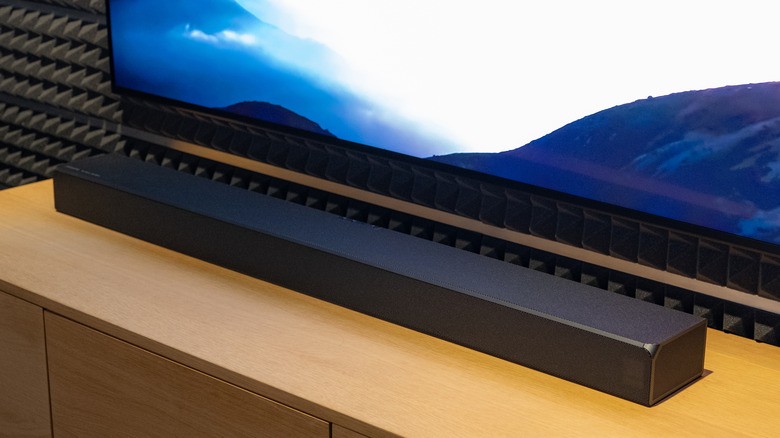
Buying a soundbar may not be as difficult as picking out a new TV or surround-sound AV receiver combo, but you should still carefully consider the room it's going to live in. Medium- to large-sized living rooms and theater dens are prime real estate for a 5.1.2 soundbar or greater, because they usually have enough space to create convincing surround sound effects. At these higher price points, many bars also come with wireless rear speakers that are battery-powered for enhanced immersion; JBL even makes a soundbar with detachable rear speakers that are battery-powered.
You'll also come across soundbars that may be labeled as 5.1 or 7.1 systems but are still marketed as Dolby Atmos/DTS:X compatible. This often means that the bar has two side-firing speakers, simulates height effects through its front channels, or both. Importantly, this isn't the same type of Dolby Atmos/DTS:X experience you'd get from a 5.1.2 system or greater, because height channels are missing entirely.
All that said, a 5.1.2 soundbar can also overwhelm a smaller living room with cramped acoustics. This is when you want to pay closer attention to class-leading 2.0, 2.1, and 3.1 configurations. The latter is ideal because "3.1" means the bar has a dedicated center channel, which bodes well for dialogue clarity and vocals.