

4 Common Problems With DVDs

The mighty DVD, the killer of VHS, is ever important for keeping your bought shows and movies under your ownership. With physical media becoming more important as Sony phases out disc production, let's talk about some problems with DVDs. From the format's limitations to region locking, the DVD isn't impervious to criticism.
DVD launched in the U.S. in 1997, a year after Japan. However, it wouldn't be until the 2000s that DVDs really began to take over. At launch, players could cost anywhere from $600, but by 2001, they were under $175. A BBC report from 2001 even has a quote that Thanksgiving the previous year saw players dip to $68.
Compared to VHS, which won out over Betamax and LaserDisc, DVD offered a lot of conveniences. Higher quality picture and sound were a main selling point, with the digital quality trouncing VHS. There was no need to rewind after finishing, and some movies like "The Lord of the Rings" became best known for their extensive extra features and behind-the-scenes footage. That said, there are a few issues with DVDs.
Unskippable adverts

There's nothing worse than sitting down to watch a movie and being forced to watch the previews and warnings. It's why the "You Wouldn't Steal A Car" stinger is ingrained into a lot of minds. While loathed, it hasn't stopped Blu-Ray releases from following suit, with recent releases, like "Stranger Things," including over five minutes of adverts before starting.
A huge benefit of VHS was total control over the tape. Adverts were loaded at the front, but you were never forced to sit through them. In fact, some the scarier piracy warnings were best skipped over for kids growing up with them. On DVD, it was a guessing game whether you could skip, or at least fast forward through the ads.
Some DVDs would allow you to hit the menu button and skip right ahead, but again, it was pure randomness on the first watch. In 2012, DVDs and Blu-Rays had government piracy warnings imprinted on them, taking up 20 seconds. However, the smart people at VLC figured out how to skip over everything by default, if you happen to be one of the few with a DVD drive on your PC still.
Quality problems

DVD is like a dead language; it was refined to a point, and then it stopped. In the NTSC regions, it topped out at 480p, while PAL came in at 576p. Once TVs phased in HD, the quality of DVDs suddenly showed the upper limits of what they could do — unless you have a TV or player with dedicated upscaling capabilities. DVDs never looked terrible on an HD screen, but once Blu-Ray came along, the physical media of choice in terms of quality wasn't even a conversation.
Then, there are DVDs that have terrible image quality. This isn't the fault of the format, but whoever put the DVD together. While Blu-Ray has some high-profile movies to avoid in the format, DVD was known for some cheaply made productions. Spaghetti Western movie fanatics have discussed some of the worst transfers, with screenshots for some movies laden with blur and poor image quality.
Notably bad releases include "The Abyss: Special Edition," in which the James Cameron sci-fi movie appears to have versions with poor-quality audio or no anamorphic presentation. Another, "Outland," starring Sean Connery, is notorious for producing a 4:3 version of the movie, with poor picture quality being cited by multiple forum goers. Even other genres, like anime, were impacted by poor transfers to DVD in some early prints, as the industry hadn't quite made the move to digital.
Region locking

Yes, region codes and region locking on DVDs are an annoyance, but there was a good reason. PAL regions played back at 25fps, and NTSC would play back at 24fps, optimized for the way that power is generated for TVs. NTSC region screens would clock in at 60Hz, while PAL and European regions were at 50Hz. Playback of NTSC on a PAL screen (or vice versa) will come out garbled, or in most cases, produce an error.
Then, there's the money factor. Region coding allowed studios to avoid losing sales on movie tickets or DVDs via imports if the movie wasn't being released concurrently worldwide. As was the case for most movies in the 2000s, the Americas would typically get a film first, and then it would come later to regions such as the U.K. or Europe. At the time, DVD sales were imperative to a film's overall success.
Region locking can be worked around, and quite cheaply these days. Amazon is filled to the gills with players that claim to offer region-free playback. If you're opting to watch these on your PC via VLC and a DVD drive, you might not be able to bypass the hardware's region encoding, so double-check beforehand.
It's harder to find DVDs now
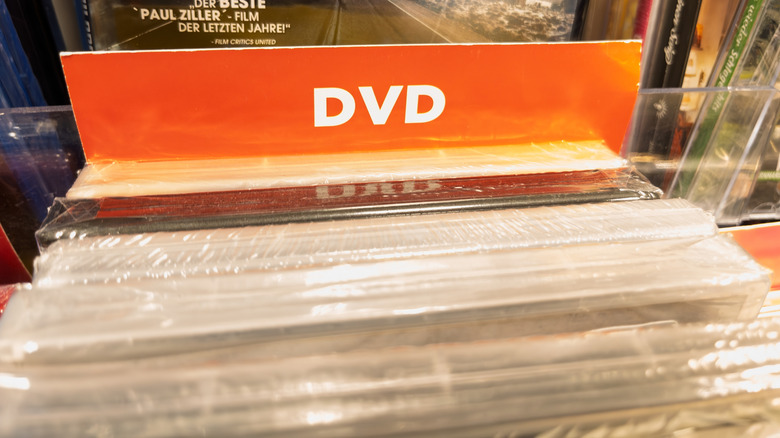
With the future of physical media production looking more and more dour (thanks, Sony!), and newer releases potentially never seeing anything but a digital store or streaming platform, it's getting harder to track some movies on DVD at all. July, 2026 is fairly stacked for DVD releases, but there are some key movies, like "Kill Bill: The Whole Bloody Affair" and "The Drama," skipping DVD entirely. The movies making their way to DVD don't appear to be the problem; it's distribution.
In 2023, Best Buy pulled out of selling DVD and Blu-Ray discs. DVD sales have been declining for a number of years, with the "physical entertainment market" reportedly dropping by 16% year-on-year in 2021, and in a 2024 report, U.K. retailer HMV's head of film and TV, John Delaney, said "60% of our sales" went towards higher quality options over everything else.
You can't even go and get a potentially scratched DVD from a Redbox anymore. For new releases, it seems like DVD buyers are stuck between Amazon and dedicated stores, as some smaller ones are now heavily featuring Blu-Ray or 4K options over DVDs. It's unlikely that DVD will come back in the same way that vinyl has. Since 2011, the market has fallen by 95%, and with not offering the quality or capacity for additional features like Blu-Ray, DVDs might just fade away entirely outside of what's currently in circulation.