

Why Your OLED TV Gets Hot – And How To Fix It
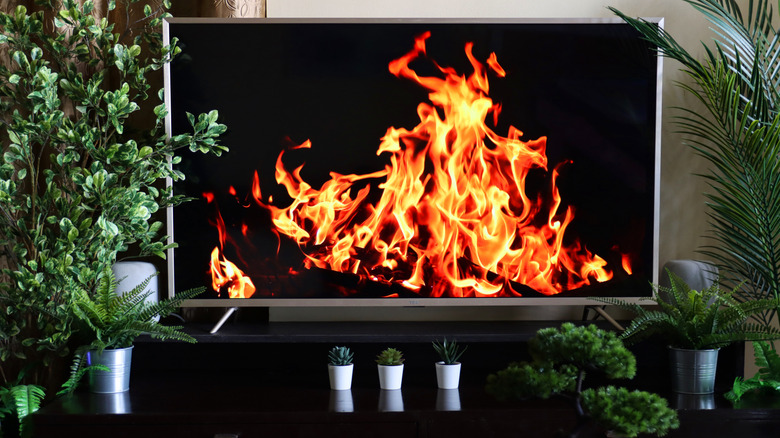
If you walk directly in front of your OLED TV while it's turned on, you might notice a lot of heat coming off of it. The same is true for all TVs, and actually, OLEDs tend to run cooler because they don't have a lamp emitting hot light through the screen. Each pixel in an OLED TV generates its own light and can shut off individually to accommodate dark scenes. But this still causes those pixels to generate heat, and there are situations when your OLED TV might get too hot for its own good. When that happens, you need to know how to fix it.
OLEDs are able to achieve very high peak brightness, and while this results in a beautiful picture that looks great even in a well-lit room, prolonged use at high brightness can really heat things up. LG recommends keeping the brightness for their displays set no higher than 70% for regular use. Some TVs also have settings such as "Clear Image" or "Sports Mode" that may alter the brightness of the display, so consider switching them off if your TV is hot. Being mindful about brightness and advanced settings is also one of the main ways to prevent burn-in on your OLED screen.
As another consideration, you should also keep your TV out of direct sunlight for prolonged periods. TV screens are very heat-absorbent, so direct sunlight poses a real risk to your TV. Even if your OLED is glare-free, you should still close the curtains on a hot day.
Keep your OLED TV from overheating to make it last longer
When an OLED TV frequently runs too hot, it can shorten the panel's lifespan. Users say that OLED TVs are reliable, albeit not quite as long-lasting as traditional LCD or LED panels. The expert reviewers at RTINGS ran a longevity burn-in test over the course of three years to see what would happen to a variety of TVs being put through intense use cases. The more those TVs were being used, the longer their screens spent getting hot. And, as a result, the team found that nearly every OLED panel tested began to show signs of burn-in by the two-year mark.
However, this is not something the average user will need to worry about at home. Experts say that OLED TVs can last for thousands of hours before there's any notable risk of burn-in. That translates to an expectancy of 10 years or more of moderate use. You can stretch this even further by taking good care of the panel. Turn the TV off when you're not using it, keep the brightness at a reasonable level, and just be aware of how hot the screen is getting. Do these things, and you'll likely get more than the average lifespan of an OLED TV.