

5 Terrible Sci-Fi Movies That Ruined The Stories They Were Based On
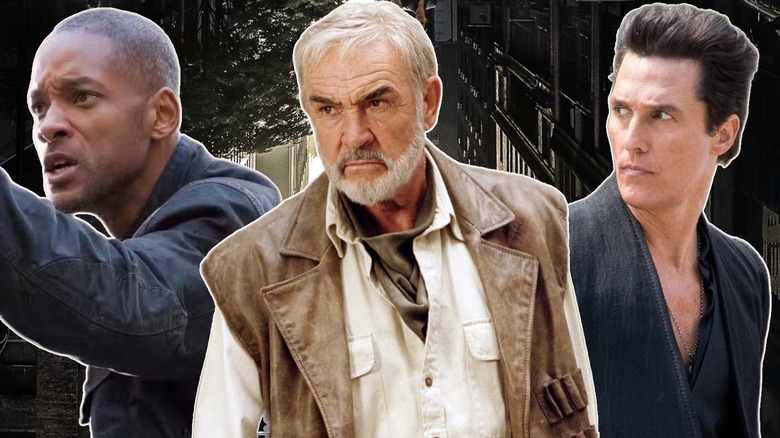
Some of the best science fiction movies have earned critical acclaim and adoration from fans because they've had a brilliant blueprint to work from: a well-known tale. Stories that have either been freshly adapted for the big screen or tried and tested over the years can earn as much popularity as their source material. However, there are occasions when, no matter how much success they might have achieved, they don't quite match the original. These are the kinds of entries where Hollywood types cut corners on crucial plot points in well-known reads. Or, in an effort to modernize the original book, they mix things up altogether. In some cases, filmmakers go completely off piste with the plot and wreck a perfectly good story in the process.
From defanging legendary threats to production issues that wrecked what might have been great takes on groundbreaking tales, we've pulled together a batch of box-office blunders that permanently tarnished these stories given the cinematic treatment. Some were so bad that they killed franchise possibilities, leading to adaptations being sent back to the drawing board and taking years to regain fans' trust. Others left such a black mark on the careers of the creatives behind them that they stepped away from filmmaking altogether. So have a scan and see which movies clearly skimmed the books they were adapting, beginning with a movie doomed from the get-go.
The Island of Dr. Moreau
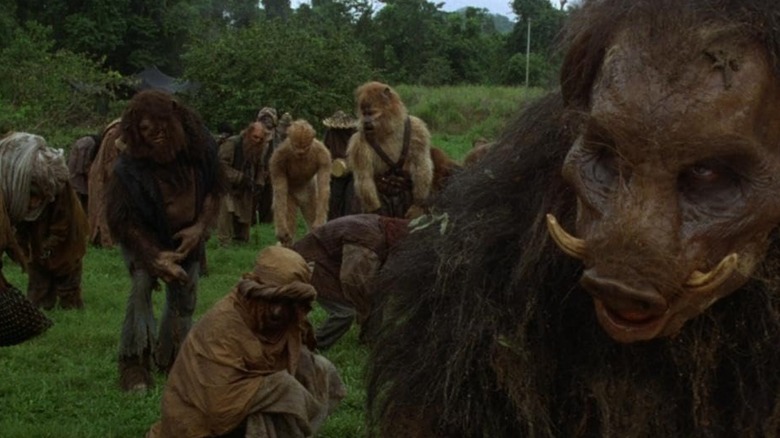
The work of H.G. Wells brought forth some brilliant big-screen adaptations — some undeniably dreadful ones as well. Perhaps the most notorious misfire spawned from the author's works was the 1996 movie version of "The Island of Dr. Moreau," which, even with the incredible talent that washed up on its shores, proved a nightmare project in every conceivable way.
David Thewlis plays Edward Douglas, who, after surviving a plane crash, finds himself on a mysterious island where a doctor (played here by Marlon Brando) and his experiments have led to humanoid creatures with animal-like physical features and traits. A well-known tale that explores the subject of human identity as well as man's propensity to meddle with nature, the final product was a Frankenstein in its own right due to the notoriously terrible production issues behind the scenes.
Actor Val Kilmer was known as difficult behind the scenes, and the esteemed legend Brando abandoned production halfway through following the death of his daughter. Higher-ups also blamed the film's terrible development on the original director, Richard Stanley, who, after being fired and replaced by John Frankenheimer, snuck back onto set in makeup as one of the movie's extras. Ultimately, if you want a good watch, you'd be better off watching the documentary "Lost Soul: The Doomed Journey of Richard Stanley's Island of Dr. Moreau" instead.
I Am Legend
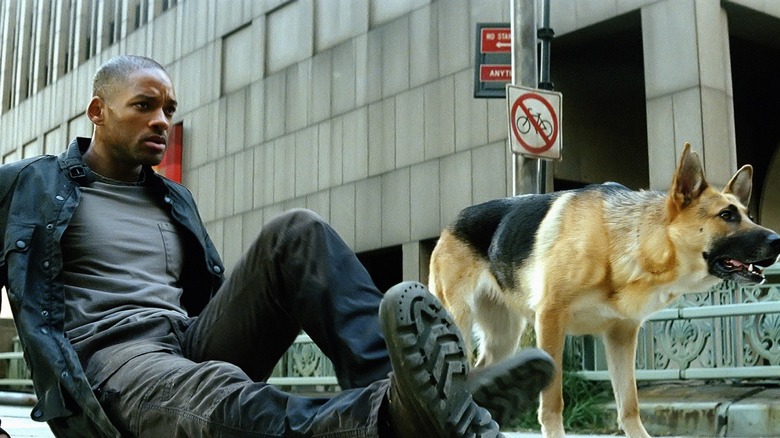
There's no doubt that Francis Lawrence's adaptation of Richard Matheson's 1954 novel "I Am Legend" is the most popular version, but it still doesn't hold a candle to the source material, which delivers gut-punch after gut-punch. In the book, Robert Neville is indeed the last man on earth, spending his days both eradicating and investigating the nocturnal monsters he considers real-life vampires. Unlike Lawrence's movie, which featured CGI (and pretty shoddy) "Darkseekers" causing chaos, Matheson's original book depicted an even darker world. It featured villains that were able to speak, spending their evenings taunting Neville to come out even going as far as using scantily clad women to get his attention. It made for a far more psychological battle between man and vampire, with the leader being none other than Neville's former next door neighbor.
If that wasn't harrowing enough, Neville also has a canine friend like Smith's in his film, but it's a stray he spends weeks trying to lure inside and protect. Just as the dog is about to form a bond with Neville, the vampires trap and kill the animal. That's all before; in the final moments of the story, we come to realize that Neville has been the monster all along, in a bleak but brilliant ending that no adaptation has dared try to bring to life.
The Dark Tower
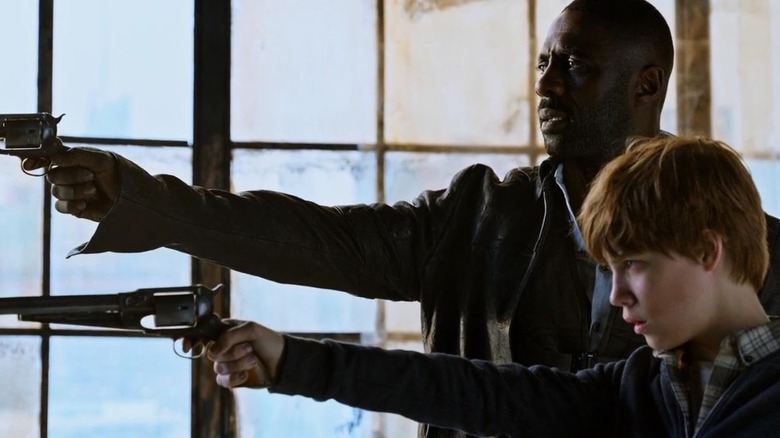
Some time in the not too distant future, Stephen King-adapting favorite Mike Flanagan is going to take a run at "The Dark Tower," and even without a single scrap of info on the project, it's a safe bet it'll surpass the cinematic mess we got in 2017 from director Nikolaj Arcel. The problems with the movie don't all fall at the feet of the director, who was the third in line to adapt the story following Ron Howard bailing on the project, which was originally teed up by J.J. Abrams. The biggest issue lies in plucking parts of different books and stitching them together to make a movie that was nowhere as, well, dark as the original source material.
Things looked great on paper initially, with Idris Elba forgetting his father's name as Roland Deschain and facing off against the dream casting of Matthew McConaughey as Walter Padick. The problem was that neither star could expand on their characters, which had been softened up for this cinematic outing. The taming down didn't go unnoticed by King, who in an interview with Entertainment Weekly, explained, "The real problem, as far as I'm concerned, is, they went into this movie and I think this was a studio edict, pretty much, this is going to be a PG-13 movie." Hopefully, that is the first thing that Flanagan tackles whenever we finally see the tower in his Amazon adaptation.
The League of Extraordinary Gentlemen
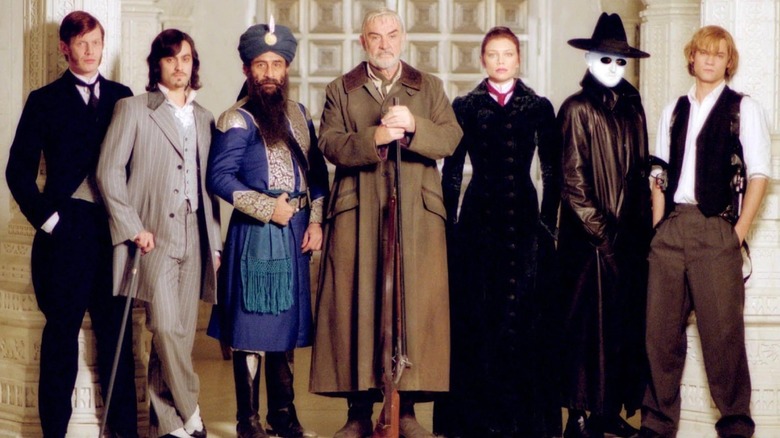
In the history of poorly received comic book movies, "The League of Extraordinary Gentlemen" remains one of the most hated, with some bad behind-the-scenes stories to go with it. It was the film that pushed Sean Connery into retirement after he constantly clashed with the film's director, Stephen Norrington. Perhaps if the film had stuck to the source material by revered comic book writer Alan Moore, it might've found success over the family-friendly(ish) steampunk-style "Avengers" movie we got.
The 2003 film features well-known literary characters from world-famous books. Mina Murray from "Dracula," Dorian Gray, Alan Quatermain, and Dr. Jekyll (and, by extension, Mr. Hyde) all unite to stop a mysterious villain who threatens the world. The core plot thread aligns with Moore's original story, but his version is considerably darker and absolutely not one for kids to see.
In the 1999 comic series, Connery's character is a worn-down opium addict grappling with his past, rather than the (let's face it) seasoned James Bond-type hero Connery phoned in here. There's also a shift in power dynamics, with Mina leading the team in the book instead of Quatermain. The team was tragic in its own way, delving into far more mature themes than the movie handled. The adaptation was so loathed that Norrington also refused to direct again, and it was the final straw for Moore and his already-tense relationship with Hollywood. If you want to watch the closest thing to the source material, fire up the Showtime horror show "Penny Dreadful," which did everything "LXG" was too afraid to do.
War of the Worlds
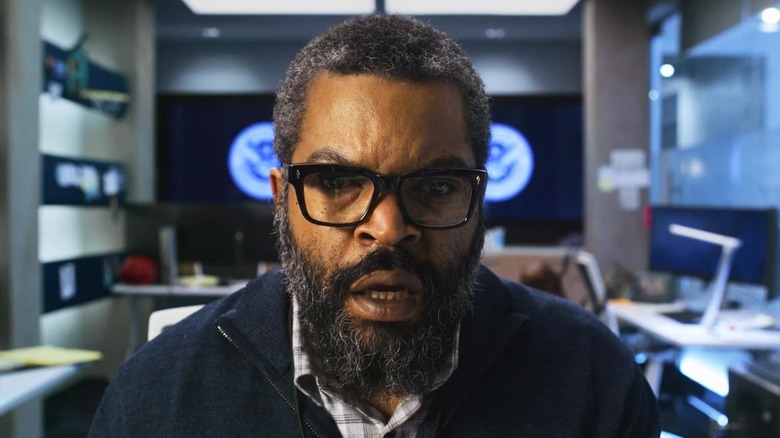
Another title from H.G. Wells' bookshelf also stands as one of the worst adaptations in recent years. Directed by Rich Lee and released in 2025, "War of the Worlds" stars Ice Cube, who leads this version of the story. This film makes the baffling choice to keep its star at a computer station, watching the alien invasion unfold through online news reports and FaceTime calls. Now, not to discredit the good name of Mr. Cube, who has been behind some great performances in the likes of "Boyz n the Hood" and "Three Kings," however, "War of the Worlds" will go down as his worst, as he's limited to an office chair most of the movie.
Labeled the worst film of 2025 and earning a handful of Razzie awards, "War of the Worlds" was met with a woeful Rotten Tomatoes score of only 4%, failing to modernize a classic story, unlike Steven Spielberg's unsurprisingly impressive 2005 adaptation. Brian Tallerico said of the film that "I refuse to believe actual human beings were involved in most of this nonsense." Empire's Ian Freer also described the film as "thin, frenetic, soulless adaptation" and "misguided moviemaking cubed." Fingers crossed that when the next inevitable adaptation comes along, whoever gets picked for the lead dares to seek a closer encounter with the tripods than on camera at an office desk.