

4 Safety Features That Your Power Bank Should Have
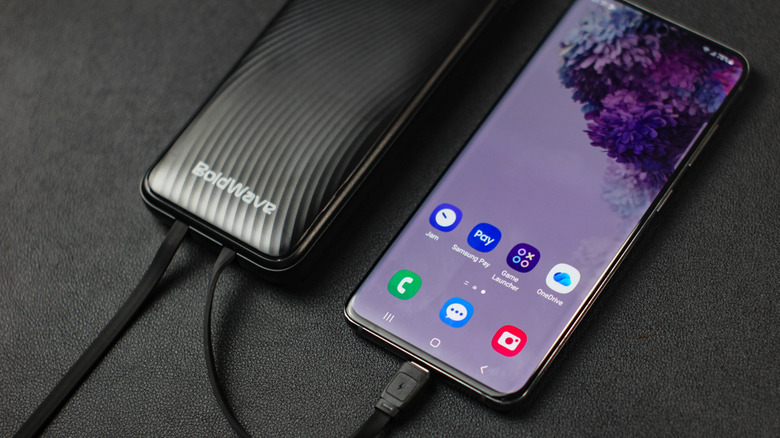
A power bank is such a useful accessory to have with you, especially since there are ones that can even do more than just charging. I bring one with me any time I'm out of the house for a full day to ensure that I can always top up my phone with extra power as needed. Power banks prove especially helpful if I'm going to be using battery-hungry features like streaming, navigation, and shooting videos. While you might be tempted to pick up the cheapest one you can find, there are certain safety features that you should seek out. While major retailers and e-tailers can largely be trusted to only sell certified products, if you buy second-hand or from an unknown shop, even when buying online, you want to keep an eye out for specific safety features.
For example, there's battery management technology that prevents overcharging, and smart charging that detects the optimal power requirements for your devices and adjusts accordingly. A power bank that has these features is what separates a safe power bank from a shoddy budget one. And when you're connecting it to crucial devices like your phone — which can not only cost upwards of $1,000 (or more) but that you rely on 24/7 — it isn't worth saving a few bucks to get a power bank that could not only short circuit itself, but damage your connected device in the process.
Battery management system
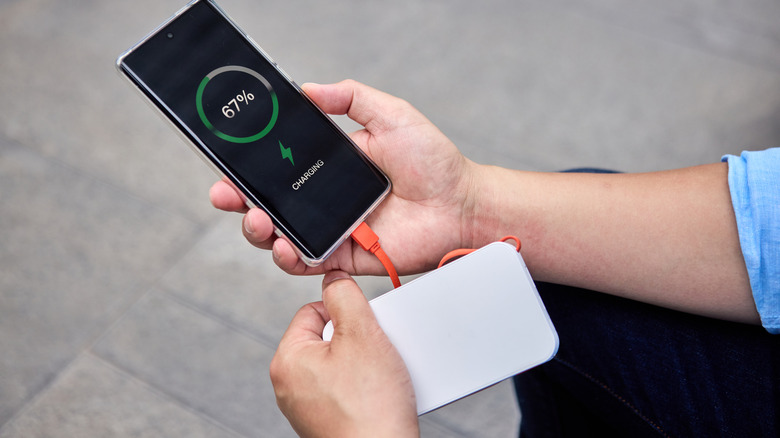
To prevent overcharging if the phone or other device is plugged in after its battery has reached capacity, quality power banks, including even the best wireless power banks, include a battery management system (BMS). This feature monitors charging as it goes and intentionally halts power so it doesn't overcharge or short circuit when you don't unplug a device after its battery is full. If you leave your phone and charger in a backpack or purse, for example, you might not know when it gets to 100%. So, this ensures the power bank won't try to keep charging beyond that. Described as the "brain" of the power bank, the BMS ensures not only that you can confidently plug in your devices and know they'll charge at a proper rate, it also provides the best performance possible and keeps the power bank's battery healthy as well for as long as possible.
Belkin, for example, uses a dual-chip design for its proprietary BMS that protects your connected device against overcurrent, overvoltage, and even undervoltage, essentially turning off the power bank once the voltage falls below a safe level. Basically, not only will the power bank avoid trying to push more charge than your device can handle, if its battery is too weak to charge, it won't tax itself to try to do so either.
Temperature protection
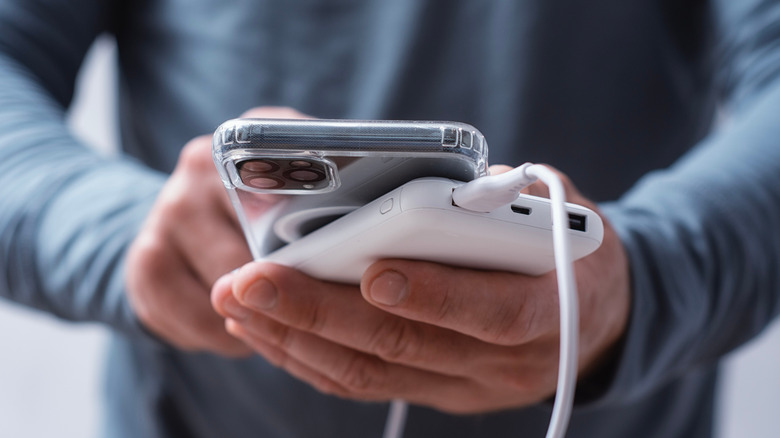
Typically part and parcel with a BMS is temperature protection. This feature pauses charging if the power bank is getting too hot. This could happen if you're charging your device outdoors on a hot, sunny day, for example, or it's stuffed in your hot bag. Belkin uses a dedicated thermal sensor in its power banks, combined with thermal shutdown mechanisms. That ensures the power bank's own integrated circuit does not overheat. That's important because it could potentially damage the charger and render it unsafe for use. This could, in turn, potentially damage your connected device, too.
This feature may sometimes be named separately in specs as overheat protection. It will usually kick in if the temperature exceeds 140°F to 158°F, at which point the charger will stop and wait until it cools back down before charging resumes. The same goes for temperatures that are too cold. If the charger gets below freezing, it will stop charging until the cells warm back up. You're less likely to encounter this unless you're using it outdoors in sub-zero temperatures, like while at a ski chalet or traveling on a frigid winter day outside.
Smart charging
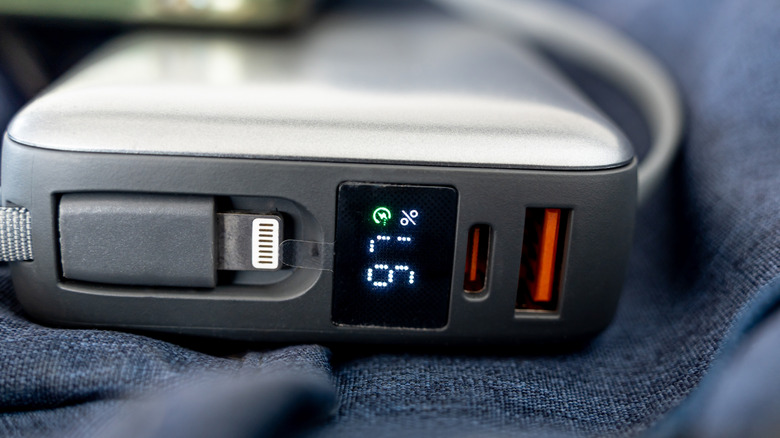
Many modern power banks have smart charging through features like Power Delivery (PD). This ensures that the power bank can detect what device has been plugged in and use the proper voltage to ensure both fast and safe charging. If the power bank, for example, is able to also charge things like a laptop on a higher voltage, you want to ensure that it doesn't attempt to charge a smartphone at the same voltage.
You may notice that some of the more advanced power banks with screens show exactly what device you have plugged into them, like an Apple iPhone or Samsung Galaxy phone. Since you can charge so many devices with a power bank, this is further reassurance that it's optimizing charging accordingly. If you have a power bank with lower voltage, you need not worry. But if you're using larger, more powerful power banks to charge devices that require more power than a phone, this feature is essential. While you might use it primarily for your laptop, this gives you confidence that you can also recharge your tablet, phone, headphones, a wireless earbud case, smartwatch, and more as well using the same power bank.
Safety certifications
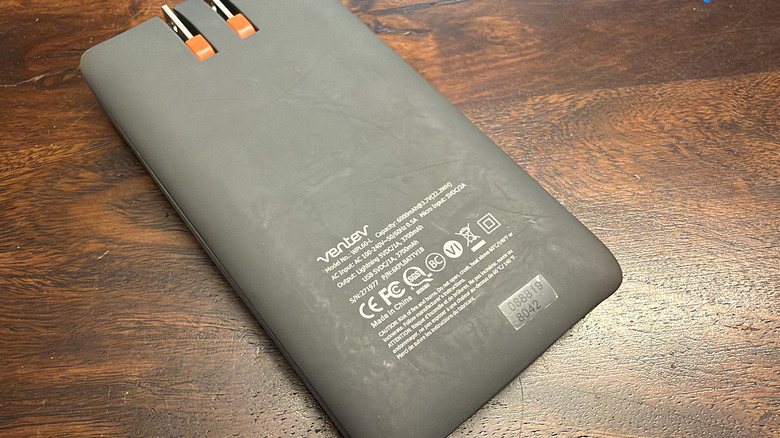
A power bank should have clear markings for safety certification for the country from which it is being sold. For the U.S., this is UL and FCC. UL certification confirms the device has been tested by independent labs, confirmed to be safe for use, and that it does not pose a fire risk when used properly. The FCC label, meanwhile, means it meets FCC requirements and compliance with required standards. In Canada, you may see CSA, cUL, or cETL labels, which also confirm it meets electrical safety standards. In other countries as well as the U.S., there are certifications like CB, CCC (in China), CE (European Union), PSE (Japan), and more. Based on where you buy, look up what certifications the product should have to verify that it's thoroughly tested. You may also look for the RoHS icon, which means Restriction of Hazardous Substances. This confirms that it meets all global restrictions for the use of hazardous substances in the manufacturing process.
All these markings might seem unimportant, but they are basically seals of approval that are worth their weight in gold. Inspect a charger you might be considering buying second-hand or look at the listing online or on the package in a store to ensure that the relevant symbols are displayed. While many good budget power banks are frequently on sale, look for these safety features first before choosing only based on the best deal.