

5 Devices You Can Charge With Power Banks (Apart From Your Phone)
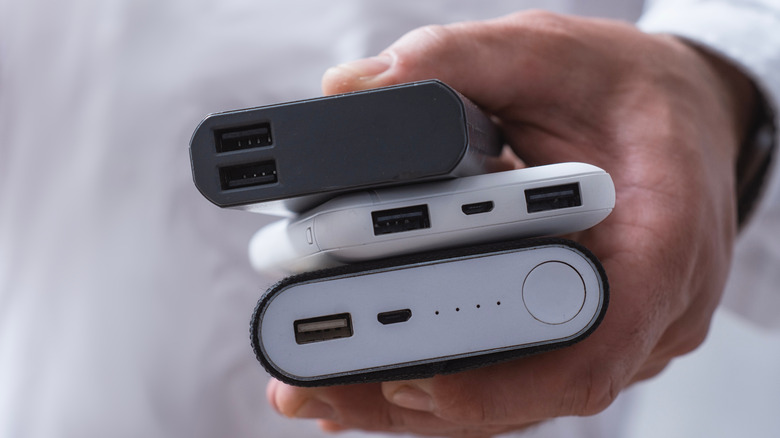
We usually associate power banks simply with charging phones, which is the main reason why most people buy them in the first place. However, your power bank can charge or power a wide array of other devices you use every day, and with modern power banks featuring bigger batteries, the number of devices they can charge has increased significantly in recent years.
Everyday gadgets and accessories you can charge or run using power banks range from laptops to handheld gaming consoles, Bluetooth speakers, smartwatches, routers, heated accessories like electric pillows and hand warmers, and much more. Of course, this all comes down to the device's power rating, charging connector type, and the power bank's capacity.
While a decent 10,000 mAh power bank should charge most devices, for power-hungry ones, you will need a 20,000 mAh power bank. Apart from that, your power bank can also charge many rechargeable batteries, which adds even more devices to the list. People are now even exploring the idea of solar power banks. These aren't the fastest, but if you are away from a reliable power source for days, solar power banks do come in handy. Before you proceed, make sure the power bank's output voltage meets the input voltage requirements of the target device. This can be verified using the manual that came along with both. If the voltage requirements are not met, the setup may fail to work, and you even run the risk of damaging the target device.
Laptops
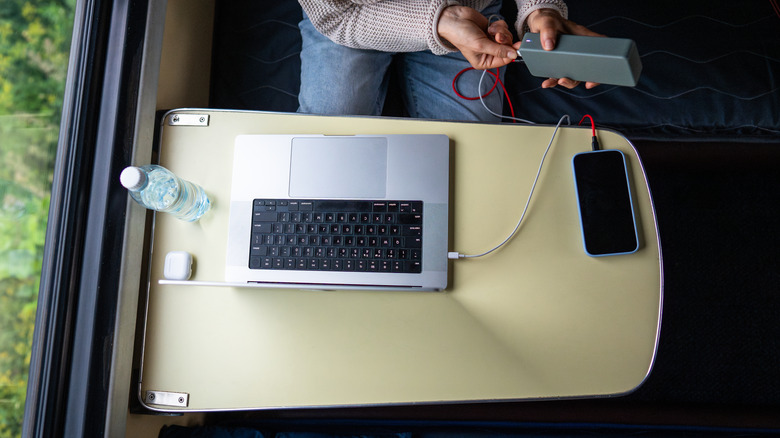
One of the most important devices you can charge with a power bank is your laptop. However, it's not as simple as it sounds, and you can't use every power bank for the purpose. The good news is that many modern-day power banks are designed to charge laptops alongside other devices. You will need a power bank that features at least one USB-C PD (Power Delivery) port with high power profiles such as 45 W or 100 W, a voltage output that matches the laptop's requirement, and has a capacity of 20,000 mAh or more. The first two are non-negotiable since laptops charge at a much higher wattage and voltage than smartphones and tablets.
You can usually find the laptop's input voltage on a sticker on the bottom face of your laptop or through the manual that came with it. As for the power bank's capacity, the more the better. Newer laptops have batteries in the 40 Wh to 99 Wh range, depending on their power requirements. That's why a higher-capacity power bank is more likely to fully charge your laptop more than once, provided it can deliver the required voltage.
You will easily find several reliable power banks and portable chargers for laptops. The choice ultimately comes down to your laptop's wattage, input voltage, the kind of tasks it performs, the number of full-charge cycles you need, and whether you plan to charge other devices too. Because if you do, you will need a power bank with multiple ports and sufficient capacity.
Handheld gaming consoles
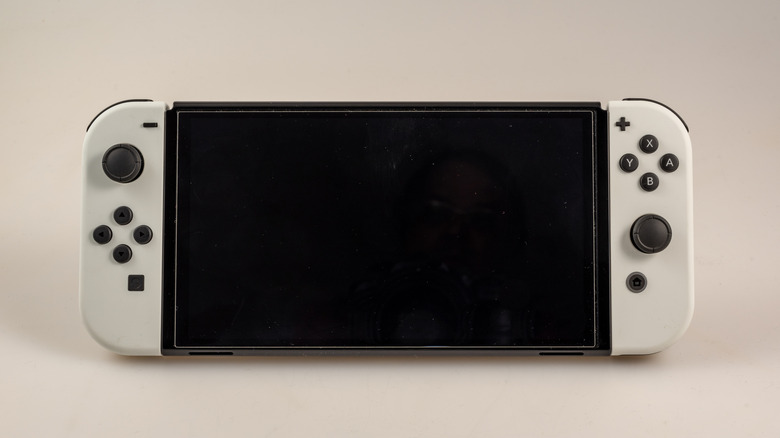
Your power bank can also charge handheld gaming consoles. If you are a seasoned gamer, it's one of the essential accessories for gaming on the go. That's because handheld gaming consoles and PCs, though more powerful than ever, still don't last beyond a few hours, especially during intense gaming. And due to their compact size, built-in batteries with higher capacities can't be fitted.
As was the case with laptops, you will need a power bank capable of delivering enough power to charge your portable gaming console. Ideally, look for one with a USB-C PD (Power Delivery) port and support for profiles like 18 W, 45 W, or 60 W, but it comes down to the device you are using. For instance, while the Nintendo Switch can work with chargers rated up to 39 W, it requires only 18 W for charging. So, even a regular power bank should be able to deliver sufficient power. For a Steam Deck, you need a power input of 45 W, which requires a high-power USB-C port. There's another benefit to it as well. When connected to a power bank or any charging source, the gaming console may even deliver faster performance compared to when you are using it unplugged.
As you can see, it's important to understand the requirements of your handheld gaming console before charging it with a power bank. But at the end of the day, they do work, giving you extra hours of gameplay.
Travel routers
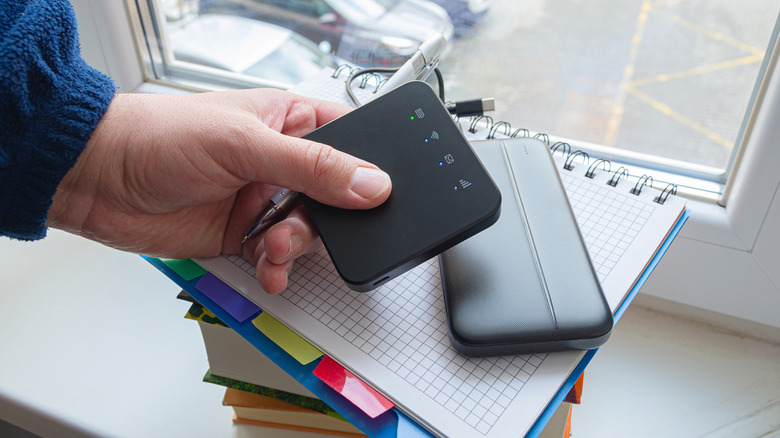
Another piece of tech that works perfectly with a power bank is a travel router. It's a must-have device for people going on vacation. A travel router connects to a wired or wireless network and can then share that connection with other devices. It also extends coverage, acting as a Wi-Fi range extender, and boosts security on public networks. And the best part is that, compared to other gadgets, a travel router doesn't require a high power input to operate.
Most travel routers are USB-powered, though you will find a few with built-in batteries. On average, these require 1.5 to 5 W to run, which even a standard power bank can deliver. As for the capacity, you again don't need much, but the more the better. A 10,000 mAh power bank can run a travel router for hours at a time. Keep in mind that travel routers don't require a lot of power. They can even be connected to the USB port on your laptop, so your power bank is more than capable of powering it, even for extended periods.
Drones and cameras
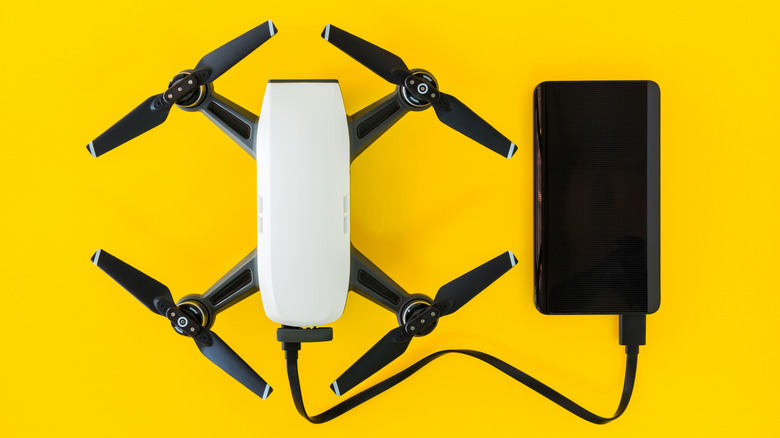
Modern-day power banks aren't just limited to phones, tablets, and laptops — they can even be used to charge drones and cameras. This is especially useful for photographers and drone enthusiasts working in remote areas with no available wall outlets. But remember to always verify compatibility when charging drones or cameras with power banks.
Many cameras now feature USB ports for direct charging, but you may need a power bank that supports 18 W or 45 W output to charge a camera, depending on the manufacturer. Some Sony cameras support USB PD (Power Delivery), so you may need a power bank with at least one USB-C PD port. You can verify the required charging wattage for your camera model.
When it comes to drones, the idea remains the same. If the drone allows USB charging, simply connect it to your power bank that can deliver the required power and voltage, and it should start charging. For drones, however, the power requirements are slightly on the higher side. Many reliable drones typically require a 30 W or 45 W supply to charge, so you will need a power bank with a high-power USB-C port. Anything higher, say 60 W or 100 W, may speed up the charging rate. As for the capacity, go with at least 74 Wh or more to get a few charging cycles out of the power bank.
Heating pillows, hand warmers, lights, and fans
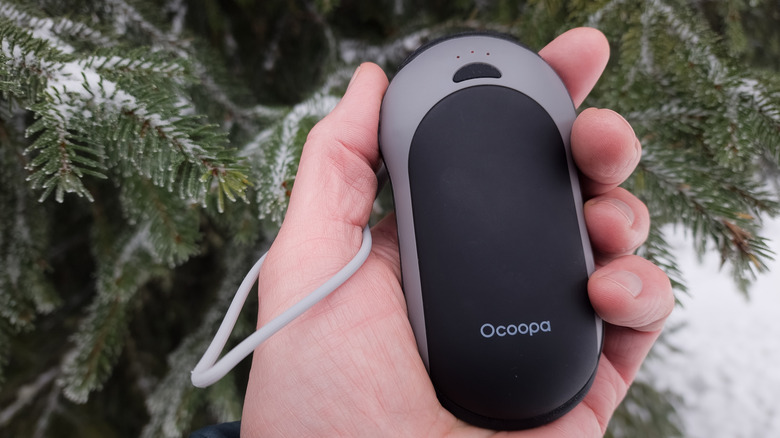
If you are looking to run some non-tech devices with a power bank, heated accessories like electric pillows or cushions and hand warmers are perfect. These don't require much power to operate or charge. A typical USB-powered heated pillow or cushion requires a power supply of around 10 W, although bigger ones may need more. Similarly, hand warmers generally require a supply of 10 W for charging, which a standard power bank is capable of delivering. For models that support fast charging, you may opt for power banks that support 15 W or 18 W output, depending on the manufacturer. Also, the input voltage is 5 V for most hand warmers, and your power bank should be capable of delivering it.
As for the runtime, even a 10,000 mAh power bank should allow hours of continuous use, provided the output voltage is 5 V. Keep in mind that the runtime here largely depends on the heating levels the device is being operated at. The higher the temperature, the more the power consumption, and the shorter the runtime.
Apart from these, any low-powered device that runs on USB power can generally be powered or charged with a power bank. Common examples include portable LED lights, USB-powered fans, and small desk lamps. And the best part is that these don't require a high-capacity power bank. Even a 10,000 mAh or 37 Wh power bank should be able to run a 3 W portable fan or light for over 10 hours.