

5 Reasons Why Some Gamers Swear By Sennheiser Headphones
We may receive a commission on purchases made from links.
A gamer's choice of headphones plays a big part in immersing them in their 9,999th time playing through "Skyrim" (it's a coping mechanism). It also plays a big part in getting that competitive audio edge over their rivals and overall comfort when locked in. Mainstream manufacturers routinely try to attract buyers' attention with RGB, gimmicky software, and bass frequencies that can only be described as sonic booms that completely wipe out footsteps and environmental noise "Warzone" players rely on.
Making a smart move by buying premium, audiophile-grade gear completely transforms how players interact with virtual arenas, converting subtle acoustic vibrations into wins. Sennheiser has built a legendary reputation among audioheads by focusing strictly on pure acoustic performance, robust engineering, and practical ergonomics instead of leaning on marketing buzzwords. They're hardly a one-trick pony either, also being well-known for making solid microphones, soundbars, hearing aids, and more.
For gamers tired of headsets that pinch their temples, distort during hectic firefights, or fail to articulate footsteps and other audio cues, making the switch to a dedicated studio-grade audio solution that Sennheiser puts out will be a revelation in clarity and positional awareness when compared to a "gaming" headset. Specialist features such as open-back architecture, flat profiling, and advanced transducer engineering make it clear to see why Sennheiser is a top choice for all kinds of gamers. Let's not forget the build quality and longevity it's known for, too.
Sennheiser headphones match premium listener profiles
When investing in high-end audio gear, buyers expect a level of sonic reproduction that handles intense action sequences and intricate musical scores with equal grace. Objective acoustic testing performed on a specialized Head and Torso Simulator (via Jakkuh on YouTube) with a Sennheiser HDB 630 demonstrates that the Sennheiser internal driver tuning perfectly aligns with the premium frequency response target profile preferred by the vast majority of human listeners. This meticulous alignment ensures that Sennheiser headphones deliver an incredibly lifelike performance, prompting industry benchmarks to compare its clarity directly to ultra-premium $60,000 reference models.
To put it into perspective, that's comparable clarity coming from a $499.95 set of headphones, which is why lots of gamers swear by Sennheiser. Not bad for a family-run business. Traditional gaming gear routinely compromises on component quality, but this high-fidelity sound profile is custom-tuned to handle the sophisticated dual demands of music production and gaming. Gamers can look forward to punchy, beautifully extended bass that reaches deep frequencies without ever bleeding into or muddying the critical mid-range frequencies where character dialogue and environmental sound effects live. The treble presentation is also remarkably detailed and crystal clear, allowing you to appreciate crisp high-frequency notes while completely avoiding harsh, piercing sibilance (harsh sounds) that commonly induces listening fatigue during long gaming sessions.
Elite spatial imaging gives you a clear tactical advantage
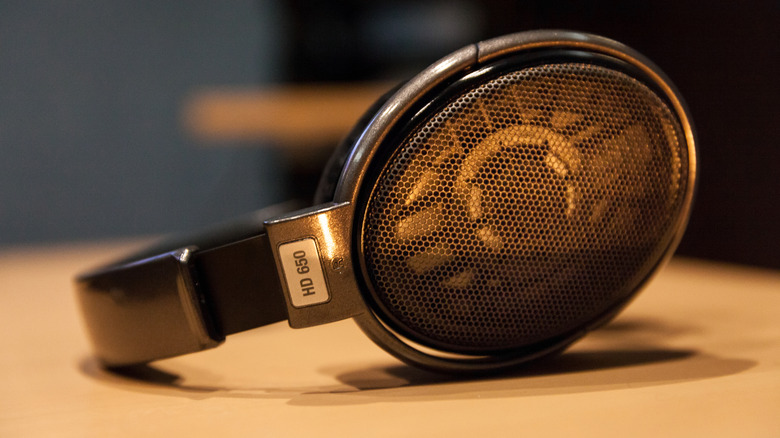
When trying to get the edge on opponents on multi-level maps in competitive shooter games, being able to hear where they are before seeing them is a massive tactical advantage. High-end monitoring gear like the Sennheiser HD 490 Pro open-back headphones is engineered to deliver exceptional performance in driver matching and ultra-clean group delay. This precise engineering means the left and right acoustic transducers operate in structural synchronicity, smoothing out panning transitions so players can sense the physical positioning of footprints moving closer or away from them. The argument could be made that this technology should just be in closed-back headphones with ANC thrown in, but this also affects how acoustics perform overall.
This transducer architecture provides gamers with a natural and wide acoustic soundscape that cleanly captures localized details like the direction of gunfire or movement. Because the internal drivers map audio cues without introducing phase issues or unnatural frequency spikes, gamers can get a solid sense of an opponent's distance and movement. This level of sound quality means faster reaction times, giving players the edge and opportunity to pre-aim at narrow angles and lock down chokepoints before another player ever appears on their monitor.
Open-back architecture options
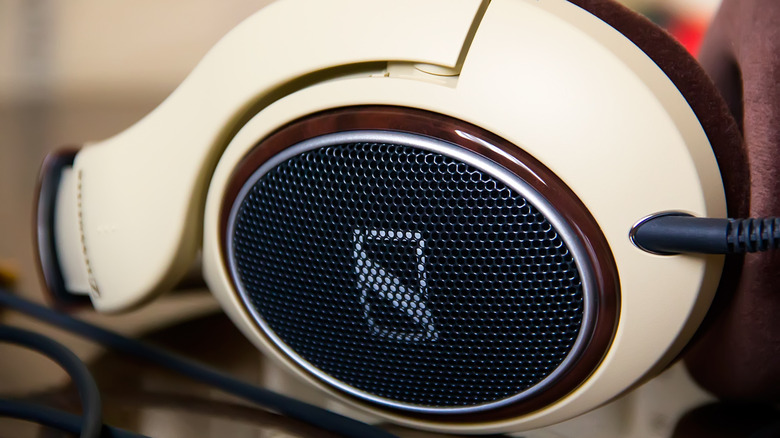
Traditional closed-back gaming headphones completely isolate a user's ears inside a sealed plastic shell, a structural compromise that traps acoustic vibrations, colors an audio mix, and can induce a cramped, unnatural frequency signature. Audiophile-focused open-back choices from Sennheiser, such as the HD660S2, resolve this limitation by implementing a perforated outer shell that allows air and sound waves to pass through the driver cage. This kind of architecture results in an expansive soundstage that puts forward an organic sense of spaciousness during interactive play.
By allowing sound waves to radiate out of the headphones naturally, the open-ear cans replicate the speaker-like acoustic properties of a physical room rather than pumping sound pressure against a user's eardrums. This sound pressure would be present in the aforementioned closed-back headphones, which can hinder the speaker-like experience the HD660S2 is known for with some gamers. The structural design of the headphone shells found in the HD660S2 removes that metallic and compressed resonance that makes environmental audio cues feel artificial and difficult to scale. To top it off, this design provides a comfortable layer of environmental awareness, which allows players to track real-world noise in their home without compromising their immersion or concentration during a match.
Optimized ergonomic design
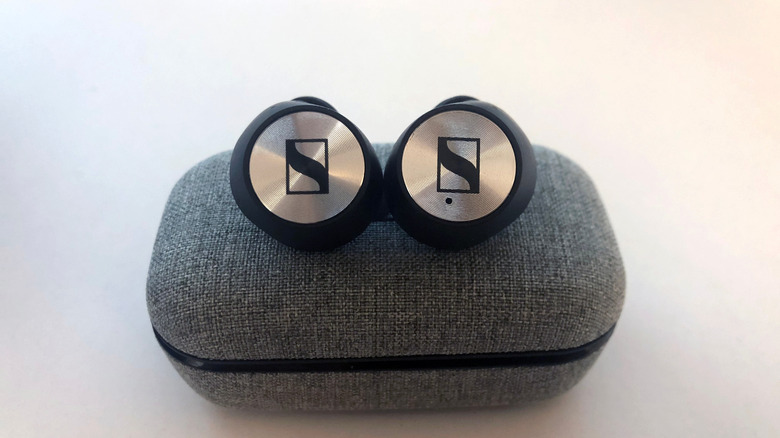
Grinding levels in competitive games or exploring open worlds takes time, and players need a set of comfortable headphones. High clamping force, heavy materials, and dense ear padding all add up to an uncomfortable experience regardless of sound quality. Headphones like the Sennheiser HD 560s open-back hit the sweet spot of comfort and acoustic performance, especially for gamers. This set of headphones has been engineered to sport an ultra-lightweight plastic construction that allows the overall frame to weigh just 237 grams.
This minimal footprint ensures the physical unit rests gently on a user's head, resulting in a lightweight solution where hardware blends into the background and feels natural while gaming. It's a premium structural layout that pairs a nicely cushioned headband with premium velour ear pads that are designed with airflow in mind. This open-back construction actively mitigates physical heat and uncomfortable humidity buildup around a user's ears, keeping skin cool and dry when deathmatches heat up.
Its headband features smooth extension rails alongside a calculated clamping force engineered to remain completely secure without pressing heavily against a gamer's jawline or temple areas. If that wasn't enough features to understand why many gamers choose Sennheiser, the HD 560s also has flexible pivot and swivel link joints, which allow its ear cups to adapt to a user's physical head contours. It's a reliable, uniform seal that prevents hot spots and distributes weight evenly across a gamer's head.
Universal connection ecosystems
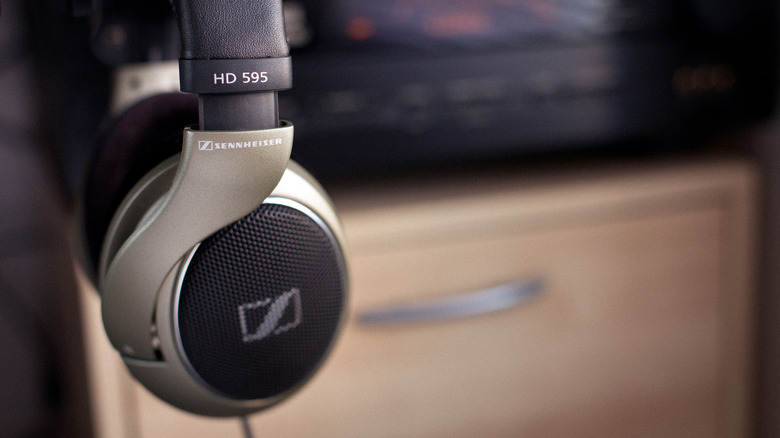
Modern multidevice gaming setups often demand a high tier of physical versatility, and Sennheiser ticks that box with models like the HDB 630 wireless. Headphones like these provide universal platform compatibility without sacrificing audio fidelity. Because the large over-ear chassis accommodates premium internal batteries, they sport a massive 60 hours of continuous wireless playback on a single charge, giving gamers uncompromised battery reliability. The closed-back framework gives players passive isolation, while an advanced Active Noise Cancellation system cleanly eliminates background household distractions so they can stay fully focused on the game.
Some households are rarely quiet, so the closed-back design with solid active noise cancellation is appreciated. For older devices not compatible with HDB 630 wireless functionality, it comes with a proprietary BTD700 USB adapter dongle that bridges the gap for everyone left behind. This specialized adapter allows a gamer's setup to utilize advanced, high-resolution wireless protocols such as aptX Adaptive that completely bypass low bandwidth and compressed wireless codecs that degrade audio detail. Users can also connect the HDB 630 directly to a desktop PC using a latency-free analog mini-jack or standard USB-C interface, allowing gamers to stream lossless digital audio formats while batteries recharge.