

Why Are TVs Sold In The US So Much Cheaper Than Buying Internationally?

If you have ever compared the prices of TVs sold in the United States to those sold in other countries, you must have wondered why they cost significantly less in the U.S. For example, the same 55-inch TV that sells for $540 in the U.S may be priced as high as $950 in Canada. Of course, the exchange rate does play a major role, but even after accounting for that, the price difference between U.S. and global TV prices is hard to ignore.
There are several reasons behind this price gap, but the most important factor is how taxes are applied and displayed. Many countries apply VAT (Value-Added Tax), but in the U.S, customers pay a sales tax instead, which is comparatively lower, bringing down the final cost of the product. In some countries, higher import duties also add to the total price. Another reason why TVs and other electronics seem much cheaper in the U.S. is that the listed price doesn't include taxes, which are applied at the time of checkout. In Europe and other parts of the globe, the displayed price tag already includes VAT, making it seem more costly, even if the final price difference isn't quite so grand.
At the same time, we can't ignore the fact that TV prices have, in general, not increased as much as other electronics in the past few decades. On the contrary, they have declined by as much as 97% since the year 2000, according to the American Enterprise Institute.
It's mostly about taxes
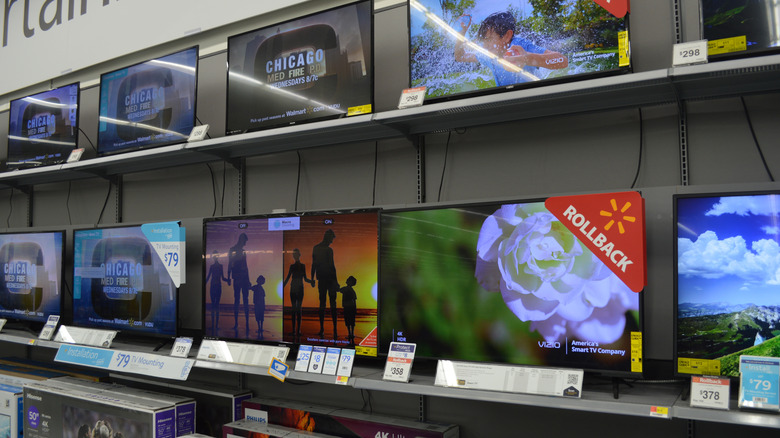
TVs cost less in the U.S. compared to Europe and other parts of the globe because of the difference in tax structure. To better understand this, you will need to learn how the taxes work out. The U.S. applies a sales tax, which typically comes out to be lower than VAT imposed in European countries. The sales tax in the U.S. generally falls in a range of zero to 10%, depending on the state, while VAT in Europe typically ranges between 18 and 27%. That difference is one of the most important reasons consumers pay less for electronics in the U.S. It's for the same reason that iPhones are more expensive in other countries compared to the U.S.
VAT is basically a structure where the government taxes every step of the process. This includes points for production, distribution, and final sale — basically any step that adds value to the product. The U.S., on the other hand, imposes a sales tax, which, as the name suggests, is added at the time of sale and is generally on the lower side compared to VAT. Also, the sales tax in the U.S. varies by state. That's why the same TV could cost you less depending on where you buy it. Apart from that, the U.S. is a larger market with much tighter competition, encouraging manufacturers to adopt aggressive pricing in a bid to attract buyers.
TV prices have dropped globally
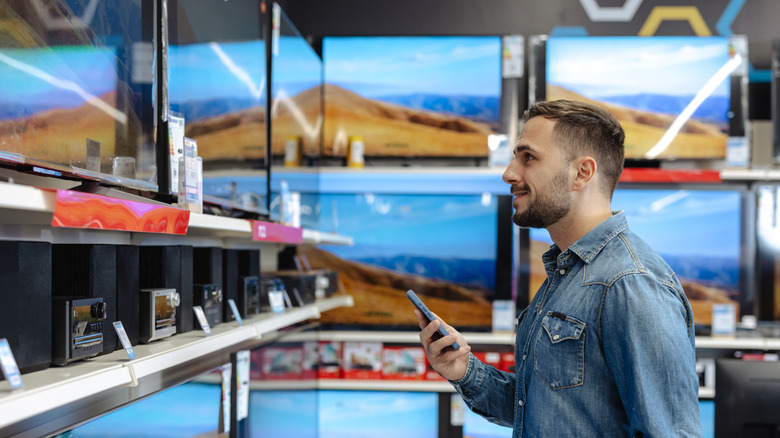
Even though the U.S. sees some of the lowest prices on electronics, TVs have become increasingly affordable worldwide over the past decade. The primary reasons behind this are improvements in manufacturing, simpler designs, increased competition, and the emergence of other revenue streams for manufacturers. As surprising as it may sound, TVs are now easier to manufacture, which cuts both the manufacturing time and cost, resulting in reduced prices. And with more players entering the market, the competition has intensified, which is ultimately working out in favor of the consumers.
Another factor behind lower prices is that manufacturers can now earn revenue even after the sale. Your TVs are no longer just a screen to watch shows and movies on. Most TVs now run on smart TV platforms or operating systems, support a wide array of streaming apps and games, and have services and tasks running in the background, much like a smartphone or PC, and all of those are potential revenue sources for companies. And this has a major downside, at least for the privacy-conscious users. Your smart TV now tracks usage, including the shows you watch, and collects personal data and device identifiers. This information is often sold to third parties. There's no way to completely opt out of it without losing most of the functionality you want from your devices. However, you can minimize data tracking by TVs, which is a critical step to take if you prioritize privacy over convenience.