

5 Disadvantages Of Switching To A Smart Ring
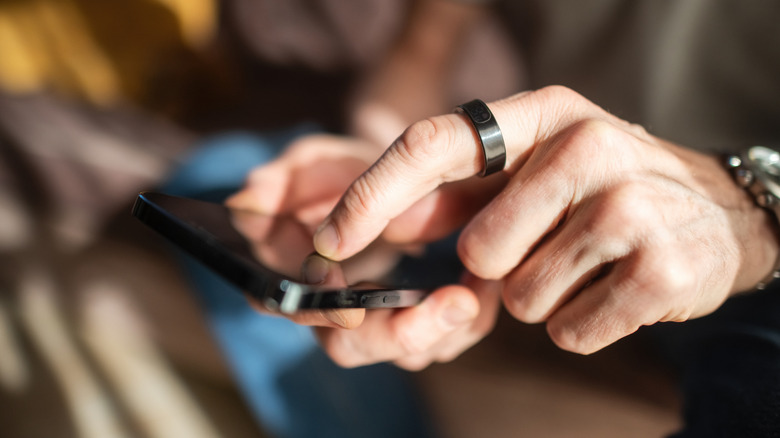
Smart rings are a market that could still grow, as companies consider expanding on their current smartwatch options. While Apple remains the king of smartwatches, other companies have been exploring what Apple isn't. Over the past few years, Oura, Ringconn, and Samsung have released their smart ring options, exploring the things that only smart rings can do that smartwatches can't. They offer unmatched comfort while sleeping, lack a screen so you don't get hooked on glowing notifications and constant buzzes, and yield exceptional battery life.
Still, there are a few disadvantages of completely switching to a smart ring, as they could limit your workout tracking, finding a proper size can be tricky, and you don't have as many customization options as you'd have with a watch. More than that, smart rings still feel more like an additional health tracker than the primary one. As smartwatches are bigger, they can wield more sensors, display more information, and even take advantage of AI, as Apple, Samsung, Google, and others have been pointing out in the past few months.
For the smart ring, on the other hand, it does a good job with basic information, but data-hungry users will starve when comparing both products. As companies are adding health sensors on earbuds, smart glasses, and more, there's a possibility that these other segments could erode the market smart rings currently have, causing some redundancies among each other.
Lack of a display
The main disadvantage of switching to a smart ring is the lack of a display. While one could say that it's one less screen to pay attention to, the smartwatch's screen can be used as an interactive dashboard, so not only can you tell the time, but you can see the effort of your workout, control media, and even play a game on it. A smartwatch with an LTE connection gives you a lot more freedom, as you can leave your phone behind while running errands and you can still answer messages, make and receive calls, stream your favorite songs, and more.
With a smart ring, you're trapped with more basic, health-monitoring functions, which, if you don't have your phone around, doesn't mean much. So if you want to verify a notification or track how long you've been resting between gym sets, you lose the convenience of a closer display, requiring you to have t your smartphone on hand all the time.
Still, you could mitigate this drawback by relying on digital minimalism, in case you're not reaching for your phone all the time. As an Apple Watch user, I know how frustrating it can be to get dozens of notifications every other minute, which ends up interrupting my thoughts while I'm working, distracting me from activities I'm doing in the present, and, most times, just makes me take it off, which then leaves me without a proper health tracker.
Limited workout and fitness tracking
If you're someone who likes to work out, then you know that smartwatches are the gold standard for active exercise tracking, as they are made for high-motion environments. A high-end smartwatch usually features dual-frequency GPS, robust accelerometers, and optical sensors optimized for rapid heart rate spikes during intense intervals. Still, even with all the technology, it's common to see momentary loss of heart rate data. Smart rings, for example, rely on tethered phone GPS and struggle to capture accurate readings during these high-intensity workouts, making the experience even worse.
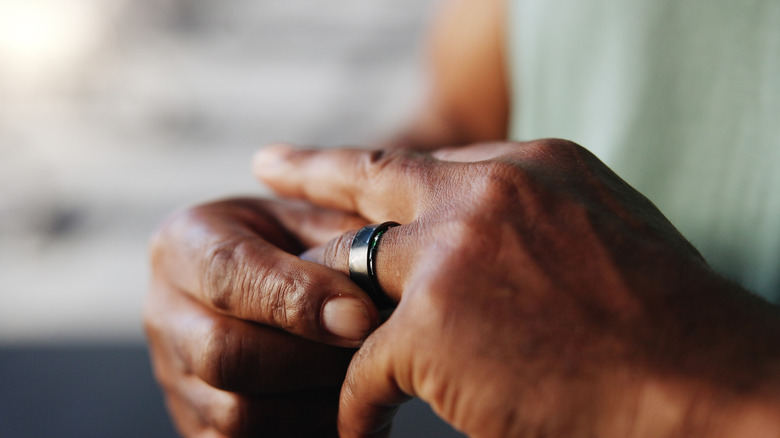
Besides that, if you love going to the gym, then heavy weightlifting, cross-training, or rowing can be an issue, because the pressure of gripping metal bars can press the ring uncomfortably against your skin, which not only can misalign the internal sensors and scratch the ring casing, but also hurt you. Still, smart rings can be a great tool post-workout, offering continuous tracking, which in more controlled environments can truly shine.
They're more comfortable to wear to bed, which is great for gathering precise heart rate, skin temperature, and Heart Rate Variability data throughout the night, which will be important information when you wake up and need to assess how you feel before going on a long run or participate in intense strength training.
Sizing and fit precision
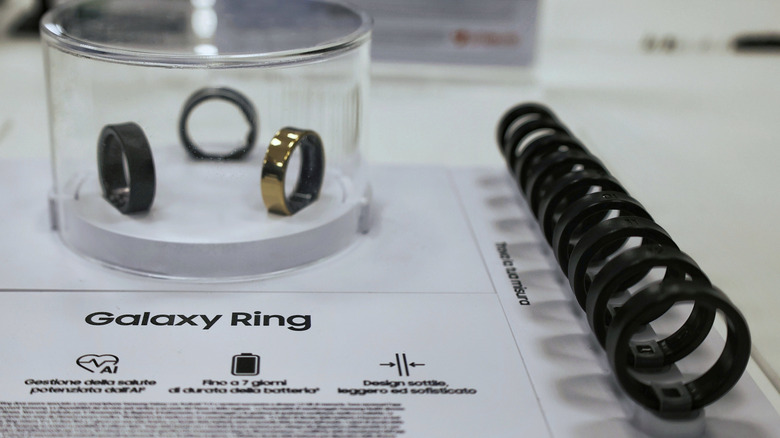
Unlike smartwatches, which usually have a smaller size for smaller wrists and a bigger size for bigger wrists, smart rings need to offer numerous options, because the size of people's fingers can greatly vary. While you also have more options because you could put the ring on your index finger, middle finger, or ring finger, you still need to know your exact size. With these rings featuring several sensors, it's likely that you need to try them yourself — as they might not be true to size or give you discomfort because they might be bigger than regular rings — before making the purchase.
While companies usually offer a few tips and tricks to smooth the process, such as letting you print the sizes or supplying a finger measurement accessory, it's an overwhelming experience that changes from company to company. In the case of an Apple Watch, for example, you only need to try the models once to understand if you're someone who gets more comfortable with a smaller case or a bigger one.
If you bought an Apple Watch Series 3 in 2017, and you decide to upgrade to a new Watch now, you still know which one properly fits your wrist. That said, once you've been through the hustle of finding the proper size, smart rings are usually more comfortable to wear for longer periods of time, especially if you're used to wearing accessories in general. Besides that, they're usually more discreet than a very bright Apple Watch Ultra.
Less versatility style options
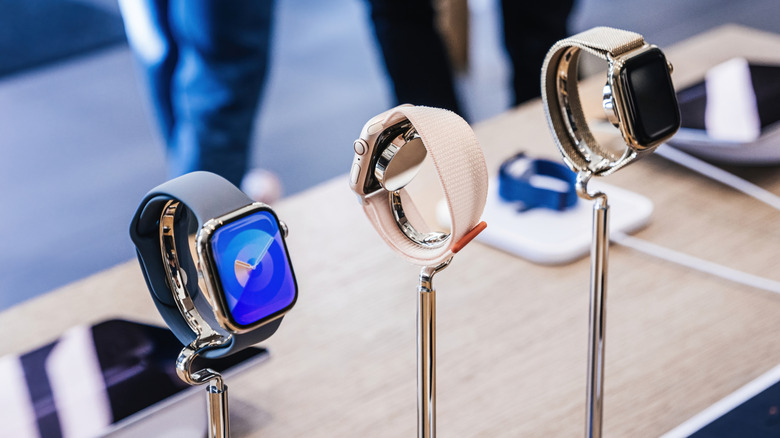
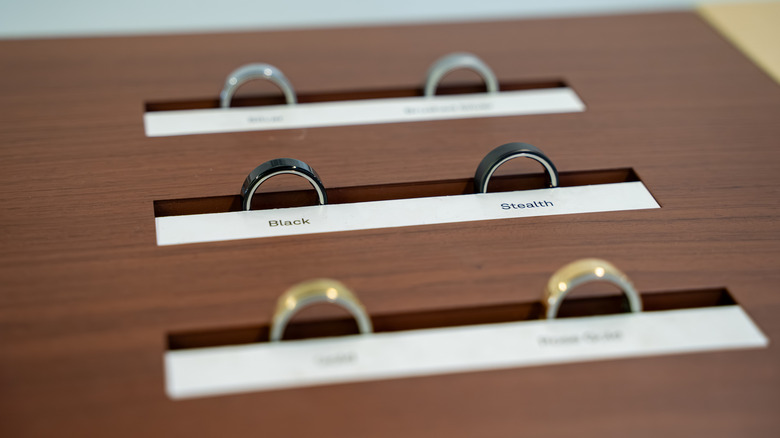
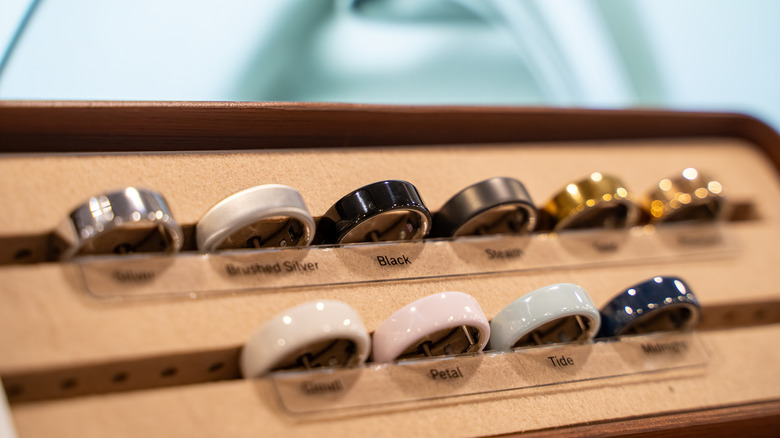
Over the years, smart ring companies have been offering special editions of their rings. For example, Oura Ring debuted in late 2025 a ceramic edition of its Ring 4 product. According to the company, this material gives users a more lightweight, durable, and polished smart ring, which is available in several colors. Though once you buy a smart ring, you'll likely not buy another one in a different color just for the sake of having options.
For smartwatches, on the other hand, there's a huge accessory market for the owners, but also third-party makers as well. Every season, Apple updates the bands it offers for the Apple Watch, and the company offers several different materials, color options, and even luxurious partnerships with brands like Hèrmes. You can make a watch look more sporty when you go for a workout, or a bit more chic if you're going to a special dinner, business meeting, or just out with your friends. With a smart ring, though, you're stuck with what you paid for.
Monthly subscriptions
Last but not least, one of the biggest disadvantages of smart rings is that you usually need to pay a subscription to actually use them or get long-term health trends. Oura, for example, locks deep sleep analytics, daily readiness scores, and health trends behind a paywall, which costs around $6/month or $70/year. Over three years, users are adding an extra $200 to a product they already put money into.
For a smartwatch, even though they can be pricier than a smart ring, they won't add extra costs for software usage or lock sensors behind a paywall. As a matter of fact, smartwatch developers are enticed to create apps to make the information the watch gets even more understandable. For example, I take advantage of Gentler Streak and The Outsiders to analyze and explain what my Apple Watch data gets after a workout or night of sleep, so I can get ready for my next workout — or rest day.
Still, it's important to note that not all smart ring makers bet on a subscription model. While these companies say that they rely on a subscription so they can continue to improve the algorithm, release software updates, and get predictive AI coaching without selling user data, users can take advantage of other alternatives like the Samsung Galaxy Ring, Ultrahuman Ring AIr, and RingConn, which offer comprehensive sleep, activity, and recovery metrics out of the box without subscription fees.