

Skip The Smart Ring Hype And Try One Of These Affordable Fitness Trackers Instead
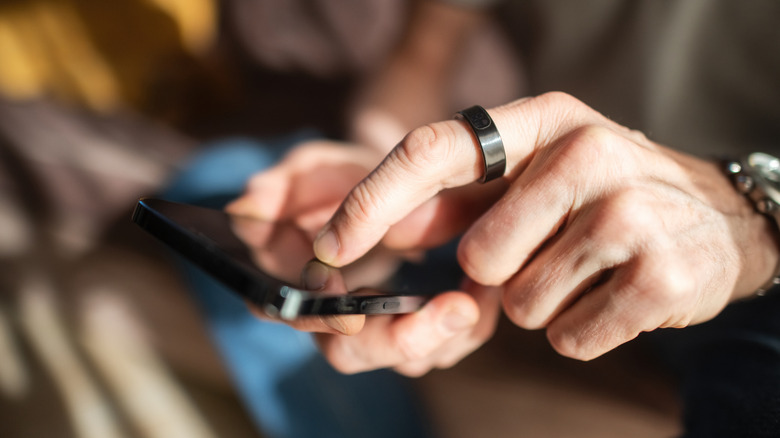
Smart rings are all the rage right now, offering passive tracking from your finger. There are no distractions from a screen or audio alerts — everything happens in the app. Virtually every smart ring allows you to initiate a workout from the companion app, and many also have activity detection to sense when you're doing a certain type of exercise and automatically track it. There are a lot of benefits to a smart ring, but you can get a similar experience with affordable fitness trackers, too. I have tested tons of fitness trackers, smartwatches, and smart rings. If an affordable fitness tracker is the device you have in mind, the world is your oyster when it comes to options.
Those who prefer wearing something on their wrist versus their finger can still get a screen-free experience with new trackers like the Google Fitbit Air or Garmin CIRQA. Meanwhile, simple and affordable fitness trackers with small screens, such as the Xiaomi Smart Band 10, provide access to pertinent details on your wrist, but aren't as in-your-face as smartwatches with larger screens and app connectivity. We've narrowed our favorite affordable fitness trackers down to five choices, and each one offers a set of features that eclipses what a hyped-up smart ring can do.
Fitbit Air

The screen-free Google Fitbit Air looks like a bracelet on your wrist but tracks the same metrics as a smart ring, including steps, workouts, sleep, vitals, and more. It even tracks data like stress, temperature, and blood oxygen, which not all smart rings capture. While you'll get the most out of the Fitbit Air with a Google Health subscription, for a base price of $99.99, you can still use it without one to monitor basic activity tracking, sleep data, and vitals.
When paired with a Google Health subscription, the Fitbit Air unlocks a lot more. Google Health Coach uses AI to analyze data and provide useful advice and details about your daily stats. You can log your food, or even snap a photo of a meal to instantly have the details logged, including a breakdown of carbs and protein intake. If you have questions, leveraging the "Ask Coach" function may provide answers.
I have reviewed the Fitbit Air, and find it to be one of the most comprehensive, AI-driven app experiences. Some smart rings like the Luna Ring Gen 2 offer similar AI platforms, but the Fitbit Air has the power of Google behind it, along with Fitbit's long-time reputation for accuracy and health tracking. As with most smart rings, it works equally well with both Android and iPhone.
Garmin CIRQA

The Garmin CIRQA is the brand's first screenless fitness tracker, and like most smart rings (the Samsung Galaxy Ring excepted), you can pair it with an iPhone or any Android device with a 9.0 operating system or higher. It's larger and thicker than the Fitbit Air but boasts all of the same core tracking metrics, and what you get with most smart rings, too. Its battery is rated to last longer than most smart rings at up to 10 days, whereas many smart rings run for up to a week per charge. Features unique to this Garmin fitness tracker include Body Battery, the equivalent of a readiness score, along with personalized sleep coaching. Unlike smart rings, you can set a smart wake alarm that wakes you up with gentle vibrations.
While CIRQA does not require a subscription, you can sign up for a Garmin Connect+ plan to unlock Garmin Coach, a wheelchair mode for wheelchair workouts, and meditation and mindful breathing exercises. I have just started my review of the Garmin CIRQA, but I can already see that automatic activity tracking works extremely well, picking up my strength training workouts with ease. While some smart rings like Oura Ring do this just as well, many smart rings with this feature can only pick up exercises with distinct movements, like walking, running, and rowing.
Xiaomi Smart Band 10
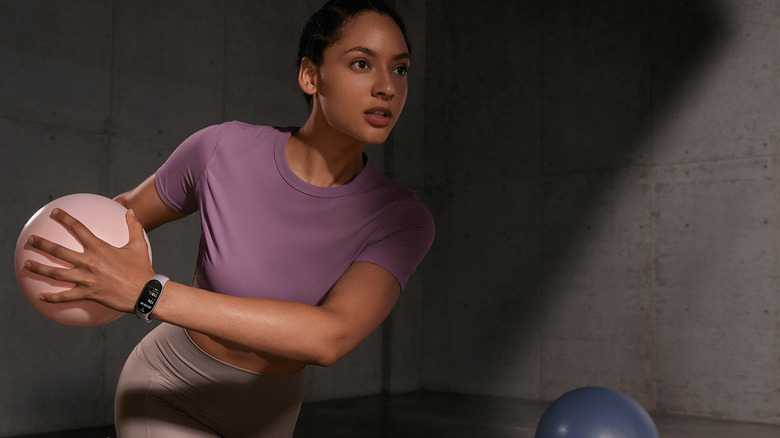
Often ranked among the best affordable fitness trackers, the Xiaomi Smart Band 10 has a pill-shaped 1.72-inch screen and offers the basics, plus additional features like advanced swimming mode. Unlike a smart ring, you can leverage the touchscreen to see your stats and quickly access the limited features. Most impressively, the Xiaomi Smart Band 10 can last up to 21 days per charge, running circles around even the best smart rings in terms of battery life. On Amazon, prices start at $49.
The band is compatible with Android and iOS devices and can track more than 150 workout types, which is more than most smart rings. Plus, as with any smartwatch or fitness tracker, you can swap out the band to change the look. With a smart ring, once you choose the color, not to mention size, you're stuck with it. In fact, Xiaomi even sells a pearl-chain pendant that allows you to wear the tracker around your neck. Once in necklace mode, you can only track basics like steps, but it's a nice way to keep tracking going when you want to wear a bracelet or fancier watch on your wrist. Wearing a fitness tracker in different ways is not an option you have with smart rings.
Fitbit Charge 6
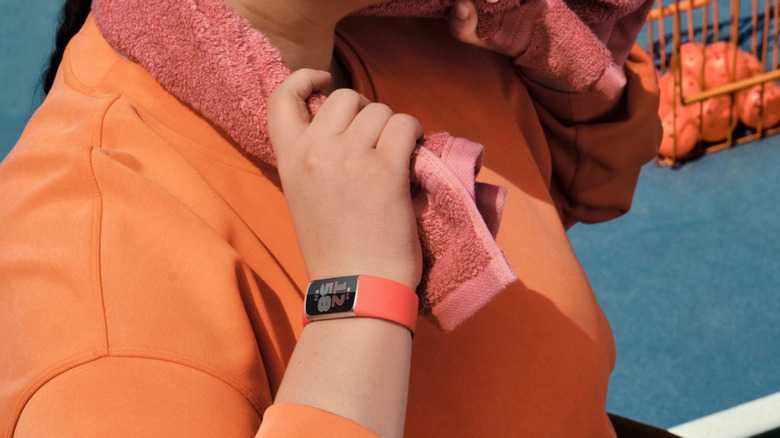
An oldie but a goodie, the Fitbit Charge 6 remains the brand's newest fitness tracker with a screen. The tiny screen provides more data than you may realize, including the option to zoom into text if necessary. You can access a selection of apps and other features through this device and have the option to see notifications from your phone, something you can't do from any smart ring. Another interesting feature is its ability to connect to compatible exercise equipment from brands like NordicTrack and Peloton to see your heart rate. The Fitbit Charge 6 retails for $159.95.
Like the Fitbit Air, it works with the new Google Health app so you can make the most of AI coaching and other advanced features. When I reviewed this affordable fitness tracker years ago, I loved the ability to control YouTube and Google Maps from it and connect to Wallet to pay for items on the go. With a small screen, access to useful apps, and reliable tracking, the Fitbit Charge 6 is a Goldilocks option that checks every box.
Amazfit Bip 6
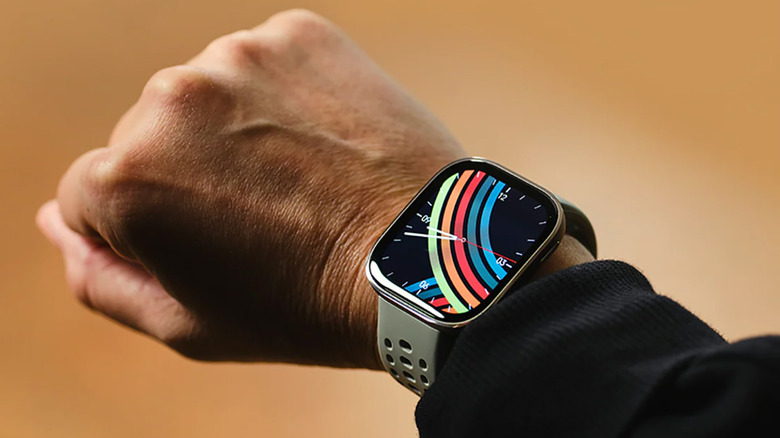
It's clear that the Amazfit Bip 6 employs more of a smartwatch design, but it's so affordable that it competes directly with slimmer fitness trackers. The previous generation Amazfit Bip 3 was the cheap Android smartwatch Consumer Reports recommended buying, and this newer model is just as budget-friendly and reliable. It usually sells for about $80, which is unheard of for a smartwatch (or even a fitness tracker), and far cheaper than any smart ring. It runs for an impressive up to 14 days per charge, outperforming virtually any smart ring. And of course, one benefit over a smart ring is that you get a screen, so it functions as a watch, too.
Since the screen doesn't do much but show your health and workout data and the time, you still get the distraction-free experience like you do with a smart ring. Although it is compatible with iPhone, there are no fancy apps to divert your focus — it's more like a digital wristwatch with health tracking built in. Most importantly, the Amazfit Bip 6 reliably does what it's supposed to do. So, you get the best of both worlds with almost entirely passive tracking and a screen when you want it.
Methodology

These fitness trackers were largely chosen based on my personal experience with them. With the specific models I have not tested, I coupled my knowledge of the brands and their reputations with product research. Many of these trackers also appear as being among the top fitness trackers cited by other trusted reviewers. This selection represents a mix of affordable options to suit varying needs, including traditional fitness trackers with small screens, smartwatch designs with simplified functionality, and completely screen-free designs. So, these were chosen to offer a good cross-section of smart ring alternatives. Every fitness tracker on this list captures everything a smart ring can, but they also each add unique advantages over and above them.