

Your EV's Battery Might Have A Far Longer Lifespan Than You Thought
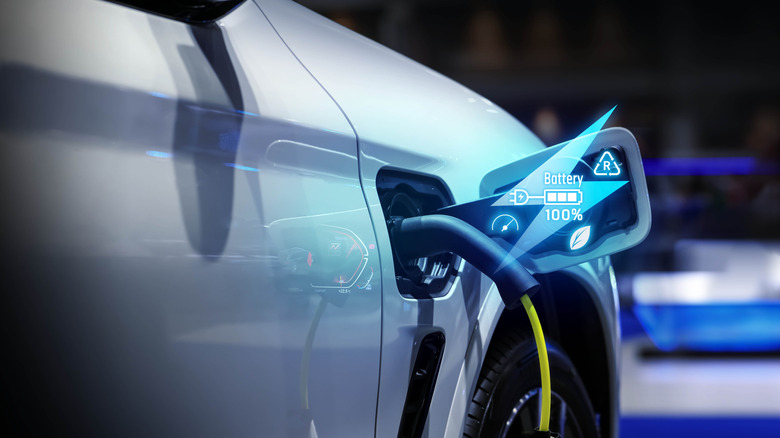
If the battery's lifespan has been one of your biggest reasons for not getting an EV, then data about the longevity of this crucial component might just change your mind. According to a recent report by The Wall Street Journal, modern EV batteries surprisingly last longer than many in the auto industry expected. The main differentiator between electric vehicles (EVs) and regular internal combustion engine (ICE) cars is the use of a battery to power the vehicle. And for many holdouts, that battery has been the main cause for concern about making the switch, despite EVs being known to be cheaper to maintain than gas cars.
The Journal gives one real-life example of Richard Symons, a U.K.-based owner of an EV-focused used-car sales company, who can still travel 260 miles without stopping in his 5-year-old Tesla Model 3, which has clocked over 247,000 miles on the odometer. That's an impressive feat for a car with that many miles. Of course, you might think Symons is among an exclusive club of the few lucky EV owners. But as it turns out, he isn't the only one surprised by the battery life on modern electric cars.
Data from Recurrent, an EV battery analysis firm, shows that an average battery-powered car can travel up to 97 percent of the original range after three years and up to 95 percent after five. That should help many holdouts change their minds about the longevity of EV batteries, especially how costly they are to replace.
Why modern EV batteries have a longer lifespan
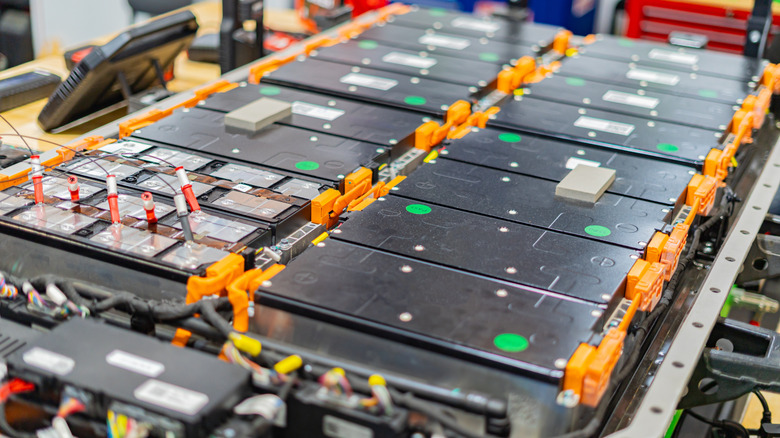
Since the early models of EVs hit the market, much has changed about the batteries. We now have electric SUVs with exceptional 400+ miles EPA-estimated range, and while manufacturers have been working to improve the travel distance on a single charge, they've also made some changes to extend the lifespan of these batteries. For instance, newer EVs have battery-cooling technology that reduces wear, which helps cells last much longer without needing replacement.
Viet Nguyen-Tien, an EV-focused researcher at the London School of Economics, attributes the longer lifespan of modern EV batteries to the early versions to improvements in three main areas: battery chemistry, thermal regulation, and battery management. As a result of these improvements, Viet Nguyen-Tien told the Journal that modern electric cars have a similar lifespan to their ICE alternatives. A study done by researchers from the University of Birmingham and the London School of Economics found that modern EVs can last for 18.4 years on average, slightly more than the 16.8 years of diesel-powered cars and less than the 18.7 years of petrol-powered ones.
Speaking of battery chemistry, the industry has been busy researching beyond the horizons of the now-ubiquitous lithium-ion in the last few years, and right now, there are many exciting emerging battery-related innovations. Early this year, a Chinese EV manufacturer unveiled the first mass-produced EV powered by a sodium-ion battery, a major step in the industry's search for alternative chemistries to address the weakness of lithium-ion-based cells.
What longer battery lifespans mean for the EV market
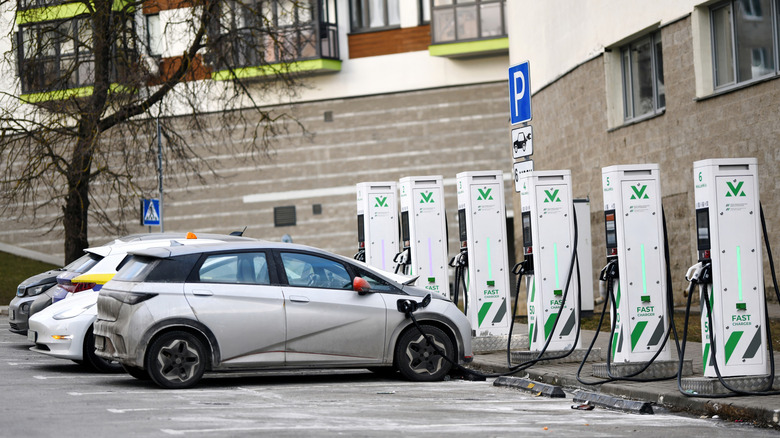
Improvements in battery lifespans are a key factor that could help convince more people to consider electric models when they're in the market for a new car. That's because, as it stands, many consumers simply don't trust EV batteries, according to Edmunds' head of insights, Jessica Caldwell, speaking to The Wall Street Journal. She says, "there still is a lot of trepidation amongst buyers." According to the Journal, battery replacement is the main reason some potential buyers steer clear of EVs, citing a 2025 survey by AutoPacific, an automotive industry research firm.
It's a valid concern, especially considering how costly replacing the battery is once you're out of warranty. Recurrent says replacing an EV battery out of pocket can range from $5,000 to $16,000, depending on the model, which isn't cheap. But with lifespan improvement in modern EV batteries, you won't need to replace your EV's battery anytime soon. Recurrent's 2025 study shows that just a paltry 0.3 percent of EVs built from 2022 have had their batteries replaced, and 2 percent of 2017 to 2021 models.
On the other hand, only 8.5 percent of first-generation models from 2011 to 2016 have had their batteries replaced. So while people might be sceptical about the lifespan of EV batteries, the data is showing they last longer than expected. That should help change people's perception about EV batteries and perhaps help convert some ICE die-hards whose only concern is battery longevity.