

Who Owns Light Phone?
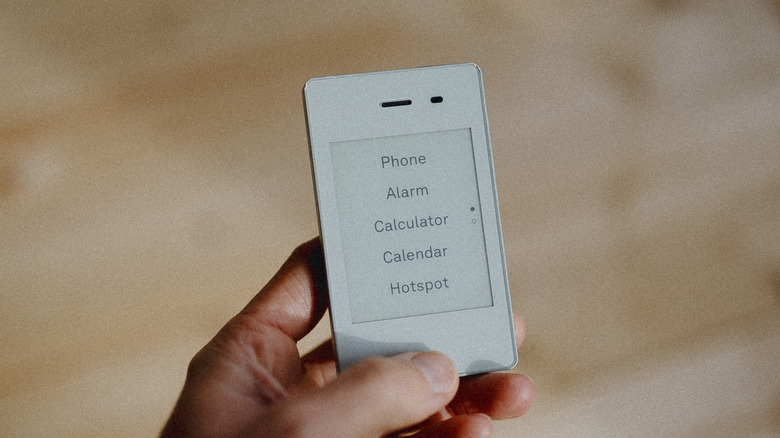
There's a recent push toward minimalist tech gadgets, surprisingly driven by younger Gen Zs. There are a few reasons for this, including the desire to disconnect, to be more budget conscious with affordable tech, and a fascination with "retro" tech, like wired earbuds and vinyl. One of the growing categories in this space is called a dumb phone.
These intentionally simplified devices harken back to days without apps, social media, and a constant desire to have your mobile device at the center of your daily experience. Dumb phones like Light Phone — owned by Joe Hollier and Kaiwei Tang, who met while working as part of an experimental incubator for designers hosted by Google more than a decade ago — focus instead on simple communications. After all, wasn't that the purpose of the cellphone in the first place?
Light Phone is one of many devices in this space, gaining more widespread attention thanks to rap star Kendrick Lamar's collaboration with the brand. While Lamar doesn't own Light Phone, pgLang — a visual media and music company the rapper and songwriter co-owns — partnered with Light in 2023 for a limited edition version of the Light Phone II. Only 250 of these phones were released, and they had unique features like the ability to ask a question, shake the phone, and receive a text-based response on the screen. So, while Lamar once partnered with the company, Light Phone is owned by Hollier and Tang.
Light Phone ownership and devices explained
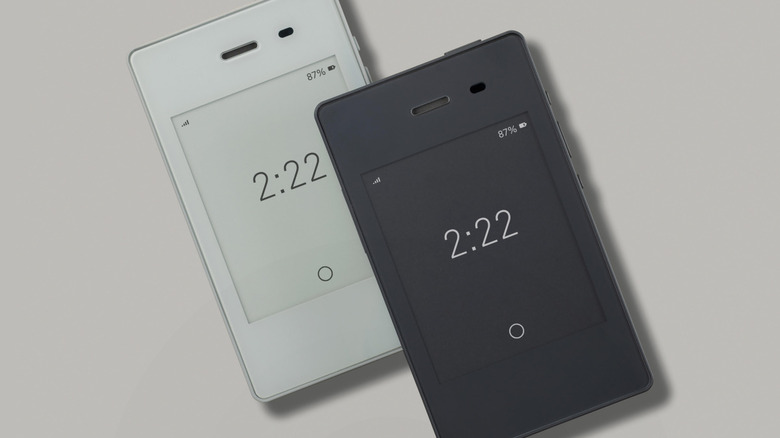
Both Hollier and Tang have backgrounds in design. A year after they met at Google's 30 Weeks entrepreneurship program, they joined forces and launched the original Light Phone through Kickstarter. The idea was to retain the core purpose of a phone but eliminate the distractions that exist with modern-day smartphones, and the excess screen time they encourage. The e-ink screen of the original (as well as the paper-like matte OLED screen of newer models) makes them easy on the eyes, too.
The first Light Phone began shipping in 2017 and the Light Phone II followed in 2019, adding a few useful apps to the experience, like calculator and clock as well as music and podcast access. The Light Phone III was announced in 2024 and began shipping in March 2025. With a metal frame and matte OLED display, it has additional antennas for better network connectivity, adds a camera for casual snapshots, and throws in a few more features, like a built-in flashlight.
The Light Flip is the next iteration that boasts many of the same features with a flip-style design. The phones are designed in Brooklyn and Taiwan in partnership with Foxconn, which also handles assembly in China. They start at $299 for the Light Flip up to $899 for the Light Phone III, making them more expensive than some other dumbphones. But they offer a nice balance of essential convenience apps and retaining the core purpose of reducing distractions.
What you can (and can't) do with Light Phones
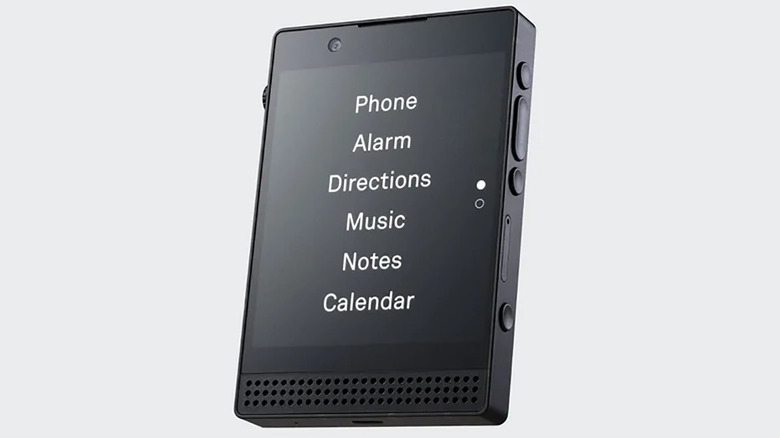
All three Light Phones offer 4G LTE (5G with the Light Phone III and Light Flip) and work with a SIM card and compatible carrier plan. The Light Phone II is the simplest of the lot, running on Light OS and including basics like GPS, Bluetooth, and Wi-Fi, along with 1 gigabyte of RAM. It's IPX3 rated for resistance against light splashes of water and has a headphone jack, a rarity in phones nowadays. It can run for up to two days per charge.
Meanwhile, the Light Phone III, the next batch of which is coming in November 2026, and the Light Flip, scheduled to ship in April 2027, both add useful, task-based apps like calculator and podcasts, as well as cameras. In the future, Light Phone III may support digital wallets via NFC chip and video calls using the front-facing camera.
Most important, however, is what the phones can't do. Light Phones don't have web browsers, e-mail, news, or social media, making minimalist phones like these phones right for those who want to reduce screen time. The idea is to use these devices for communication, light entertainment and productivity, and nothing else. The fact that the men who own the company met at a Google-hosted event and recognized the need for such a device speaks volumes to our deep desire to disconnect.