

5 Laptops More Powerful Than The Xbox Series X
We may receive a commission on purchases made from links.
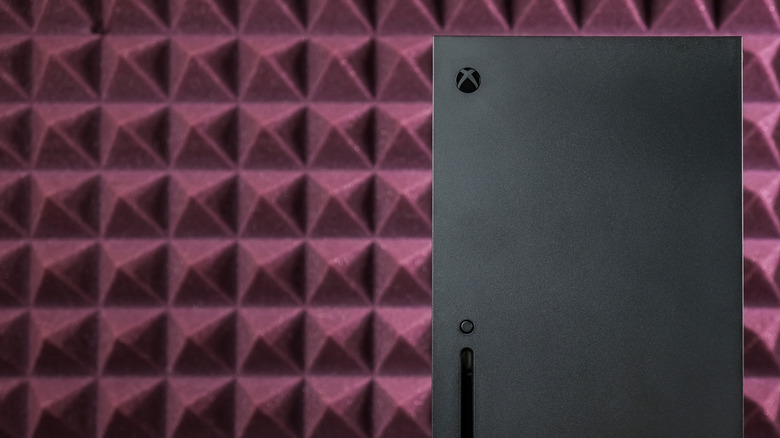
The Xbox Series X is an impressive gaming console, but its custom chip is no longer the high-end offering it once was. The console features a custom RDNA 2 GPU with 52 compute units running at a locked 1.825GHz, producing 12.155 teraflops of GPU compute power, paired with eight Zen 2 CPU cores at up to 3.8GHz. When thinking about an Xbox Series X GPU equivalent, the graphical performance lands somewhere between an Nvidia RTX 2070 Super and an RTX 3060 Ti, or an AMD RX 6700 XT for real-world gaming.
The original marketing leaned on first-party titles like "Gears 5," which benchmarked at very similar performance to an RTX 2080, but that was a showcase that squeezed every drop of power out of the hardware and wasn't a representation of the average gamer's back catalog. In practice, the Series X sits firmly in the mid-range of the PC graphics stack, matching its closest equivalents within five to 10% at 1440p.
This matters because it also means plenty of gaming laptops now outpace the console, though it is hard to find many within $100 of the Series X's price tag with the cost of electronics skyrocketing. The console is still a great gaming option, and there are ways to get more out of an Xbox Series X, but for buyers wanting to get into PC gaming, the case for a laptop now holds water, especially if you look at the MSI Thin 15, Acer Nitro V 16, or even the Lenovo LOQ 15.
MSI Thin 15
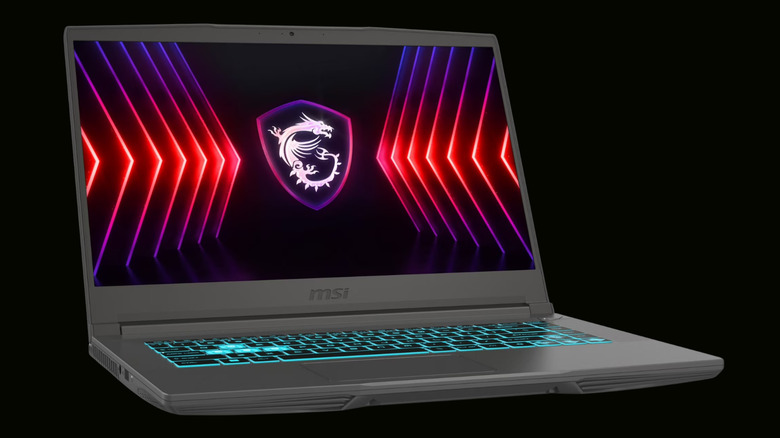
The MSI Thin 15 is the most affordable way to beat the Xbox Series X without stretching budgets. It pairs an Intel Core i5-13420H processor with an Nvidia GeForce RTX 4060 laptop GPU, 16GB of DDR4 memory, and a 512GB SSD, all packed into a slim chassis with a 15.6-inch 144Hz display. At $1,074, it sits comfortably below most desktop builds. The RTX 4060 laptop chip is key to the whole value argument here.
It's built on Nvidia's Ada Lovelace architecture and, like the rest of the 40 series, supports DLSS 3 and DLSS 4 features like Super Resolution, Ray Reconstruction, and Frame Generation. That means a game running at high settings with DLSS enabled can hit higher, smoother frame rates than the silicon ray tracing performance well beyond what the Series X manages, outperforming the Xbox Series X.
But laptop GPUs aren't as powerful as desktop GPUs, with mobile chips running on less wattage than the same-name desktop card, delivering around 40 to 50% less real-world performance. This 4060 runs at a modest power target, has a plastic build, and the 512 GB SSD will fill up fast, but it still outperforms the Series X. Not to mention this laptop doesn't have the same restrictions, as there are a few things owners should never do with an Xbox.
Acer Nitro V 16
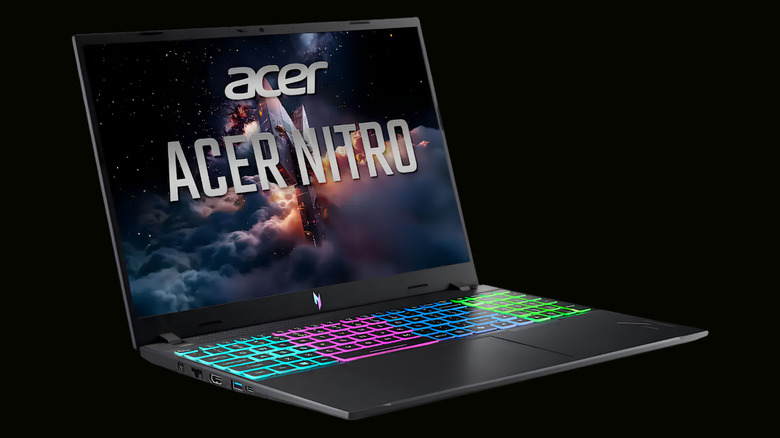
The Acer Nitro V 16 steps up the game with an Nvidia GeForce RTX 5060 laptop GPU, a current generation chip that comfortably outperforms Series X graphics core. It's driven by an Intel Core 7 240H processor, backed by 16GB of DDR5 RAM, and a 512GB SSD, featuring a 16-inch WUXGA display with a 165Hz refresh rate and 400 nits of brightness for $1,629.99.
The RTX 5060 serves as a great starting point, matching and exceeding the Series X silicon for "better than console" performance, according to SlashGear. Nvidia's RTX 50 series uses full DLSS 4.5 with multi-frame generation to multiply performance by generating additional frames, a feature the Series X doesn't have. In practice, a GPU at this level outperforms the Series X in titles like "Black Myth: Wukong" and "Cyberpunk 2077," hitting 80 to 90 frames per second at 1440p with upscaling where the console targets 60 FPS.
Where Series X is locked to its fixed hardware profile, the Nitro V 16 can push higher refresh rates at 1440p and lean on upscaling to keep demanding games running smoothly. The trade-off when buying a console like Xbox Series X is that it comes with a few genuine disadvantages, including locked hardware, a single storefront, and no path to upgrade certain components. Granted, a laptop is restricted too, but gamers can still usually upgrade their RAM and storage from multiple brands.
Lenovo LOQ 15
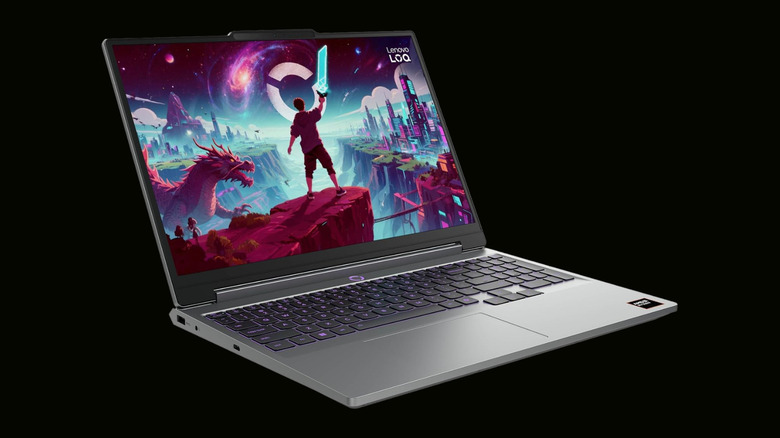
The Lenovo LOQ 15 takes the same RTX 5060 laptop GPU and pairs it with more storage and a fast 165Hz panel, making it a strong value-focused alternative to Acer with a lower $1,529.99 price point. This laptop runs an AMD Ryzen 7 250 processor with 16GB of memory and a 1TB NVMe SSD, removing the storage anxiety that plagues cheaper and higher-priced gaming laptops. The 15.3-inch WUXGA IPS display at 165Hz keeps motion smooth, and the Ryzen 7 CPU gives the machine solid all-around performance beyond gaming.
Like the Acer Nitro V, the Lenovo LOQ 15 delivers the same comfortable margin over the Series X in games. The GPU outperforms the console's equivalent by a healthy amount, and DLSS 4.5 multi-frame generation means supported titles run at far higher frame rates than the raw specifications would suggest. The bigger SSD is the standout practical advantage here, since it holds several modern games without forcing gamers to juggle their back catalog.
The combination of the RTX 5060 GPU, generous storage, and a high-refresh display makes it one of the more balanced picks on the list. When it comes to the cost of some higher-end laptops, LOQ 15 is a reminder that matching and beating current generation console performance doesn't need a massive price tag. Gamers just need a mid-range laptop that happens to sit above the Series X's dated GPU equivalent.
Maingear Super 16
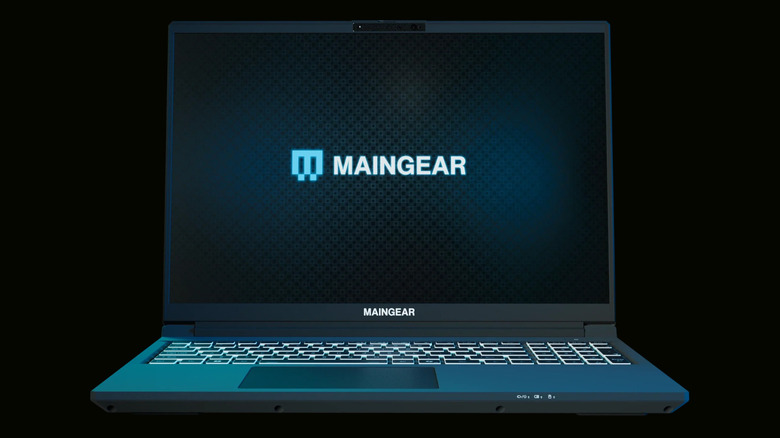
The Maingear Super 16 jumps into a different class of gaming laptop, rocking an Nvidia RTX 5070 Ti laptop GPU that leaves Series X in the dust. It's powered by an Intel Core Ultra 9 275HX processor with 24 cores, 32GB of DDR5 memory, and a 2TB NVMe SSD, all housed in a metal chassis with a 16-inch 2560x1600 300Hz display. At $2,649, this is an investment for a massive jump in performance over Series X.
The RTX 5070 Ti is several tiers above the Series X's graphics core, and it belongs to Nvidia's RTX 50 series lineup, meaning once again this GPU can be pushed beyond its static limits with DLSS 4.5. The 300Hz panel and G-Sync support mean even fast-paced competitive titles run buttery smooth, and the 12GB of GDDR7 VRAM handles high-resolution 4K textures at far higher frame rates than Xbox Series X. Not to mention this laptop will have some nice ray tracing performance well beyond what the Series X manages.
The Core Ultra 9 processor adds another layer of headroom for streaming, rendering, and multitasking, making this a machine that outperforms the Series X in every measurable way. The Maingear Super 16 is a laptop for buyers who want to blow open the performance ceiling of an Xbox Series X while not being locked down to just one storefront. Let's not forget that it comes with Maingear's lifetime support and one-year warranty; just give them a call if there are any problems.
Maingear Ultima 18
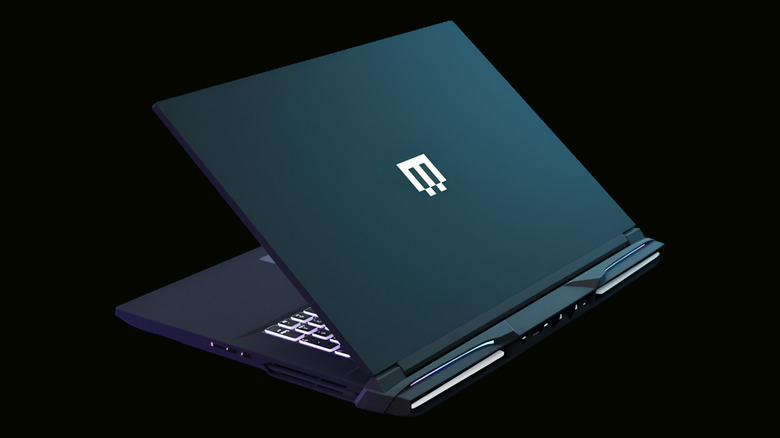
At the top of performance is the Maingear Ultima 18, a flagship laptop built around an Nvidia RTX 5080 laptop GPU and an Intel Core Ultra 9 290HX Plus processor. It comes with 32GB of DDR5 memory, a 2TB NVMe SSD, and an 18-inch 4K 240Hz G-Sync display, making it one of the most powerful gaming laptops money can buy without exceeding $5,000. At $3,699, it's the most expensive pick, but it's my daily driver and represents the sweet spot of high-end laptop gaming.
The RTX 5080 with 16GB GDDR7 VRAM is in a different league from the Series X's GPU. It averages more than 60 FPS with maxed-out settings at 4K resolution on "Halo: Campaign Evolved" without any frame generation, and the same goes for "Oblivion Remastered," but I prefer putting on Frame Generation to get a near 100 FPS at 4K consistently. This level of quality and performance at 4K just isn't possible on Xbox Series X without settling for a 30 FPS "quality mode".
The 4K 240Hz 16:10 panel is a showcase for that power, a 175W GPU power target that allows the 5080 to stretch its legs rather than being throttled to fit into a slim chassis. For a lot of gamers, the cheaper options here will make sense, but for those who can stretch their budget, the Maingear Ultima 18 is a prime example of why PC gaming wins out against console gaming.
Methodology

We started by pinning down the console's hardware, then comparing it to the real-world GPU equivalent at 1440p resolution, which is the most-used resolution in PC gaming. Any laptop graphics chip at or above that performance level counts as more powerful, which is why the RTX 4060 to RTX 5080 gaming laptops qualify, with the RTX 5060 being a solid equal to Xbox Series X performance.
Each laptop was selected for being both accessible and genuinely faster than a Series X, with specifications pulled directly from manufacturers and retailers. On the CPU side, the matching parts list notes that a modern six- to eight-core processor is plenty to keep up with the console, which is why we picked capable current-generation chips rather than top-end ones.
The five laptops were listed from the most affordable to the most powerful to give readers a clear sense of the price-to-performance trade-off. However, Laptop GPUs are power-limited compared to their desktop counterparts, as a mobile chip runs at around half the wattage of the same-named desktop card but still delivers fantastic performance. This means that the laptops listed reflect the performance of laptop-level GPUs, not the desktop version with the same name.