

5 Disadvantages Of Buying An Xbox In 2026
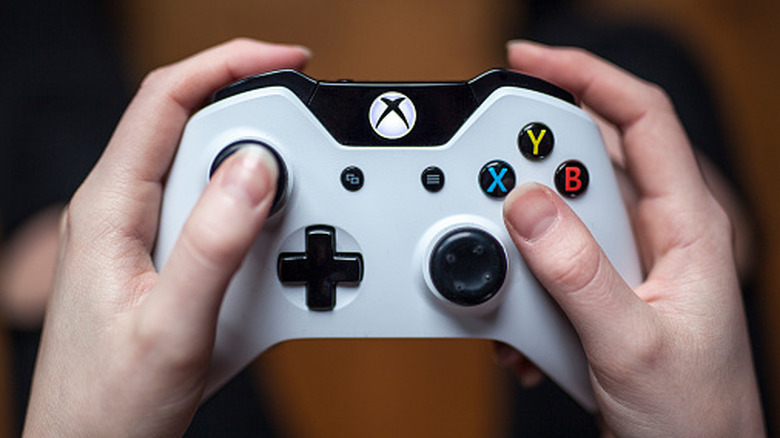
Playing video games is one of the most popular forms of entertainment. There's a video game genre for everyone (even for people who don't really like video games). However, what console should you buy to play the games? Once upon a time, that question carried a lot of weight, but today, not so much. Unless you buy an Xbox.
Before we continue, we should clarify the above statement. When the Xbox Series X released, it was an excellent, powerful gaming platform that paved the way for the next generation of games. The Series S, while not as powerful, was a more budget-friendly alternative because it used cheaper hardware. While these consoles lagged behind the Nintendo Switch and PlayStation 5 in sales and popularity, they still held their own and carved out a dedicated niche and market.
However, as time went on, the returns owners got out of these consoles steadily decreased. Rival consoles passed by the Xbox, and upper management made some questionable decisions that left the brand in a dubious position. While the Xbox is by no means a bad console, you simply aren't getting the best bang for your buck if you buy one in 2026.
Exclusives no longer exist
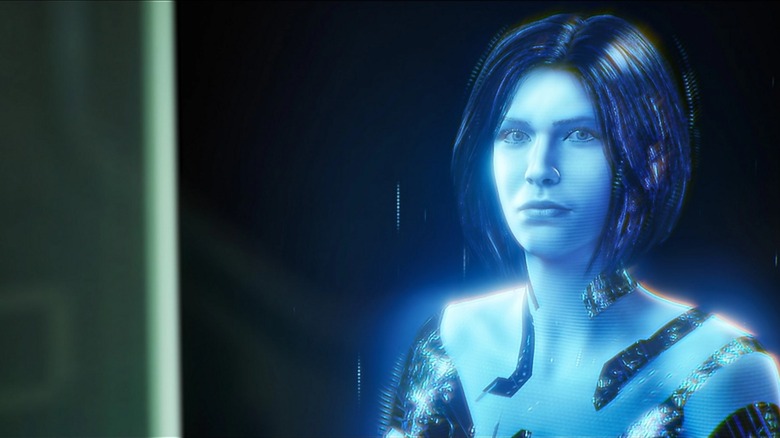
During the heyday of the console wars, manufacturers realized they could attract audiences by making certain titles exclusive to their platforms. You wanted to play "Halo: Combat Evolved?" Buy an Xbox. Want "Sonic the Hedgehog?" Sega does what Nintendon't. Unfortunately, Sega stopped making consoles after the Dreamcast, and now Sonic graces the consoles of his erstwhile competition. Xbox properties are undergoing a seemingly similar transition.
When Microsoft decided to share its key Xbox properties with Sony's PlayStation 5 in 2024, it resulted in ports of titles such as "Forza Horizon 5" and "Sea of Thieves," as well as flagship remakes like "Halo" and "Gears of War." Microsoft also snapped up ZeniMax and Activision Blizzard, so you might not realize they're a part of the Microsoft ecosystem. And who could blame you, because instead of making "Call of Duty" exclusive to Xbox, Microsoft struck a deal with Sony to publish it on PlayStation, as well. Not exactly the best way to convince gamers to buy an Xbox Series X.
While Microsoft might be reconsidering its strategy with exclusive titles, fans won't likely see an Xbox exclusive again simply because gaming PCs exist. Most, if not all, modern Xbox games are available on Steam, the Windows Microsoft Store, or the PC Game Pass. These and other outlets provide gamers a way to save money. Simply put, Microsoft is its own obstacle in the game console industry.
The controller still lags behind rivals
The Xbox 360 undoubtedly had one of the most influential controllers in video game history. Not only did Microsoft copy the basic layout for subsequent controllers, but Nintendo did as well, only swapping the positions of the right face buttons. If you look for the best gaming controllers on the market, third-party or otherwise, odds are it will ape this classic Xbox controller design. But this success has seemingly convinced Microsoft to rest on its laurels.
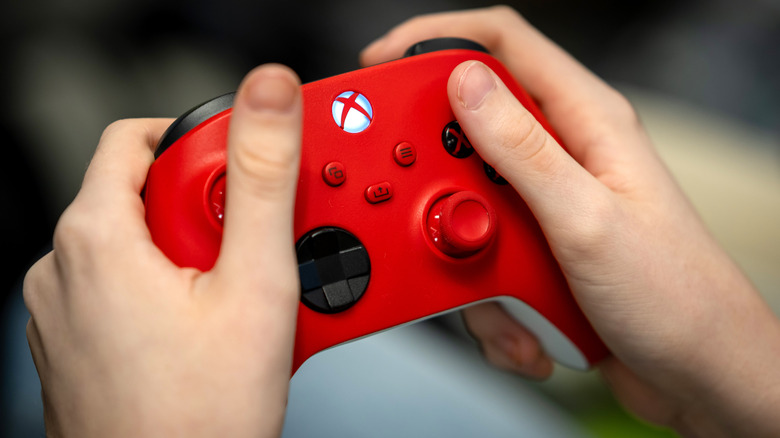
On the surface, you won't find anything objectively wrong with the current line of Xbox controllers, but rivals do so much more. Sure, the Xbox controller includes all the buttons, rumble motors, and triggers you need, but they don't have gyro controls for added immersion (games such as "The Legend of Zelda: Breath of the Wild" and "Infamous Second Son" put them to great use). Even third-party peripherals outperform Xbox's because they cram Hall Effect and TMR technology under the shell for smoother controls.
Arguably the biggest argument against the Xbox controller is its power source. Unlike virtually every other peripheral available, Xbox controllers still need batteries. Instead of plugging the device into an outlet when the charge gets low, you have to swap out AAs. Sure, you can buy rechargeable batteries (or a dedicated Xbox rechargeable battery pack), but either way you will end up spending more money on an Xbox controller than any other, even though devices such as the DualSense cost more up front.
Xbox is no longer the most powerful console out there
As the graphical fidelity of games increases, so do their hardware requirements. A game engine can't exactly render scenery that realistically simulates how light works in the real world without an Nvidia RTX graphics card or equivalent. As time goes on, console publishers generally upgrade their products with stronger GPUs, but Xbox didn't for this console generation.
When Microsoft announced the Xbox Series X, part of its advertisement revolved around the GPU. With 12 teraflops (the calculation of one trillion floating-point operations per second), the console was allegedly more powerful than the PS5 and its 10.28 teraflops – the Series S lags behind both with only 4 teraflops. Granted, the true deciding factor of a game's graphics and performance is the developer's optimization skills, but at release the Xbox Series X had more graphical potential to work with, making it the most powerful console on the market. That is no longer the case.
While the Xbox Series and PlayStation consoles have received refreshed models that improved cooling and added extra storage space, neither updated the GPU. But then Sony released the PlayStation 5 Pro. On paper, the console is straight up better than the PS5 with a GPU that provides 16.7 teraflops. Again, a game's optimization has the final say in graphics and performance, but now Sony's flagship console has the theoretical upper hand. Anyone who wants to squeeze the most out of their games (and has the money to do so) is more likely to gravitate to the PS5 Pro instead of the Xbox Series X, especially since PS5s support VR games and Xboxes don't.
Owning an Xbox is more expensive than ever

The AI bubble made 2026 the most expensive year for tech. As companies snapped up RAM, chips, and all manner of computing components to fuel data centers, other industries suffered. Chip scarcities drove up prices for computers and consoles. When the Xbox Series X and S released, their initial prices were set at $499 and $299, respectively.
However, both consoles have experienced a series of price increases, almost all of which Microsoft justified by blaming the ongoing component crisis and the inflating prices of storage and memory. As of this writing, the discless Xbox Series X with 1TB of storage sits at $599.99 — this model was initially priced at $449.99. If you want a Series X with a disc drive, you will need to spend either $649.99 for 1TB of storage or $799.99 for 2TB. $500 for the console was expensive, but it was reasonable for what it provided. $650 is significantly less so.
The Xbox console isn't the only part of the Microsoft gaming environment to feel the sting of inflating prices, and few have felt it worse than Xbox Game Pass. Back when Game Pass released, this Netflix of gaming only cost $9.99 a month, but by the time the Series X and S launched, the service rose to $14.99 a month. Right now, you need to spend $29.99 per month to access Xbox Game Pass' top tier. Granted, the number of games available has more than octupled, but that is still a hefty price tag – $10 more than PS Plus.
The Xbox brand is on the ropes

Normally, a company can weather any one of the above issues if it maintains its customers' support. Unfortunately, Microsoft isn't one of these companies. The biggest disadvantage to buying an Xbox in 2026 is that there's no telling how much longer Microsoft will support the brand, because it has been on a bad decision streak. The video game industry has been hit with countless layoffs and closures, and Microsoft is one of the largest contributors.
The company decided to lay off 3,200 employees. In some cases, this amounted to studios losing half of their staff. Microsoft explained this decision away as a means to "reset Xbox," but some don't see it that way. And while some of the companies that were previously part of the Xbox family were "allowed" to spin off and go independent, others have been shut down, taking their projects with them. Given this predilection, why would anyone get excited about any games Microsoft announces? Finally, every modern game console purchase is meant to be an investment thanks to the power of backwards compatibility.
However, if you buy an Xbox now, your library might live on borrowed time. Many rumors about the next Xbox, codenamed Project Helix, swirl and bring the future of the Xbox brand into question. Will the console support physical discs (and can you digitize physical games so you can still play them on it)? Will Project Helix even be a console and not just a gaming PC you can plug into your TV like a Steam Machine? Nobody knows, but these rumors make audiences fear for Xbox's future.