

The Hardness Rating On Your Screen Protector Might Not Mean What You Think
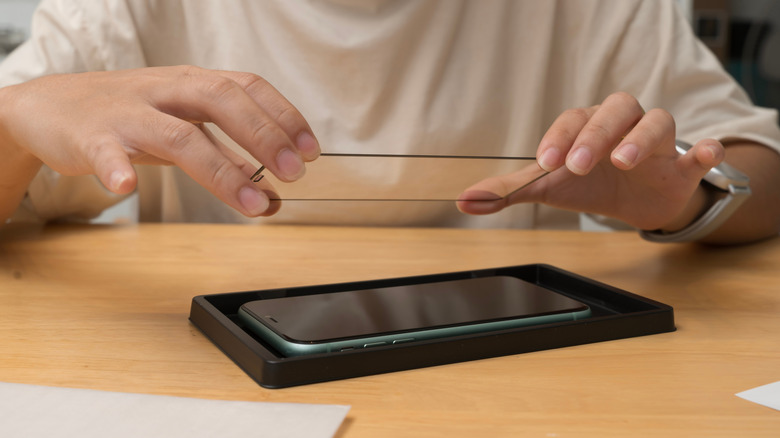
While shopping for a screen protector, there are some specs that can help you determine how reliable the new film or glass will be. Hardness is one of those ratings, primarily used for tempered glass protectors to describe the material's durability. 9H is a common listing, often presented in a way that implies a screen protector is pretty tough, if you take it at face value. If you explore further, you'll realize that rating doesn't mean what you think it does, even on some top-rated screen protectors.
You see, the real toughness scale is called the Mohs mineral scale or Mohs Hardness Scale. The weakest mineral is talc at level 1, with gypsum at level 2, and the toughest material being diamond at level 10. Most people understand diamonds are super tough, though. A knife or glass plate sits somewhere in the middle around 5.5. The Mohs scale is not linear, so an object at level 2 isn't twice as hard as an object at level 1.
Now, you would think the 9H figure puts the tempered glass protectors pretty high on the list, near diamond. But that's false. 9H hardness isn't actually a measurement that belongs on the Mohs scale. Hardness, as it applies to film and thin materials, like tempered glass, goes by a different scale, standardized by the American Society for Testing and Materials (ASTM). More specifically, ASTM D3363 establishes a testing method to find the hardness of a coating — a pencil is dragged across the surface at a 45-degree angle, and based on marks left behind, or not, it's given a score. They use different pencil leads from 9B, the softest, to 10H, the hardest. A 10H hardness is roughly equal to around a 3 on the Mohs scale, though there is no precise conversion between the scales. Though, 9H really isn't particularly tough.
9H film can actually get scratched a lot
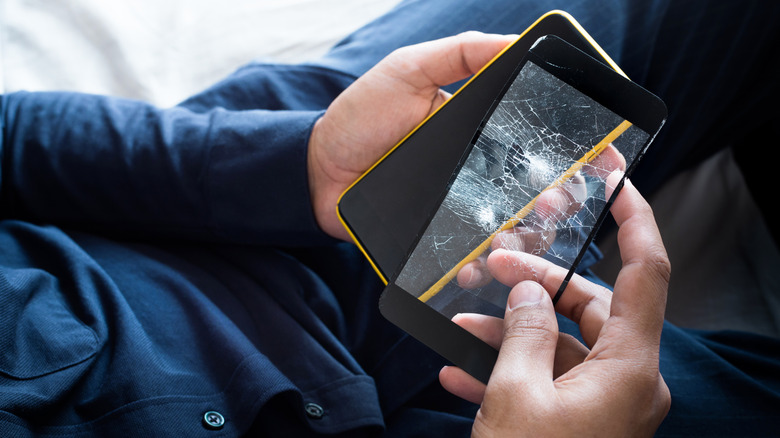
With the hardest pencil has a rating of 10H, so a 9H screen protector sits a little below that. Even the hardest 10H pencil lead sitting relatively low on the Mohs scale, around 1 to 1.5. So a 9H rating clearly isn't comparable to a Mohs rating of 9. The pencil test only tells you that the surface resisted scratching from a 9H pencil under the test conditions. But the approximate Mohs scale level means anything stronger than that type of lead can scratch the surface, including keys, coins, styluses, and possibly even fingernails, which are a 2.5 on the Mohs scale.
This is where things get more confusing. Glass really does have a rating on the Mohs scale, around a level 5.5. Tempered glass is a little higher, around a level 6 or 7. Technically, in terms of mineral hardness, tempered glass is tough. But while higher hardness ratings can mean more resistance to scratches, they also correlate to a higher chance of shattering. That's precisely why 9H screen protectors hold up to certain scuffs and scratches, but often break completely after a sudden drop. That being said, tempered glass screen protectors are always better than plastic ones at protecting modern devices from physical damage.
What we can take away is that the 9H hardness rating, when used to describe a tempered glass screen protector, is not all it's cracked up to be. The film is not totally protected from scratches, especially from harder objects or materials, and for true durability, it lands between a 5 and a 7 on the Mohs scale — it can still be shattered. 9H hardness is not telling you it's a Mohs 9 rating. It's telling you the film passed a 9H pencil hardness test. Manufacturers aren't lying; it did pass. But they're often using language and marketing tricks to make the feat seem better than it really is.
True durability is a combination of protective factors
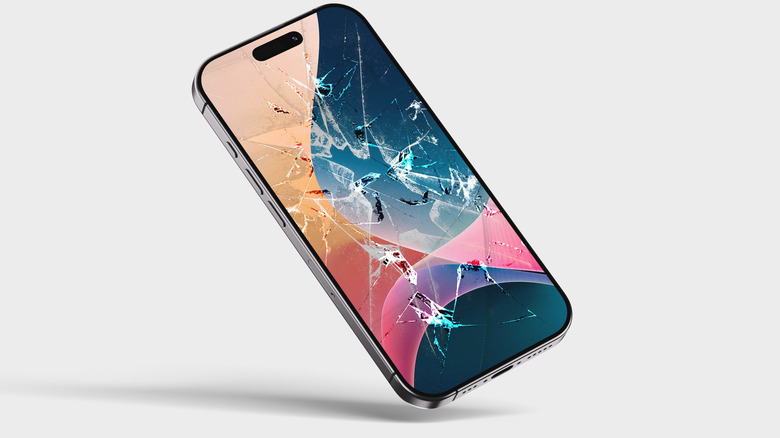
In reality, when you're shopping for screen protectors, rather than looking at a single feature or metric, like 9H hardness, you should consider several factors. The first, and most important to consider, is how you'll be using your device. What kind of protection do you need? 9H hardness might be great if your phone or device will spend a lot of time in your purse around objects that won't harm it. But if you're outdoors, working on a construction site, for example, you'll want a thicker, scratch-proof protector, paired with a rugged case for the phone.
You should also consider which type of material the protector is made from. Tempered glass isn't always the best option, regardless of its hardness levels. Thermoplastic polyurethane (TPU) won't shatter, and although it seems rubbery and softer, it offers a lot of protection from bangs, bumps, drops, and even most objects, though it may show more scratches and abrasions over time; they can sort of heal. Polyethylene terephthalate (PET) protectors or materials are a solid middle ground, between the soft plastic and glass. They offer excellent scratch protection but virtually no impact protection. Then, of course, there's the matter of whether you should choose a matte screen protector for your phone, glossy one, or a reflective one. That has nothing to do with the toughness, however, but everything to do with the outward appearance and experience.
If your phone doesn't already have an oleophobic coating to keep out moisture, it's another feature you should always look for, as well. Don't buy a screen protector for your iPhone without it. Actually, even if your device has one, you should still look for it in a protector anyway.