

Why Are Bose Headphones So Expensive?
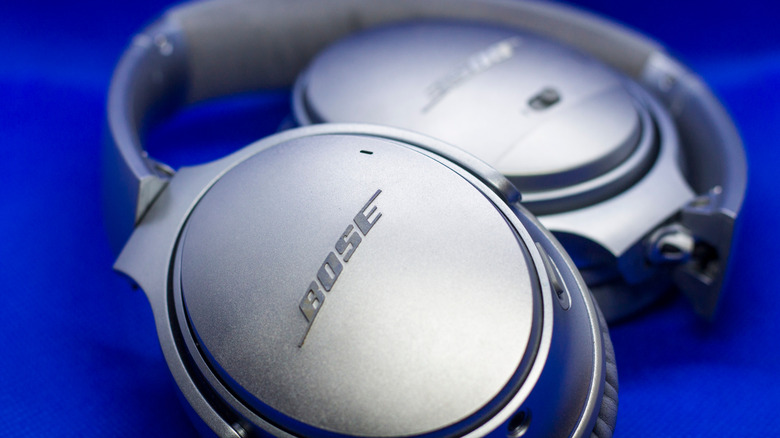
When discussing the best headphones, you'll be hard-pressed to avoid Bose. A staple of the audio world for decades, over-ear products like the Bose QuietComfort Ultra (2nd Gen) are lauded by laymen and professionals alike. But have you ever wondered why Bose cans are so expensive? If so, you wouldn't be the first individual to question the prices. Part of the reason why is that the brand really doesn't prioritize entry-level headphones, at least not anymore.
As of August 2026, the Bose QuietComfort Headphones (1st Gen) are the company's least expensive headphones, and they still cost more than $200. Once you dive into the features and specs, though, it gets a bit easier to see why Bose demands this price. Active noise-cancelation (ANC) is one of the brand's fortes, and even at the bottom of the QuietComfort hierarchy, you'll still be treated to one of the most robust ANC systems on the market.
Bose faces fierce competition in this category, too, as brands like Sony, Apple, and Sonos deliver strong noise attenuation on their premium over-ears. But the former also lets you customize how strong your ANC is via the Bose app, whether you prefer doing so manually or by selecting one of the two listening modes: Quiet or Aware. Noise reduction is also just one reason you'll pay more for Bose headphones; overall comfort is another criterion the brand excels at.
Bose headphones prioritize noise canceling, comfort, and sound quality
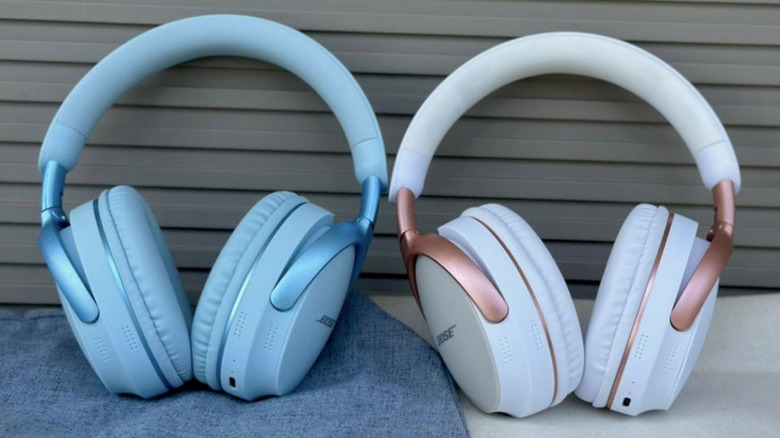
No headphone manufacturer is ever going to admit that bargain cans won't be as cozy as a pair of premium over-ears, because then said manufacturer potentially loses your transaction. Bose headphones are specifically revered for how comfortable they are, especially during longer listening sessions. High-quality padding on the ear cups and headband isn't something you'll find on every pair of headphones, but it's one of Bose's calling cards.
So far, all the Bose features and specs we've discussed can be found across the entire QuietComfort range, but there's some additional specialty tech baked into Bose's flagship over-ears. The QuietComfort Ultra Headphones (2nd Gen) support wired playback via USB-C, and they also support aptX Adaptive for near-lossless Bluetooth playback, although a compatible Snapdragon Sound device is required. Speaking of playback, Bose headphones are typically tuned to offer more balanced listening across multiple genres.
This isn't to say that there isn't a single pair of cheap headphones that deliver great sound quality. It's just that, right out of the box, Bose tends to offer a fuller, more detailed soundstage, which can be further fine-tuned using whatever version of the Bose app your headphones support. Sure, it's only a three-band graphic EQ, but think of it this way: The Apple AirPods Max 2 cost $550 and currently feature zero audio customizations, other than a handful of iOS Accessibility tweaks.
Audiophiles may tell you otherwise, but it's up to you if you'll listen
I used to sell and install A/V tech for a living, and Bose was one of the many audio brands available to customers. That's where I first heard the infamous quote: "No highs, no lows. Must be Bose!" It was dialogue tossed around by a handful of peers who considered themselves to be audiophiles. Fast forward to my research for this piece, and wouldn't you know it, I stumbled on that same negative Bose quote while combing through the r/audiophile subreddit.
At the end of the day, what's more important than how much a product costs (which is definitely important) is how a pair of headphones sounds to you and you only. Maybe you'll love how the Bose QuietComfort Ultra sounds, or maybe you'll hate the company's flagship cans with every fiber of your being. As long as you remain open-minded, there really isn't a wrong choice.
The "no highs, no lows" mantra may very well be true amongst discerning audiophiles, and I don't take that away from the community. But Bose headphones are lauded across the globe, and we'd be more than willing to bet that there are plenty of audiophiles who love the way Bose headphones sound. I also wouldn't put it past Bose that, no matter what, the company can always rely on consumers buying purely for the name.