

5 Budget-Friendly Laptops More Powerful Than The Samsung Galaxy Book4 Edge
We may receive a commission on purchases made from links.
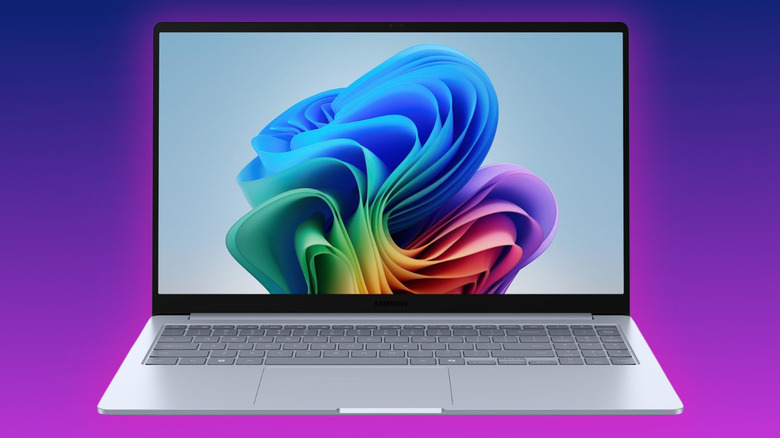
The Samsung Galaxy Book4 Edge is a solid budget laptop, but its processor leaves room for improvement. Replacing the base Book4 model, the Galaxy Book4 Edge is currently $699.99 and is built around a Snapdragon X Plus chip. That processor is efficient and battery-friendly, which is a real strength, but it's not a performance powerhouse. Its ARM architecture can also create compatibility headaches with some Windows software, and its eight CPU cores trail the best x86 rivals on sustained processing power.
For everyday users, that means a machine that's pleasant to use but rarely feels fast, and one that quietly falls behind on demanding workloads. The good news is that several laptops undercut the Edge's price while genuinely outclassing its chip. The market for cheap Windows-based laptops is extremely competitive, and Apple now has its own budget MacBook in the running too, so there are plenty of budget picks that hold up well.
The five laptops below each pack a processor that beats the Snapdragon X Plus on real-world performance, and several add sharper displays or more storage on top. Some cost hundreds less, while others match the Edge's price with far better internals. Whether it's an Intel Core Ultra chip, a high-performance Core i7, or Apple's A18 Pro, every pick answers the title directly: these are budget-friendly laptops that outperform the Galaxy Book4 Edge.
The Acer Aspire 14 AI pairs a newer chip with a $180 price cut
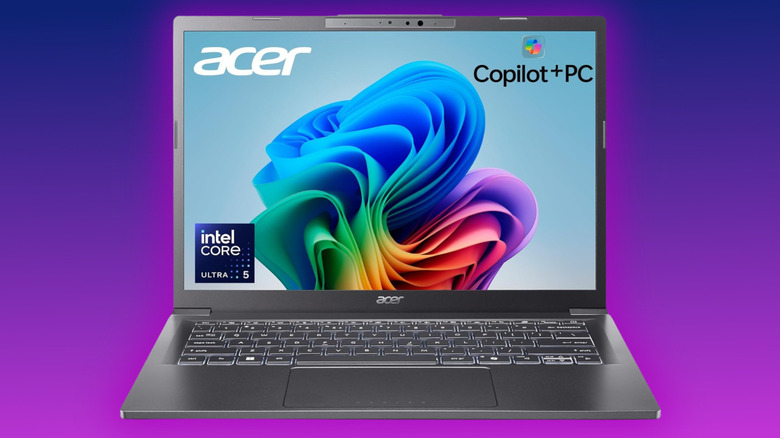
The Acer Aspire 14 AI is the cheapest way to outmuscle the Galaxy Book4 Edge, and it does it with a more recent-generation processor. Inside sits an Intel Core Ultra 5 from Intel's Series 2 lineup, a modern Lunar Lake chip that's a clear step ahead of the Snapdragon X Plus in the Samsung for everyday Windows use.
This newer silicon delivers snappier multitasking, a strong neural processor for AI features, and full x86 compatibility, so it runs the entire range of Windows software *without* the ARM translation hurdles Edge can hit. It's also on sale for $519.99, down from the usual price of $599.99, which is a full $180 below the Edge.
The power upgrades don't stop at the processor. The Acer Aspire 14 AI features a 14-inch WUXGA display at 1920 by 1200, slightly sharper than the Edge's full HD panel. It's backed up by 16 GB of RAM with a 512 GB SSD, matching the Samsung on memory and storage. An advertised battery life of up to 22 hours crushes the Edge on endurance, and as a Copilot+ PC, it unlocks AI features like Recall that the older Samsung can't run. For hundreds less than the Edge, the Aspire 14 AI is quicker, sharper, and longer-lasting, making it the clearest power-for-value pick in this article.
The Acer Swift Go 14 AI adds a 2.8K OLED and dedicated graphics
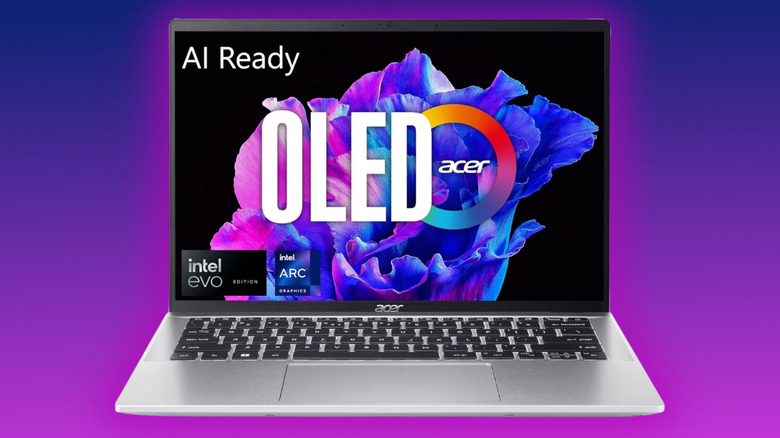
The Acer Swift Go 14 AI is the pick for anyone who wants a serious display upgrade with real power. At $699.99, it matches the Galaxy Book4 Edge's price while beating it on both the processor and screen. It's powered by an Intel Core Ultra 5 125H with 14 cores and 18 threads, a high-performance H-series processor that comfortably outpaces the Snapdragon X Plus on multi-threaded work, and it pairs that with dedicated Intel Arc graphics for smoother visuals and light creative work.
The combination of a strong CPU and its own graphics silicon makes it noticeably more capable than the Edge for anything beyond basic browsing. Its 14-inch 2.8K OLED panel delivers vivid color accuracy and deep blacks on a 16:10 screen, a night-and-day upgrade over the Edge's standard Full HD panel. That combination makes photos, video, and design work look dramatically better with far richer contrast than the Samsung can manage. It's also an Intel Evo Edition laptop, which means it's thin, light, and responsive.
It has 16 GB of LPDDR5X memory and a 512 GB SSD matching the Samsung, plus Wi-Fi 6E and Bluetooth 5.3 for fast wireless. For the same price as the Edge, the Swift Go 14 AI delivers more processing power and a far superior screen, making it the most compelling direct alternative on this list.
The ASUS Vivobook 16 brings a Core i7 and a bigger screen for $671
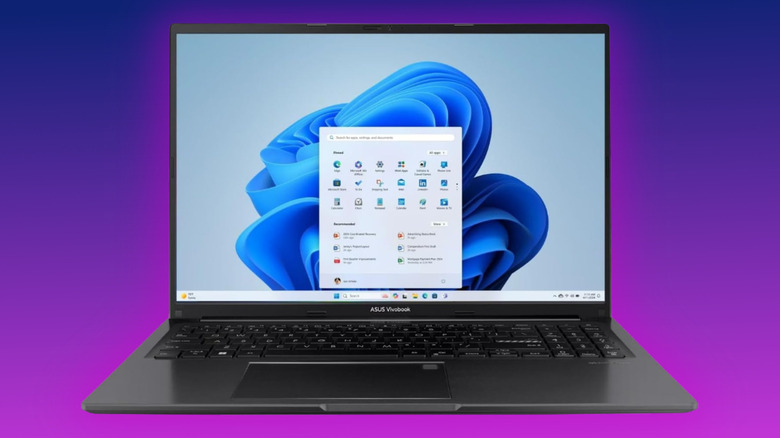
The ASUS Vivobook 16 is a powerful, big-screen alternative that undercuts the Galaxy Book4 Edge by about $29. At $671, it runs on an Intel Core i7-1355U processor, a 10-core chip that outclasses the Snapdragon X Plus in raw CPU performance while keeping full x86 compatibility. That makes it a strong choice for multitasking, office work and streaming.
It's backed by matching 16 GB of RAM and a 512 GB SSD, with specs like the Edge. The Intel Iris Xe integrated graphics handle everyday visuals smoothly, and the 10-core processor gives it real headroom for demanding apps. Where it really differs from the Book4 Edge is the screen size: a 16-inch WUXGA display that offers more workspace than the Edge's 15.6-inch panel. It doesn't sound like a lot, but that extra 4 inches of productivity real estate is a win for anyone juggling documents, spreadsheets, or browser windows.
It also means the Vivobook 16 doubles as a strong media machine, since the larger panel gives movies and shows more presence than the Samsung can offer. Connectivity is generous too, with USB-C, USB-A, HDMI, and a microSD card reader, with Wi-Fi 6 and Bluetooth 5.1 for fast wireless connectivity. For a slightly lower price than the Edge, the Vivobook 16 delivers a more powerful processor, a bigger screen, and the same memory and storage, making it a clear winner.
The Lenovo IdeaPad Slim 3i Gen 10 packs a high-performance Core i7 H-series chip
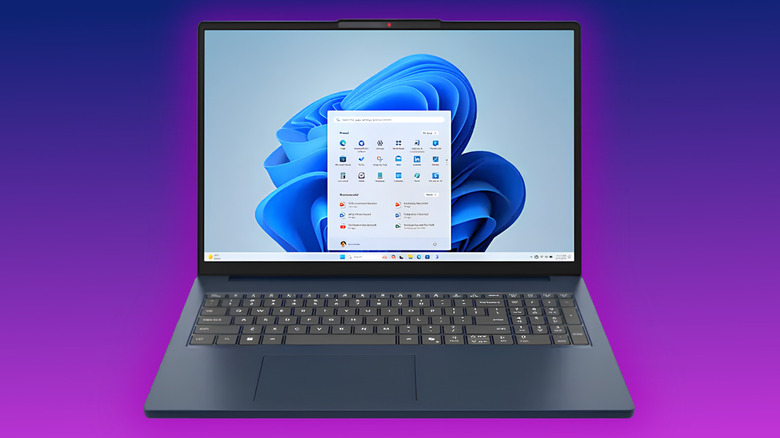
The Lenovo IdeaPad Slim 3i Gen 10 takes the power angle furthest here with a true performance processor. At $699.99, it matches the Galaxy Book4 Edge's price while putting an Intel Core i7-13620H under the hood. That's an H-series chip built for sustained performance, and it outclasses the Snapdragon X Plus on CPU-heavy workloads like heavy multitasking and demanding productivity apps.
The H-series designation matters because it's designed to hold higher clocks under load, so it keeps delivering performance when the work gets tough, something the Edge's efficiency-focused chip can't match. It also runs full x86 software natively, sidestepping the ARM compatibility questions that come with the Samsung.
The rest of the package is solid for everyday use. It pairs 16 GB of DDR5 memory with a 15.3-inch WUXGA IPS display that runs at 1920 by 1200 with a 16:10 aspect ratio, offering a roomier, taller workspace than the Book4 Edge. Wi-Fi 6, USB-C, and an SD card reader round out connectivity, with Dolby Atmos speakers for decent sound on a budget laptop. The only issue is the storage: It ships with 256 GB of SSD space, half of the Edge's 512 GB, so users who need lots of room may want an external drive. But for pure processing power at the same price, the IdeaPad Slim 3i Gen 10 is a genuine upgrade that backs itself up.
The MacBook Neo's A18 Pro chip leaves the Edge behind

Apple's MacBook Neo is the outlier here, and it's also the most powerful laptop on this list by a wide margin. At $689, it's about $11 less than the Galaxy Book4 Edge, yet it runs on the A18 Pro chip, the same processor found in 2024's iPhone 16 Pro models. That silicon is dramatically faster than the Snapdragon X Plus in the Samsung, which makes the Neo feel exceptionally quick for school, browsing, and everyday tasks.
Its 13-inch Liquid Retina display supports 1 billion colors, so photos and video pop and text stays crisp, a clear step up from the Edge's standard panel. It's built for portability and long sessions, with an advertised battery life of up to 16 hours and a durable recycled aluminum design available in four colors, each with a color-coordinated keyboard.
The base model's trade-offs are 8 GB of RAM and a 256 GB SSD, which isn't usually a problem since the MacBook Neo runs macOS, which in some cases is optimized to squeeze solid performance from Apple silicon, but half the RAM will affect heavy multitaskers. The Neo outguns the Edfe where it matters most, and it's easily one of the best budget laptops under $1,000, thanks to the A18 Pro's performance and speed.
Methodology
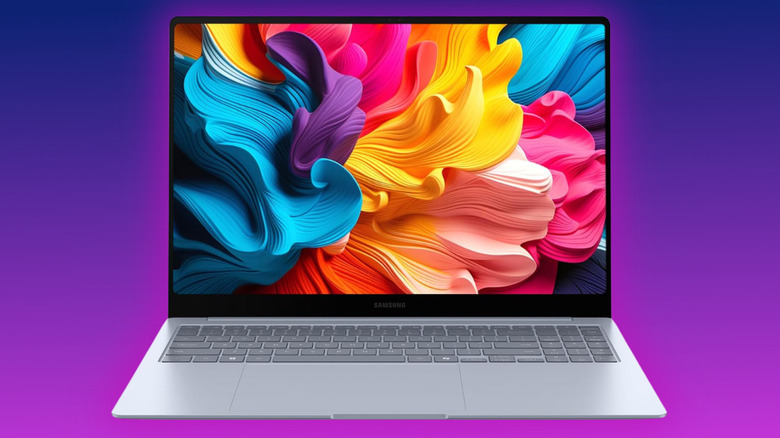
The five laptops above were picked to answer the article title directly: which budget-friendly machines beat the Galaxy Book4 Edge? Each candidate has to beat Samsung's Snapdragon X Plus processor with a genuinely stronger chip, either an Intel Core Ultra, Core i7, or Apple's A18 Pro. Price mattered too, so every pick costs the same as or less than the Edge's $699.99, and several come in well under it. The Acer Aspire 14 AI, Acer Swift GO 14 AI, ASUS Vivobook 16, Lenovo IdeaPad Slim 3i Gen 10, and MacBook Neo were each chosen because they pair equal or lower prices with faster processors and mostly better displays.
Pricing and specs were pulled from each laptop's current Amazon listing, so they're accurate as of mid-2026, though they may shift with sales. The goal wasn't to find the cheapest alternative, but the ones that provide genuine power advantages for the money, which is why some picks match the Edge's price while others undercut it by hundreds.
Storage and memory deserve attention when comparing, since 16 GB is now the sweet spot for comfortable multitasking and a cramped SSD can slow a laptop down. That's why most picks pair strong processors with 16 GB of RAM, even where storage is a tradeoff. From longtime Windows users to those open to trying macOS, these laptop choices show that paying Samsung's asking price isn't always worth the brand tax.