

5 Of The Best QLED TVs You Can Buy In 2026 (So Far)
We may receive a commission on purchases made from links.
TV technology is always evolving, and advancements are happening faster than ever before. It feels like just yesterday the world was losing its mind over LED backlighting, whether edge-lit or full array. It was hard to imagine LED TVs getting any brighter or more colorful, but brands like TCL, Hisense, and Samsung weren't content to rest on their laurels. Thus, we now have Quantum Dot Light Emitting Diode TVs, or QLEDs for short.
Quantum dots are charged nanoparticles that are arranged in a grid. When LEDs shoot light at the particles, a chemical reaction occurs that boosts overall panel brightness. The dots also increase color volume, making many scenes look more vibrant and lifelike. Believe it or not, QLED technology is already a bit of a relic; most LED TV makers are focusing on RGB Mini LEDs, at least for 2026.
You'll still be able to buy QLED TVs; the fanfare around the picture tech has just started to die down. That is, unless you're TCL, a renowned TV maker that bucked tradition in 2026 by doubling down on QLED tech. The first of the five QLED TVs we'll discuss is a TCL model that uses what the manufacturer calls "super quantum dots."
TCL QM7L
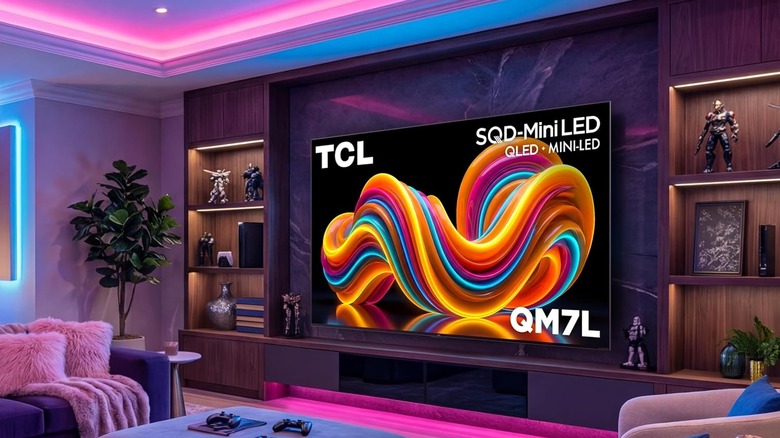
TCL is no stranger to industry-lauded TVs, and upper-tier models like the TCL QM7L are among the best QLEDs on the market. Available in several sizes, the QM7L delivers exceptional picture quality at a reasonable price; the 65-inch has a $1,500 list price, and you'll often find markdowns (at the time of writing, the set was discounted to $1,200 on Amazon). New for 2026 is TCL's Super Quantum Dot (SQD) technology, introduced to improve color brightness.
That's on top of tech like TCL's AIPQ Pro processor, which uses AI to optimize picture quality in real time, and 2,100 local dimming zones. The QM7L uses Mini LED lighting, too, so you can watch in a brightly lit room without much hassle (the VA panel does a decent job of reducing glare, too). The QM7L also supports up to a 144Hz refresh rate and HDMI 2.1 on two inputs, making it a great choice for gaming.
More than 60 Amazon users wrote in about the QM7L, netting the TV a 4.2 out of 5-star rating. The overwhelming majority favor the QLED's breathtaking visuals, but one reviewer's TV began experiencing audio issues after only two years of use. That said, we don't feel that's enough of a reason to start worrying about TCL quality control.
Hisense U8QG
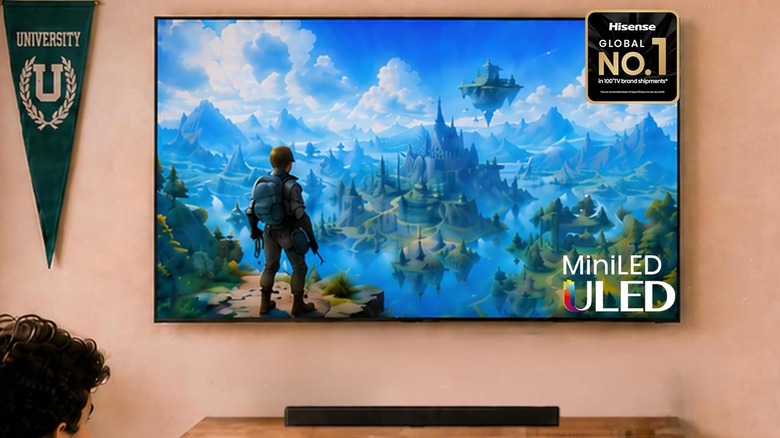
Hisense often comes in as a runner-up to TCL, and vice versa when the former takes home the top prize. The Hisense U8QG is a 2025 release you can still find brand-new. It's also last year's flagship set, and it delivers some truly chart-topping brightness. PCMag measured 3,200 nits for an 18% window in HDR; that's one of the brightest QLED TVs we've ever heard of!
The U8QG ditches traditional LEDs for smaller Mini LEDs, which helps colors pop. The TV also has a native 165Hz refresh rate, full HDMI 2.1 connectivity, and support for all leading HDR formats, including HDR10+. We also appreciate the USB-C port, which can serve as a DisplayPort connection for gaming PCs. You'll notice a bit of light bloom when you view the screen off-center, but it's not as bad as other LED haloing we've seen.
Over 700 Amazon shoppers wrote in about the U8QG, earning the TV a 4.3-out-of-5-star score. Most folks love the bright, arresting picture the TV produces, but one user was let down by the Google TV operating system. Another user mentioned that Dolby Vision content looks dim and washed out; the review was posted in February of this year, though, so Hisense may have released a software update to fix the issue.
Samsung QN80H
Samsung offers a wide array of TVs, from entry-level LED models to award-winning QD-OLED sets like the Samsung S95H. Today, though, we'll be spotlighting one of the brand's midrange QLED TV options: the Samsung QN80H. Why should you love this TV? Out of the box, the QN80H delivers impressive peak brightness and stunning SDR color accuracy.
The TV is no slouch for HDR, either; TechRadar measured over 1,100 nits using the TV's Movie and Filmmaker Mode presets. The QN80H also has a native 144Hz refresh rate, which can be boosted to 240Hz, but at the cost of 4K visuals (the TV will need to downscale to 1080p). Something to keep in mind: the QN80H doesn't have the greatest reflection handling, which may impact your overall HDR experience.
What do folks like you and me have to say about the QN80H? Mostly good stuff. On Amazon, the TV scored 4.3 out of 5 stars, based on 40 reviews. Most of these reviews were 5-star, but one 1-star blurb caught our attention: this individual dealt with dead pixels right out of the box on two 55-inch QN80H TVs, back-to-back. When you buy yours, be sure to check and test its functionality.
Roku Pro Series
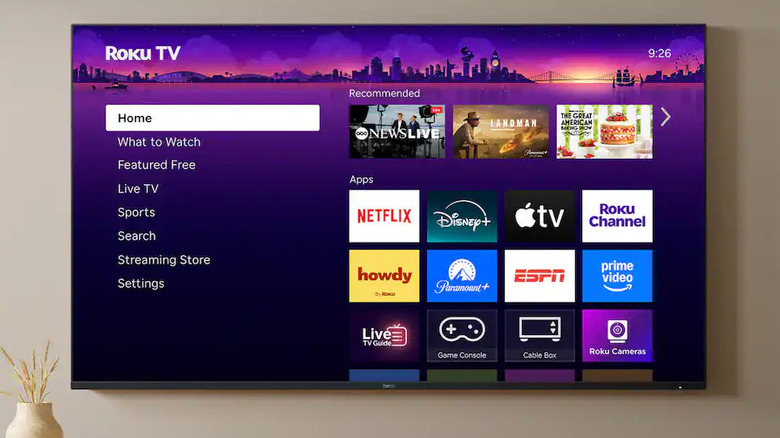
Roku may be best known for its streaming devices, but the company also makes TVs. You can choose from a few models, and the Roku Pro Series is one of the best. Delivering up to 4K/120Hz, the Pro Series comes in three sizes (55, 65, and 75 inches) and features HDMI 2.1 on two of its four inputs. It's also one of the only midrange TVs with a USB-C port on the market, and it can decode all mainstream HDR formats.
One of the Pro Series' strengths is its vibrant picture quality. The TV's quantum dots help to boost HDR highlights, and its wide color gamut delivers rich, lifelike visuals across the board, from older TV shows to brand-new 4K movies. The Pro Series gets bright enough to keep some glare at bay, but the panel struggles with direct reflections; it may be worth investing in blackout curtains for an unruly window.
Best Buy shoppers gave the Pro Series (65-inch) a 4.9-out-of-5-star rating based on over 100 reviews. Our friends at CNET also gave the TV two thumbs up and praised its contrast levels and streaming features.
Vizio VQM55C-10
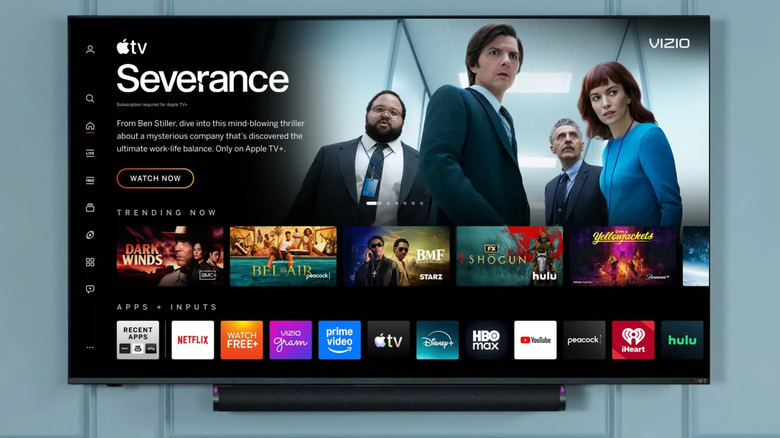
Vizio used to be a brand you could find anywhere TVs were sold, but Hisense and TCL pushed it out of the limelight. Walmart also bought the company outright in 2024, so you'll now only find Vizio TVs at Walmart and Sam's Club. That said, when it comes to budget-friendly QLED sets, we were particularly impressed by the Vizio VQM55C-10. This model features a layer of quantum dots and uses Mini LED lighting. Expect a bright picture with rich colors.
Like the Hisense U8QG we mentioned earlier, the VQM55C has only three HDMI ports, but all three are HDMI 2.1-certified. The TV is capped at 60Hz, but it supports Variable Refresh Rate and has pretty low input lag (less than 10 milliseconds). It may not be the best TV for gaming, but it's definitely one of the least expensive options. Plus, the VQM55C doesn't skimp on HDR support; all three major formats can be decoded, including HDR10+.
On Walmart's site, the 55-inch Vizio VQM55C scored 4.4 out of 5 stars based on over 280 user reviews—most of which are 5-star. People love the low cost, great picture quality, and simple setup, but we should point out that Vizio uses its own smart TV platform (Vizio OS), which doesn't support as many apps as systems like Google TV or Roku OS.
How we chose these QLED TVs

It's funny to think that TV manufacturers are already onto new and improved LED panel tech. QLED technology isn't as groundbreaking as it was three years ago, to the point where only TCL is championing its pros. But if you love a bright, colorful picture that can hold its own in a bright room, a QLED TV is well worth considering.
When choosing TVs for this list, we didn't include any models that scored less than 4 stars on sites like Amazon and Best Buy. We also stuck with tried-and-true TV companies and referenced both user feedback and professional, hands-on reviews to inform each write-up.