

Is It Safe To Keep Using A Cracked Screen Protector?
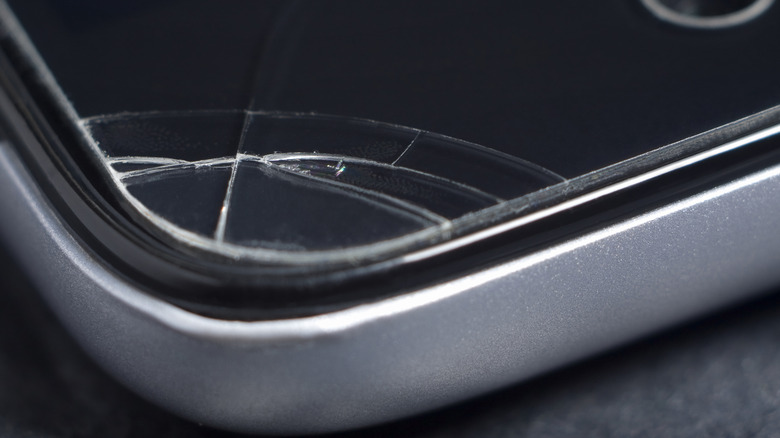
A YouGov survey in 2023 revealed that 46% of Americans use a screen protector on their smartphone to shield it from knocks, scrapes, and drops. While some of those screen protectors will be soft film, many others will be tempered glass, designed for more effective protection. Unless you handle your phone with kid gloves (in which case you may not actually need a screen protector), you've probably dropped it at some point, or knocked it around in a bag or a pocket.
As a result, over time, the glass protector may crack or chip, a sign that it's taken punishment that might otherwise have reached the phone's screen. Whether it's okay to keep using a cracked screen protector depends on the extent of the damage. For example, if its condition continues to deteriorate to the point where you can feel sharp edges when you run your finger over them, or if broken fragments are falling off, then you should start to seriously think about replacing it.
Also consider that if the screen protector is badly cracked on, say, a corner, it could leave part of your display unprotected, risking damage. Fragments of the screen protector could even scratch the display over time. If the protector begins to deteriorate badly, there's a chance the touchscreen will stop responding in certain areas. In that case, it's definitely time to invest in a new protector, or to start looking at other ways to shield your display.
How to remove a damaged screen protector
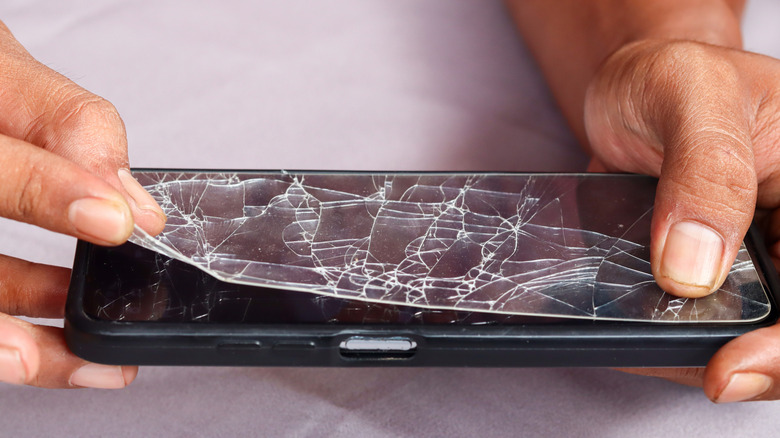
There's no need to panic at the first sign of damage to your smartphone's screen protector, but the longer it's left on your handset, the more difficult it might be to remove when you eventually decide to take it off. Cracks can run across the entire display, while small pieces may start to break away from the edges, particularly the corners. That's when you know it's time to sort it out. At that stage, the damage may be making the display difficult or unpleasant to view, giving you another good reason to get a new protector.
If you've reached the point when you know that it's time to remove it, then do it slowly and carefully to avoid injury or marking the display underneath. First, find a well-lit area to work in. Then, turn off your phone and remove the case, if you have one. If the screen protector is badly shattered, you might want to wear protective eye gear and gloves. You should also apply some clear tape over it to help hold the fragments together for easier removal.
Next, use your fingernails or something like a thin plastic card to gently lift up one of the corners, but avoid using sharp metal tools as they could damage the phone's display. Slowly peel off the protector while supporting the rest of it as best you can. Once you've safely lifted the protector from the phone, make sure there are no loose fragments on the display. Finally, clean the surface of your phone with a microfiber cloth. You're now ready to decide how to protect your phone's display going forward.
Other ways to protect your smartphone
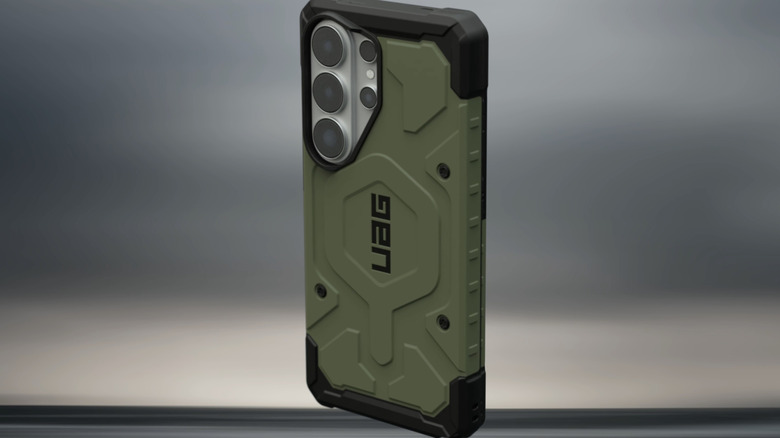
If you're fed up with replacing damaged screen protectors on your smartphone, it may be time to move away from tempered glass in favor of a different setup. For that, you could consider a tidier option in the form of a flexible TPU (thermoplastic polyurethane) film or hydrogel film, paired with a protective case. Some TPU films even have self-healing properties that can reduce the appearance of marks and scuffs.
If it's a high-quality film, it should be a long time before it starts showing signs of peeling away from the edges, and it certainly won't shatter, while a decent case will take care of your phone's edges and back, including the raised camera bump if it has one. There are plenty of durable phone cases on the market, along with other options like wallet phone cases for more usability. Even minimalist cases can do a great job of protecting your phone, depending on the nature of your daily routine.
While it's true that a clear film generally offers less impact protection, as well as a different feel from tempered glass, it could be the way to go if you mainly want scratch protection and are happy with a case-and-film combination. Some even argue that improvements in materials and display glass mean there's really no need for a screen protector anymore. In the end, the right choice is the one that best suits how you use your phone, as well as your tolerance for risk.