

Europe's Wooden Wind Turbine Blades Could Be The Answer To Fiberglass Pollution
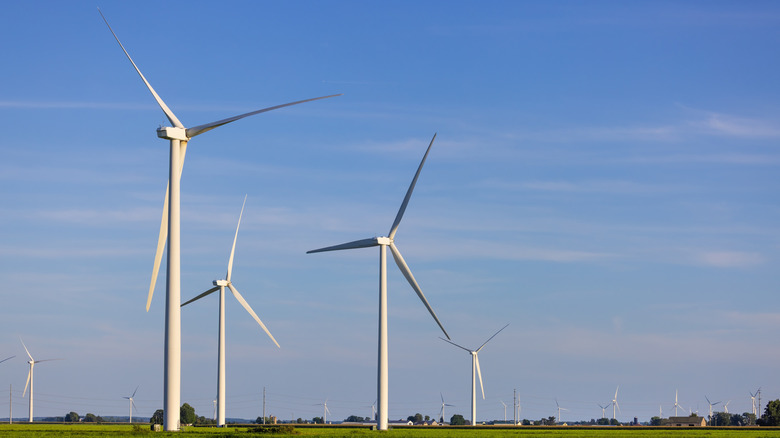
Wind turbines are a powerful alternative to fossil fuels, with wind power now accounting for about 10.5% of all utility-scale electricity generated in the United States. In Germany, the combination of wind and solar power has passed fossil fuels as the nation's top electric generators. But the environmental impact of wind turbines and their massive blades cuts both ways. The blades are generally made of reinforced fiberglass, a material that is strong, light, and durable. They can last 20 to 30 years.
But they're so difficult to recycle that Europe came up with an unexpected new job for old wind turbines: Pedestrian bridge girders. A company in Germany has a solution that could make the recycling process easier. Voodin Blade Technology made 63-foot wind turbine blades from laminated veneer lumber (LVL). It's not a completely new idea. In the 1980s, NASA approached Michigan boatbuilders Gougeon Brothers about applying their wood-composite techniques to wind turbines. The wood held through 8,000 hours of testing, until a steel mounting stud failed, not the wood composite.
Gougeon Brothers went on to sell 4,300 wood-composite blades, some up to 70 feet long, to General Electric, Westinghouse, and other manufacturers. By the 1990s, turbine designers moved on from composite wood and settled on fiberglass. It's not clear why. The good news is, the U.S. can now recycle 90% of wind turbine components. However, the blades' fiber-reinforced composite remains difficult to repurpose, and some processes could be more environmentally damaging than simply tossing them into a landfill.
Wooden wind turbine blades could be easier to recycle than fiberglass
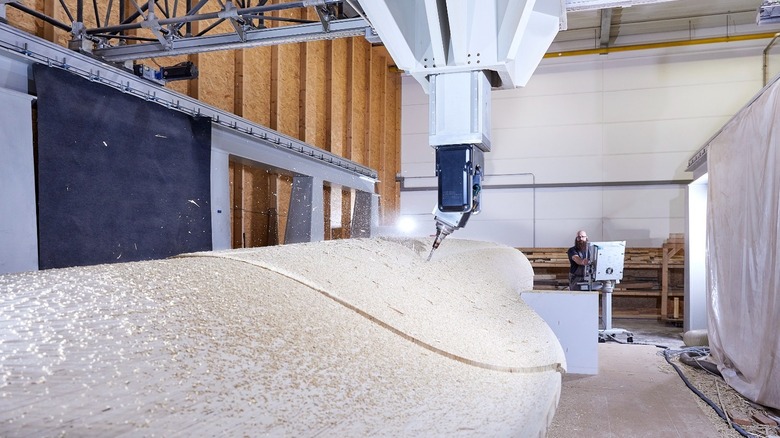
Voodin is using a similar process to Gougeon's NASA blades. They're both made of thin layers of wood bonded together with epoxy, but Voodin doesn't use molds. Engineers bond Nordic spruce into LVL, then use a computer-controlled cutting machine that tilts and rotates to mill the material into the blade's final curved shape. Automation means more flexibility for design changes and fewer craftspeople. Voodin says its manufacturing method makes laminated wood easier to scale and mass-produce.
Regardless of how the blades are made, engineered wood is easier to recycle than fiberglass. The glass fibers in fiberglass are trapped within a thermoset resin. Recovering it can require shredding, grinding, or chemical treatments. One energy-intensive process, pyrolysis, uses heat with no oxygen to separate the glass fibers from the polymer. Engineered wood, on the other hand, can be ground down to make wooden structures like shelving and pallet parts or ground into fiber for mulch and bioenergy.
Now consider how many fiberglass-bladed wind turbines currently exist. Just five states with the most wind turbines in the U.S. have more than 41,000 in total. That's a lot of pedestrian bridges. But like aerospace agencies are finding with satellites, wood can help prevent a nightmare pollution problem. Testing on Voodin's 63-foot blades is underway in Germany. The company hopes to commercially produce much larger blades that match the needs of modern utility-scale wind turbines.