

Should You Add USB-C Ports To Your Desktop PC?
We may receive a commission on purchases made from links.
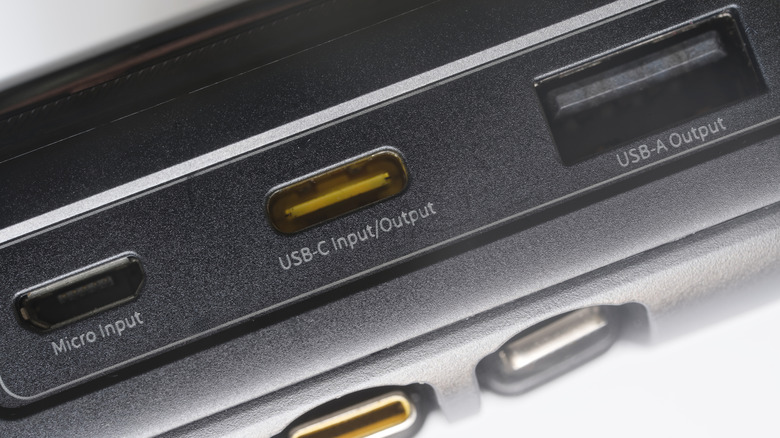
USB-C is an improvement over other types of USB in many ways. It was created to provide a more universal port for all your devices, but there's much more to it. USB-C ports support faster data transfer rates, typically charge much faster than USB-A, and can even handle high-resolution video and audio. With so many advantages over older USB, you might wonder why PC manufacturers still use USB-A and if you should consider adding more USB-C ports to your PC.
In most cases, the answer is yes. A USB-C slot that supports USB4 can transfer hundreds of GBs worth of games or large video footage in minutes, while the addition of PD makes it easier to charge devices without getting up from your chair. Adding more ports also gives you more versatility in what peripherals you use and allows you to use the same ones for all your devices.
It's important to note that, while more USB-C ports will always be good, you don't exactly need to remove all USB-A ports for a good desktop setup. One of the biggest advantages of USB-C is its smaller form factor and versatility. If you're getting a thin and light laptop like a MacBook Air, you don't have a lot of space for ports. Being able to use the same USB-C slot to charge your device, transfer data, and connect peripherals is essential. That's why an all-USB-C MacBook still gets the job done. However, for most desktops, having a good mix of both USB-A and USB-C ports is the best step forward.
Reasons to get more USB-C slots on your PC

Getting more USB-C slots on your PC allows you to share peripherals between different devices. You can use the same mouse for both a desktop PC and a USB-C-only laptop, or share your tablet's keyboard with your computer. Data transfer is another area where USB-C far exceeds its predecessors.
Most modern motherboards come with at least one USB-C port, which is enough to connect an external SSD or your phone to transfer data. However, if your PC doesn't have one, adding a USB-C expansion card can double, triple, or even quadruple the speed at which you transfer files between your computer and external devices. USB-A speeds cap out at 10 Gb/s with USB 3.2 Gen 2, while USB-C supports standards like USB4 that offer 40 Gb/s transfer speeds or Thunderbolt 5 that supports a theoretical maximum of 120 Gb/s.
Another convenience with USB-C is the addition of Power Delivery (PD), which doesn't exist with USB-A. You can charge your phone or wireless peripherals with your PC, but the charging speed will differ depending on whether you're using USB-C or USB-A. A USB-C port with PD can output up to 240W, while using a USB Type-A connection usually means charging at 2.5W to 18W, depending on the motherboard – certainly fine for older phones or Bluetooth peripherals, but not enough to charge a modern smartphone.
How to get more USB-C ports on your PC
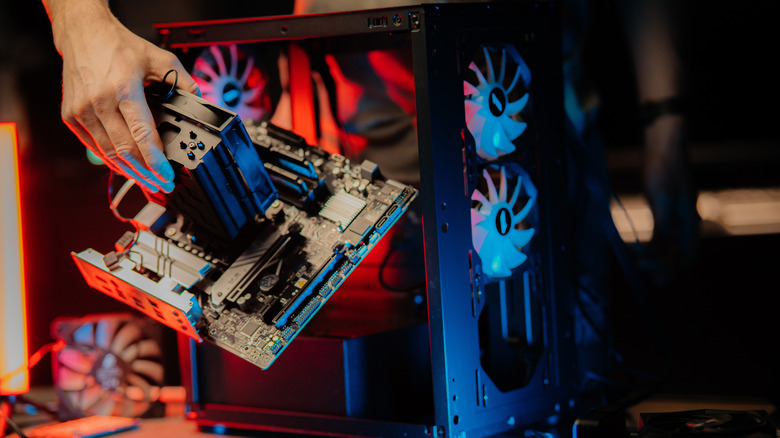
You can get more USB-C ports on your PC in a variety of ways depending on what you need the ports for and the specifics of your PC rig. If all you need is a way to connect your phone or another device that only has a USB-C to USB-C cable to your PC, you can get a cheap USB-C-to-USB-A adapter. Alternatively, you can get a USB hub that supports both USB-A and USB-C connections. However, neither of these can make use of USB-C transfer speeds or power delivery (PD) if your motherboard only supports USB-A; if you want to transfer large amounts of data or want to charge your phone, this method isn't the best.
If your motherboard comes with no USB-C ports and you want to leverage higher USB 3.2 transfer speeds, you can add ports using an expansion card. These cards connect to a PCIe slot, which means you need an unused PCIe slot to use them. So long as you have one, you can attach a USB expansion card — such as this SineFine expansion card that you can get for $17 — to add USB-C and increase the number of USB-A ports.
If you already have peripherals that use USB-C and want to make use of the higher power delivery and transfer speeds to charge your devices or to connect external SSDs, there are motherboards that provide more USB-C ports. You can get the Asus ROG Maximus Hero Z890, which has two USB-C slots and two Thunderbolt 4 ports. Alternatively, if you want a setup with only USB-C peripherals, you can get the ASRock Z890 Taichi Aqua, which is an all-USB-C motherboard.