

Is There Any Point In Buying An Expensive SSD In 2026?
We may receive a commission on purchases made from links.
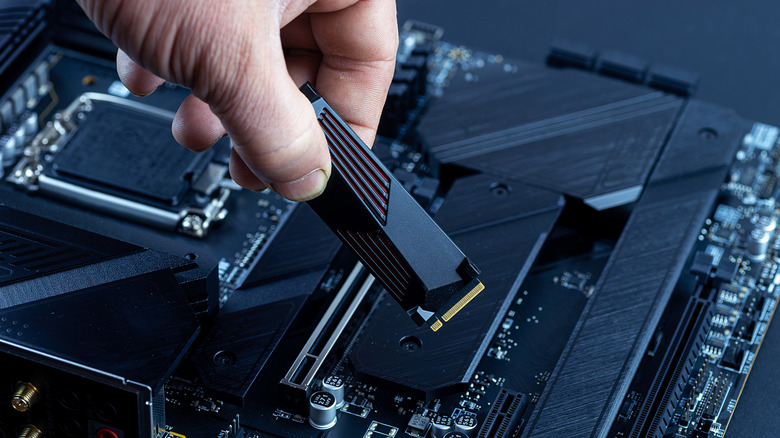
The best solid-state drives (SSDs) money can buy today use the PCIe 5.0 standard with the M.2 NVMe protocol. This generation of SSDs can boast a read speed exceeding 14,000 megabytes per second, which is twice as fast as a PCIe 4.0 drive. But here's the kicker: SSDs are one of the gadgets that have jumped in price due to the RAM shortage. As of this writing, a WD_Black SN8100 4TB PCIe 5.0 NVMe SSD goes for around $660. The original list price for this exact model was $469.99 when it launched in May 2025. Is there really any point in buying such an expensive SSD?
For most users, the answer is no. When TechSpot compared PCIe 5.0 SSDs against their 4.0 and 3.0 counterparts, they found that there's little practical difference when it comes to game loading, verifying files, and copying files across drives. The previous generation of NVMe drives already completes these everyday tasks nearly as quickly as possible.
The ultra-fast speed of a PCIe 5.0 SSD only becomes particularly meaningful for very large transfers or heavy workloads. Prime use cases for a PCIe 5.0 SSD include high-end content creation, database management, and AI acceleration. If these scenarios don't apply to you, consider a more budget-friendly option like the Biwin Black Opal NV7400 PCIe 4.0 NVMe SSD; the 4TB model costs $489.99, and the 2TB version goes for $289.99.
Are cheaper SSDs worth buying?
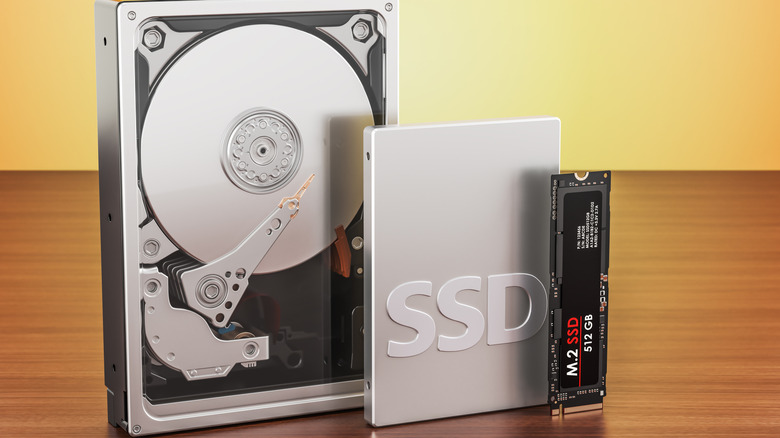
Most people don't need a PCIe 5.0 SSD, but the unfortunate truth is that even a PCIe 4.0 SSD is overpriced in the current market. If you want good value, you may have to make some frustrating compromises. Luckily, SanDisk is releasing new SATA SSDs at budget prices. The SATA technology is noticeably slower than NVMe — as much as 70% slower in some of TechSpot's intensive game-loading tests — but a budget SATA SSD like the Crucial BX500 goes for $255 for a 2TB model, or as low as $66.70 for a 240GB version.
Another option is a traditional hard disk drive (HDD). HDDs tend to be much cheaper, even in the current market; you can get a Seagate 2TB portable hard drive for as low as $129.99. However, HDDs often have an average read speed of just 100 megabytes per second, which is many orders of magnitude slower than the latest PCIe 5.0 SSDs. Even so, hard drives are still worth buying in 2026 if bulk storage is your main priority.
Ultimately, SSDs tend to be the only practical option for running modern applications. Some cheap ones are worth buying, especially since SSD prices are unlikely to drop soon, but cheaper options can be more prone to failure. Before buying something that seems too good to be true, check what users say about which cheap SSD brands are actually reliable.