

5 Tech Products That Defined A Generation But Are No Longer Safe
New tech comes and goes every year. As someone who has attended CES in Las Vegas for over a decade, I've seen the industry's whims and consumers' reactions. But now and again, something comes around that ends up defining an entire generation. We all associate certain tech with specific generations, like the original Sony PlayStation, the Walkman, and even cars like the Nissan Skyline GT-R.
But with every generational product that is fondly looked back on and even kept alive by fans, there are some that we'd rather forget. Then, there are the rare few initial successes that were actually dangerous to consumers. Tech products that could lead to injury, or in some cases, even death.
From incredibly popular devices that could explode in your pocket to products so dangerous they changed the rules for non-tech sectors, and even everyday devices we later found did more harm than good. A surprising number of popular tech and innovations, both small and large, were and still are generally unsafe to use.
Samsung Galaxy Note 7

Samsung is by far the most popular maker of Android smartphones, and it has released Galaxy devices since 2009. Over the years, the company has released all kinds of phones and devices, from the budget-friendly Samsung Galaxy A17 to high-end, expensive smartphones like the Galaxy S26 Ultra, plus Samsung Galaxy tablets at every price point.
At one point, the Galaxy Note smartphone was Samsung's high-end flagship model and focused on pen-computing. These devices featured a stylus pen, pressure-sensitive digitizer, and large screens in an attempt to blend the best of a tablet and smartphone. And while the Note line was successful, it wasn't always smooth sailing. The Galaxy Note 7 was popular upon launch, but issues quickly arose that took the world by storm.
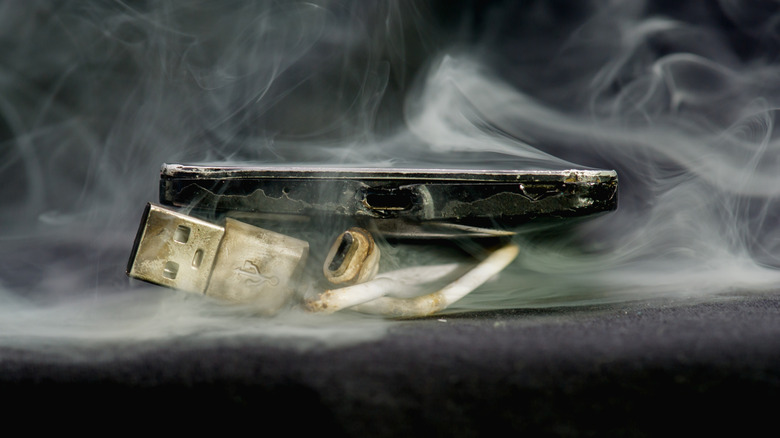
Battery defects could lead the device to overheat and explode with normal use. Samsung recalled over a million devices and replaced the batteries, but the replacement batteries from a separate company also had flaws, leading to another recall. The Note 7 became the butt of jokes and was deemed hazardous, leading to bans on many airlines. The phone was eventually discontinued and cost Samsung billions.
Ionization smoke Detectors
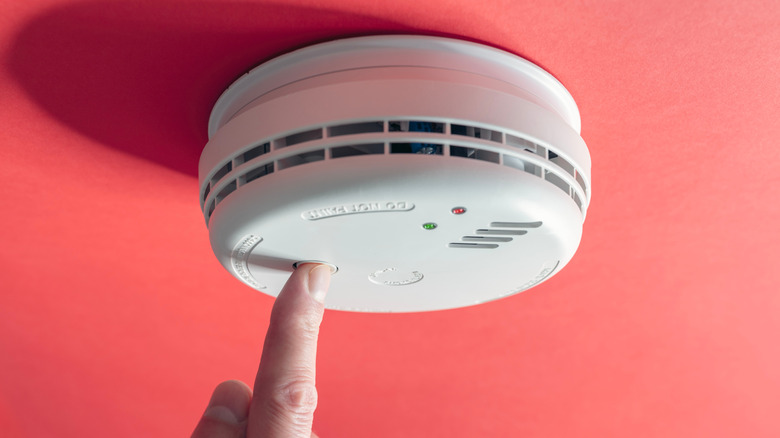
Modern smoke detectors are safe and save lives. While these devices save lives and property, they can also pose their own dangers, especially older models and those that aren't well maintained. Unfortunately, the smoke detector in your home might be radioactive.
There are two types of smoke detectors used in homes. You have basic optical smoke detectors (OSD), which use light sensors to detect smoke particles, and ionization chamber smoke detectors (ICSD), which use a radiation source to help detect smoke particles. That radiation source is exposed to the atmosphere and can be dangerous to humans in large doses, which is why some countries and several states have banned ionization smoke detectors.
This is why you should dispose of older or damaged detectors properly, as they could pose a greater risk. And you should never tamper with a smoke detector, as it could damage the ionization chamber. Another issue is disposal itself, since many people don't realize proper disposal is needed because of the radiation. As long as you aren't in a room filled with hundreds of broken, vintage smoke detectors, you should be fine.
Self-balancing wheeled hoverboards
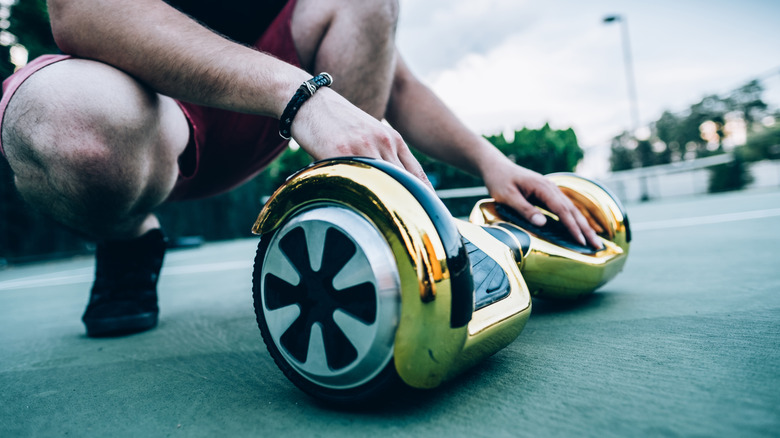
I'm sure many can remember the cultural phenomenon that was the hoverboard. While not the kind of device we all envisioned after watching Back to the Future II, they seemed like the first step toward getting there. These self-balancing wheeled devices seemed to be everywhere. They featured in television shows and movies. Kids and door-to-door salesmen used them to get around. Then there was the plethora of YouTube videos of people crashing while trying to use them.
And it looked like this insatiable desire to get in on the trend led to companies with unpronounceable names popping up, trying to cash in. But in trying to fill a market gap, many of these hoverboards were rushed out and skipped proper safety checks. This led to hoverboards catching fire and potentially putting users and their homes at risk.
The worst part was that no one knew why different hoverboards were failing and burning up. It wasn't isolated to a single company, and they weren't coming from a single factory. Testing later found that the lithium-ion battery packs could overheat and cause fires, leading to recalls from multiple companies.
Old GE color televisions

If you're of a certain age, your parents probably told you not to sit too close to the television, lest it damage your eyes. Perhaps you've even heard that old tube televisions can emit radiation, something people have worried about since the early days of the technology. And while those older televisions did emit radiation, it was assumed to be so low that it wasn't an issue.
This assumption changed in 1967, when testing became more rigorous and found that several large-screen televisions manufactured by General Electric emitted radiation above what they considered desirable levels. This led the company to seek out owners of 90,000 of these televisions to repair them. Some speculated that the higher voltages required for the switch to color television led some sets to produce higher levels of radiation.
And while this issue was quickly addressed, it's unclear how many older televisions before 1970 could have emitted higher-than-recommended radiation. Today, more modern tube televisions are safe and great for retro gaming, the only danger being potentially blowing out your back trying to lift one.
Radium clocks and watches
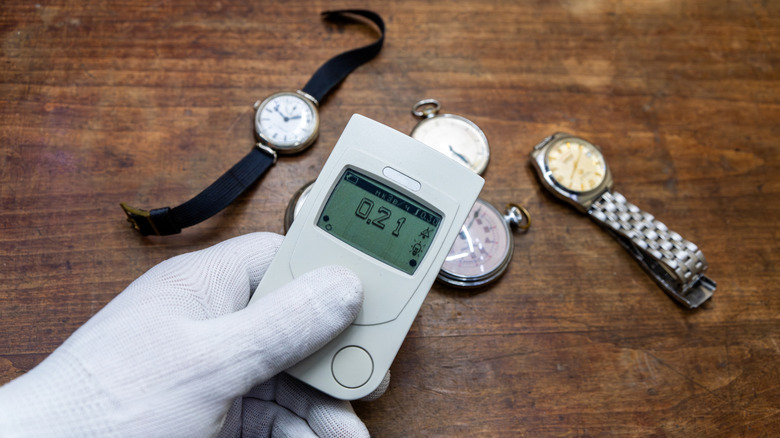
If you visit an antique store, you might come across something labeled as a radium clock/watch. These devices were popular in the 1900s because their bright glow lit up the dark. This glow came from the radioluminescent paint used in their manufacturing, usually painted by hand. This process led to the deaths of many factory workers because of the radium-226 used in the paint.
Radium-226 is highly radioactive and is deadly, especially when ingested, something those workers did as they commonly licked the tips of their brushes to help them paint. Simply being in the presence of radium-226 makes it dangerous. The EPA even notes that these clocks, alongside various radioactive antiques, can register on a Geiger counter and emit low-level radiation for thousands of years.
Many of these early clocks no longer glow. You might assume that they're no longer dangerous, but just because they aren't glowing doesn't mean they aren't still emitting radiation. Another danger is that the paint used can eventually turn into dust, and that dust can be inhaled, leading to serious issues.