

Home Projector Vs. TV: Which Costs More In The Long Run?
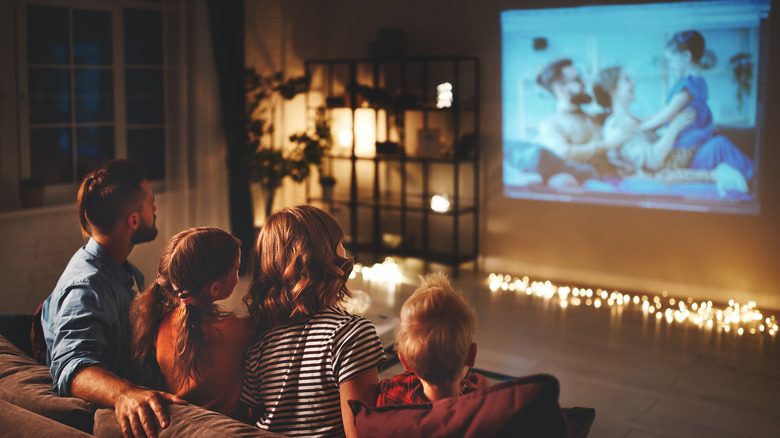
There's no denying television is a cultural mainstay both in the United States and worldwide. The number of TV households in the U.S. alone amounted to approximately 128.1 million, per TVB, and around 97.2% of American households possess a TV set. Be that as it may, not everyone uses a conventional television as their go-to source of news and entertainment at home. Some prefer turning their TV space into a home cinema via a projector setup. While there are several pros and cons of replacing your TV with a projector, one would have to look further than unit prices to truly weigh each option. TVs and projectors nowadays generally fall within similar price ranges per size and quality level. For example, if you considered replacing your home theater's TV with a projector, the cost could be anywhere from $150 to a ceiling reaching thousands of dollars for either option, depending on the model and features you choose. Projectors, however, may come with added expenses if you opt to purchase accessories like a screen or blackout curtains for your home theater.
Basic projectors have an edge over standard TVs, however, in terms of the average cost to run them. Magcubic indicates a 100W TV can burn an annual average of $21.90 out of your wallet, based on an average electricity rate of $0.15/kWh and 4 viewing hours per day. A cheap projector, in contrast, would cost approximately $15.30 (considering 70W power consumption) annually. They also benefit from offering a larger display size than TVs with the same amount of power. Higher-end models, however, may consume more energy, and thus, more cash; the Xgimi Horizon Ultra with a maximum power consumption of 300W adds around $70 to your annual electricity bill after about 30 hours of use per week.
Projectors include added expenses

The initial and day-to-day cost of a basic home theater may be enough to convince you to ditch your TV for a projector. However, other factors should also be taken into consideration before you make the jump, including their respective lifespans and additional expenses like lamp replacements. Modern TVs can last anywhere from 5 to 10 years – give or take the model, functionality, and usage. Some projectors generally last the same amount of time, though traditional lamps and bulbs often require replacements after 1 to 2 years of use, and often cost $100 to $400 to replace. Though some LED and laser projectors may help you save a little, given they last over 20,000 hours while maintaining pristine image quality, they may still require parts replacements that would rack up the total cost — or sometimes the unit itself may not last longer than a standard TV.
The price differential between TVs and projectors ultimately depends on the size, type, and specs of the unit you choose, along with any additional expenses. Though it may seem cool to add retro projector vibes to your home theater, the lesser cost of running some units — while achieving a larger display — may be outweighed by the added price of additional accessories, parts, and replacements. Thus, it's up to the buyer whether they value performance and display more than lower maintenance to truly determine which is the better option.