

5 Popular Drone Brands Owned By Chinese Companies
We may receive a commission on purchases made from links.
Shenzhen is the Silicon Valley of China these days, and unsurprisingly the base of some of the biggest consumer drone manufacturers in the world today. DJI is the well-known industry giant, but it has some competition among other popular Chinese drone brands.
With DJI now facing restrictions in the U.S. and Autel Robotics withdrawing from the consumer drone market, it's opened up a gap for other quality brands such as Antigravity, Potensic, HoverAir, and the ex-DJI employee-founded Skyrover. Away from the consumer market, even the U.S. Navy is getting savvy by 3D printing their own drones at sea, and drone manufacturing is going to be more competitive than ever if this becomes a mainstream practice for civilians.
All of this competition in today's drone market is great for regular consumers. It's driving prices down and pushing innovation so that different manufacturers can stand out in a crowded room. There's brands like Antigravity that offer 360 degree video, then there's Skyrover who are taking full advantage of DJI's stranglehold in the U.S. market.
DJI
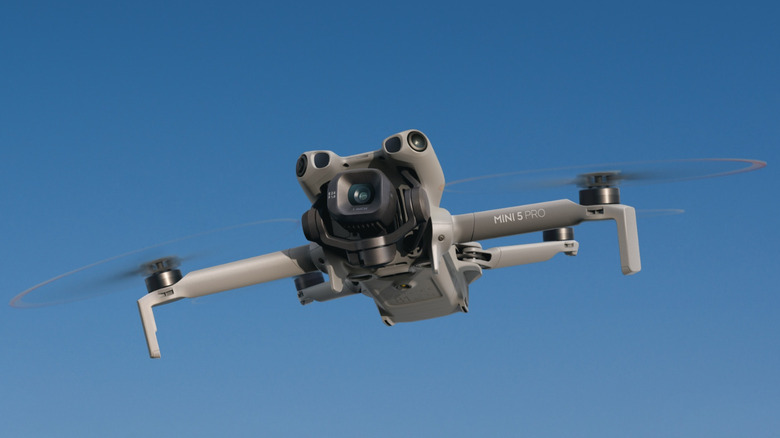
DJI is the undisputed champion of consumer drones, thanks to its iron grip on the market and a drone for every budget. DJI (Da-Jiang Innovations) was founded in 2006 by Frank Wang while he was studying at Hong Kong University of Science and Technology. Headquartered in Shenzhen, China, the company has offices around the world, including in the U.S., Germany, Japan, and South Korea.
The DJI Phantom was the first ready-to-fly drone with GPS-powered return-to-home features in 2013, followed by other cool releases such as the Inspire (2014), a foldable Mavic (2016), and the gesture-controlled Spark (2017). DJI is also known for its camera stabilization via gimbals such as the Zenmuse and Ronin lines for handheld cinematic footage.
The current DJI lineup includes the Mini 5 Pro, Mini 4K, Mavic 4 Pro, Air 3S, Avata 2/360, Inspire 3, and the Neo. Although one of the best materials for speedy drones seems to be carbon fiber, DJI mostly uses hard plastics. Companies such as DJI keep pushing the envelope, but due to a U.S. court ruling, any DJI products announced after December 23, 2025, are banned from the U.S. market, and won't receive FCC authorization. Previously purchased products, or imported stock already with retailers, are legal. The decision comes as lawmakers fear that DJI is backed by the Chinese Communist Party, with ample potential for spying on U.S. citizens, although evidence for this has never been publicly provided.
Antigravity
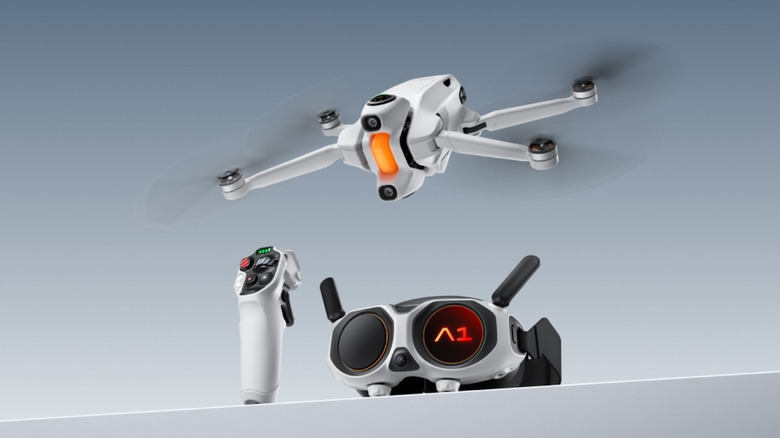
Antigravity is Insta360's drone spin-off that brings something new to the market. Insta360 was founded by JK Liu in 2015 and is headquartered in Shenzhen, China. It is the world's leading 360 degree camera brand. The Antigravity A1 was launched as the world's first 360 degree drone.
The A1 features two ultra-wide lenses to capture a full spherical view, with its built-in software removing itself and propellers from footage. It weighs less than 250g, and is capable of 8K 30 FPS video recording with well thought-out mobile and desktop apps to manipulate footage with pans and zooms.
It's not a perfect experience thanks to the clunky setup of the goggles and motion controller, but nevertheless, a world's first helps to push the consumer drone market into new areas and drive competition — so, Antigravity is certainly a brand to watch. There are many niches that drones are suitable for, including specialized jobs like clearing clouds over solar farms.
Potensic
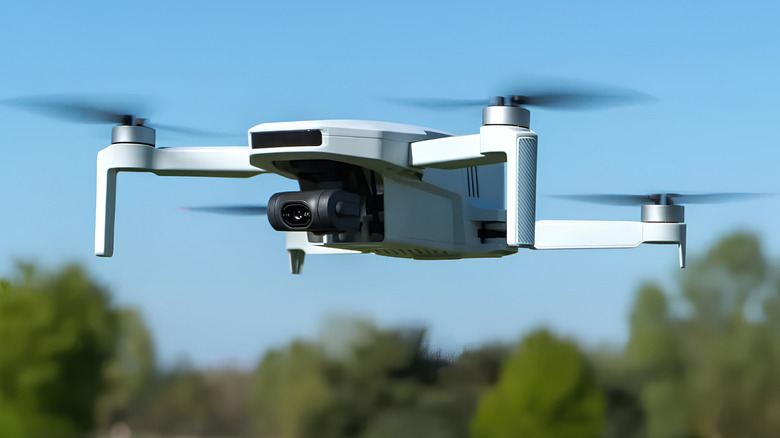
Thanks to DJI having a very small footprint in the U.S. these days, Potensic has emerged as a light-weight and budget drone alternative. It's not a small operation either, with more than 500 employees serving five million customers, according to Potensic.
Potensic is bringing down the barriers of entry into the hobby by providing entry-level drones for beginners with solid features. The Atom 2 has modes like wide angle, 180 degrees, and spherical panoramas. Because many users just want a capable drone that doesn't cost the earth to enjoy nature and capture breathtaking aerial photos and videos, Potensic is having success scratching that itch.
The Potensic Atom 2 is the best DJI alternative available in the U.S., and its specifications prove it. It has a 1/2-inch Sony sensor for 48MP photos and 4K HDR video at 30 FPS, a three-axis gimbal, AI tracking, QuickShot support, and around 30 minutes of battery life on a single charge. Not bad at all for $399.99 for the combo drone pack, which includes a remote controller, three batteries, a charging hub, and eight pairs of spare propellers.
HoverAir
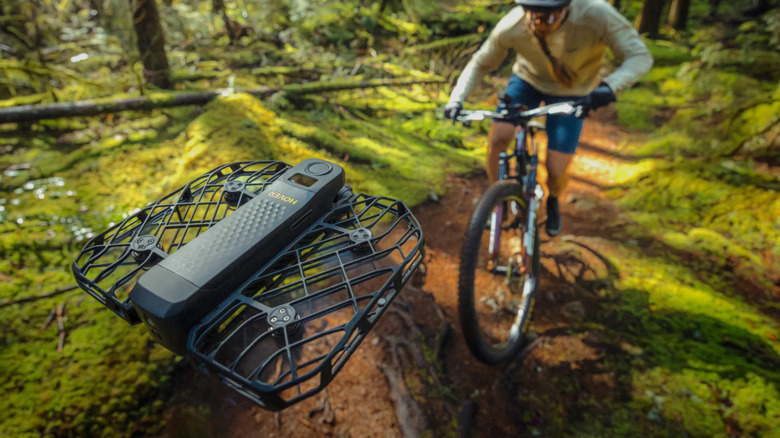
Zero Zero Robotics is the company behind HoverAir. It's headquartered in Hangzhou, China, with offices in Beijing, Shenzhen, and San Francisco. It was co-founded in 2014 by Stanford PhDs MQ Wang and Tony Zhang, who went all-in on automated drones, focusing on AI, machine vision, and high precision control with over 140 patents.
The company pioneered enclosed-propeller design in the Hover series alongside the dual-rotor system in the V-Coptr Falcon. The enclosed-propeller design fixes a big problem for drone owners like myself who feel the need to fly as close to objects as possible.
The HoverAir X1 ProMax is a pocket-sized automated drone meant for tracking users and taking selfies during activities when they can't do it themselves — like while mountain biking or skating. It tracks and follows users while capturing 8K video and 48MP photos. Limits include its 16-minute battery life, and lack of camera rotation, but the 107 degree lens supported by a two-axis gimbal make these downsides forgivable.
Skyrover
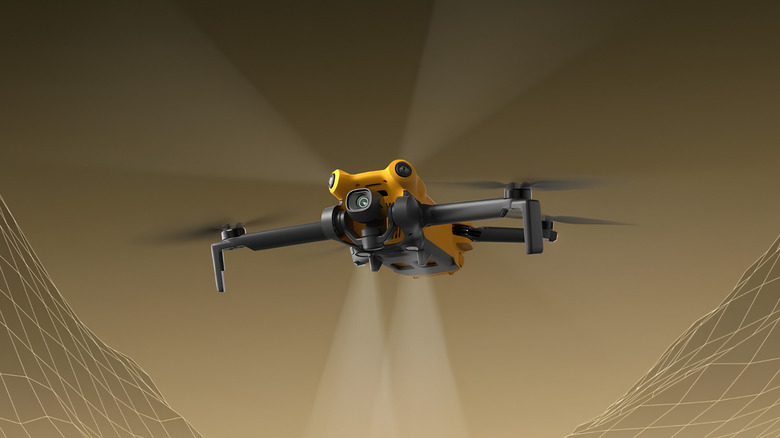
Skyrover was created by former DJI engineers in 2025, and is led by Henry Zhang. The small team aims to provide users with trusted and accessible everyday drones. The two models that Skyrover offers are the S1 mini drone for casual flyers, and the X1, which is a solid alternative to the DJI Mini 4 Pro.
The X1 has up to 32 minutes of flight time per battery, 4K/60 FPS HDR video, and 48MP photos. Best Buy have the combo kit available for $449, which is $350 off its MSRP. The pack includes three batteries, a battery hub, a shoulder bag, six pairs of spare propellers, a remote controller, and other bits and bobs.
The S1 has a longer flight time of up to 40 minutes, and a lower MSRP of $499 with the same bundle. It does offer a slightly downgraded camera, but it still puts out 4K/60 FPS video and 48MP photos. Both drones folded are palm sized and weigh just 249g, which means they can skip FAA registration and Remote ID in the U.S.