

Are LG WOLED Monitors Actually Worth It?
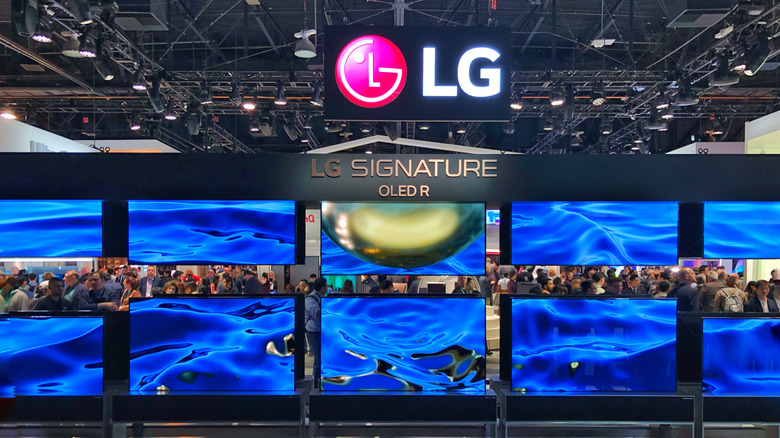
If you're considering a monitor upgrade, you might be tempted to switch from the traditional LCD screen to something a bit more modern. OLED displays are much more common than in years previous, with manufacturers like LG offering 27-inch panels for as little as $380. Scratch beneath the surface and things get more complex quickly, though, with terms like OLED and WOLED cropping up all over the place. Before explaining the differences between these, let's answer the most important question: Are these monitors even worth your money?
In a word, yes. LG's monitors are highly regarded by consumers and critics alike. They're available in various sizes up to 45 inches, with newer models using WOLED (white organic light-emitting diode) technology. In short, this means they send white light through red, green, and blue filters while also allowing it to pass through unfiltered if needed. Response times are generally 0.03 ms or lower and smaller panels can go as high as 720 Hz. That's a huge advantage since research shows higher refresh rates improve gaming performance.
That's not all these panels have going for them, either. LG has an OLED monitor for every price point, so if you're looking to dip your toe in, you're almost certainly covered. Alternatively, if you want an HDR-compatible, 5K panel with 1,850,000:1 contrast ratios, these are available too. Although cheaper brands definitely exist, LG actually makes OLED panels in-house, so you're cutting out the middle man and supporting a company that clearly knows what it's doing.
How do WOLED monitors compare to LCD screens?
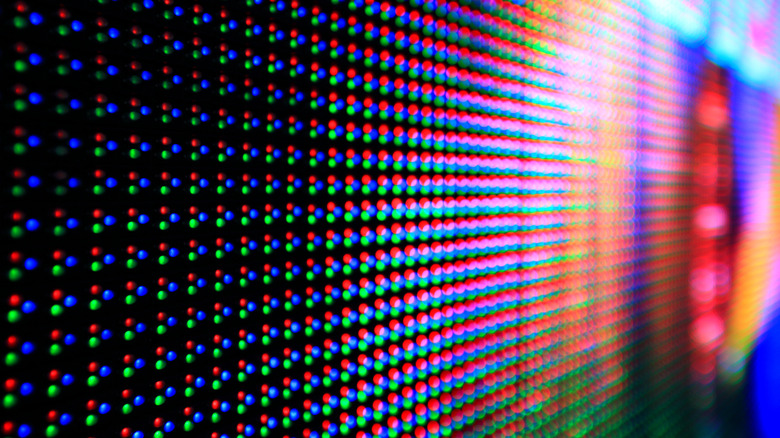
Let's start with the basics. LCD screens require a backlight to work. This sends light through red, green, and blue subpixels in different amounts to create different colors. OLED displays, including the WOLED subtype, contain organic material that illuminates when an electrical charge is applied. As such, no backlight is needed, allowing for thinner monitors. OLED even allows for flexible display panels, giving it a huge advantage over LCD.
There are other advantages too, of course. LCD panels often struggle with dark scenes since their backlight is still active even when no colors are showing. By comparison, OLEDs can completely turn off individual pixels, leading to better contrast and darker blacks. Additionally, because there's no liquid layer visually distorting things based on where you're standing, OLED panels tend to have wider viewing angles.
The OLED basics apply to WOLED displays, too, with the main difference being that "W" at the front — WOLED screens start with white light that passes through color filters rather than using dedicated red, green, and blue sub-pixels. Samsung also has its own alternative to WOLED called QD-OLED which uses blue light instead of white, leading to even more vibrant colors (though the black levels are higher in bright rooms).
As OLED monitors are newer, they cost more than LCD screens. They're also more prone to burn-in (though LG has taken steps to reduce this), which is when an image that's left on-screen for a long time refuses to go away. Finally, you may notice "fringing" — slight discoloration around objects, most noticeably text, caused by mismatches between your panel's subpixel layout and the one that your operating system expects. On the whole, though, OLED panels will almost always provide a higher-quality image than LCD.