

5 Gadgets Worth Adding To Your Emergency Kit
We may receive a commission on purchases made from links.
It's always a good idea to be prepared in case an emergency or disaster cuts off utilities and communication channels. That's why you've built an emergency kit for those very situations. You may have loaded it with basic items from your home, such as water, food, medicine, candles, a lighter, toiletries, blankets, copies of your IDs, and some cash, to help you last until the situation resolves or help arrives. But having the right tech beside your phone can make a difference, especially when your survival is on the line.
This isn't about extra AAA batteries for an old flashlight you have lying around, a basic walkie-talkie you got at your local sporting goods store, or extra USB cables. It's about specialized equipment for communication, power backup, and navigation. They have essential features that make them worth adding to your emergency kit. Test the gadgets, maintain them and keep the kit somewhere accessible so you can reach it quickly if the time comes.
TrixHub Flashlight
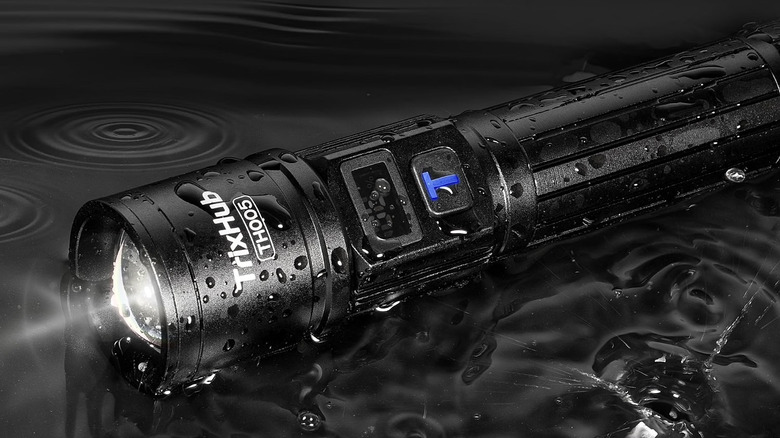
Everyone needs a flashlight during blackouts or at night when disaster strikes, and they need to venture outside to get help and supplies. Your smartphone probably has a flashlight that can help. But you can only comfortably use it to find items indoors or get to your room for safety. But during a disaster, you need something brighter and capable of shining the light farther than a phone's flashlight. In those situations, you also need to conserve your phone's battery. For that reason, the TrixHub Flashlight is a rechargeable, super-bright flashlight that deserves a spot in your emergency kit.
The flashlight has three main modes: High, Medium, and Low. But you'll want to keep it at low if you want it to last longer during an emergency. Then you have Strobe, which makes the light blink really fast, making it an effective signal at night or a self-defense measure that disorients threats. The last mode is SOS, which is like Strobe, but slower.
The TrixHub Flashlight comes with a removable lithium-ion (Li-ion) cell battery, which you can charge with a USB-C cable. The LED battery-level indicator shows how much charge you have left so you can use it efficiently. It has a telescopic head you can adjust to widen or narrow the beam, turning it from a searchlight into a spotlight. You can get one for $19.99, or a two-pack for $23.99 if you have a few bucks to spare.
FosPower NOAA Emergency Weather Radio
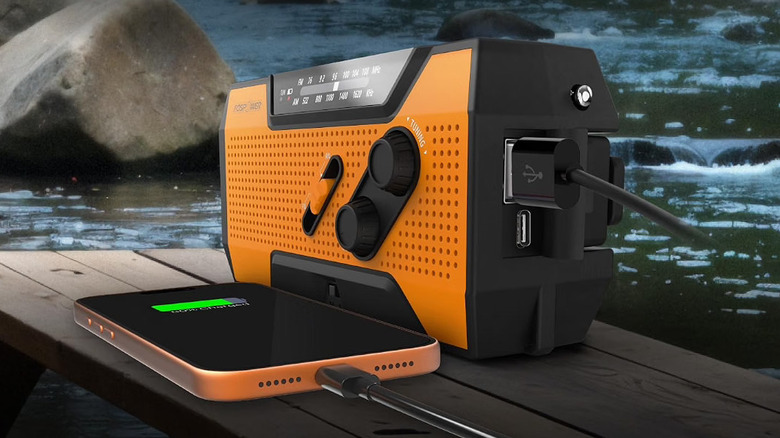
Whether you're in the midst of a natural disaster, a blackout caused by harsh weather, or a camping trip gone wrong, access to weather emergency updates will always be useful. So when you're putting together your kit, consider adding an emergency weather radio that can tune into NOAA Weather Radio (NWR) frequencies. This system of radio stations broadcasts continuous real-time weather forecasts, warnings, and alerts nationwide in the U.S. The FosPower NOAA Emergency Weather Radio is a good option, and it can also connect to AM and FM stations for other important information.
The FosPower NOAA Emergency Weather Radio has three power sources you can use when electricity isn't available: a hand crank, solar panel, and AAA batteries. These can provide enough power to run the radio, lights, and SOS alarm during an emergency (have a whistle as a backup, though). Its 2,000mAh battery turns it into a small-capacity power bank, capable of giving the phone more than enough power to call for help.
The weather radio also has a 1W LED light that can output 135 lumens (lm) to help you cut through the darkness. The flashlight also has a zoom function, allowing you to adjust it from a wide to narrow beam. It also has a reading light to help you read maps or entertain yourself in the dark.
Blavor Solar Power Bank
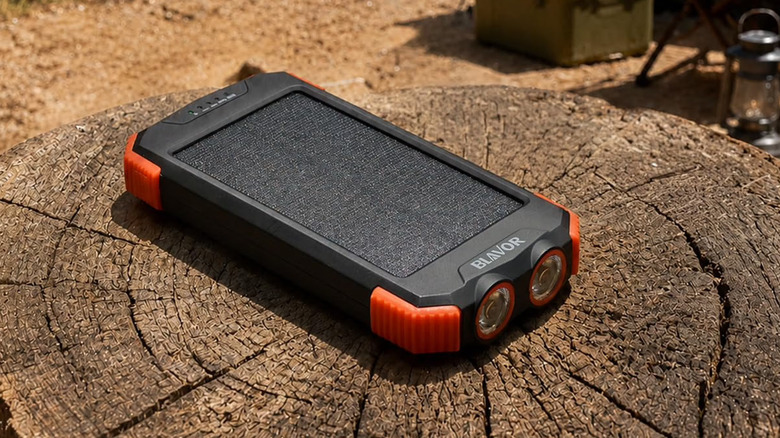
With rechargeable gadgets in your kit, such as flashlights and radios, you will need a power bank in case you have to run them longer. With something like the Blavor Solar Power Bank, which has a 10,000mAh battery, you can effectively charge these devices. That kind of capacity is enough to charge your phone 1-2 times. Thanks to its 20W fast charging, the manufacturer claims it can charge an iPhone 15 from 0% to 65% in just 30 minutes. And it can do so safely because it supports the USB Power Delivery (USB-PD) protocol that allows the phone and power bank to negotiate safe charging levels. Every minute counts in an emergency, and you may need your phone to be juiced up quickly. It also supports 10W of Qi wireless charging.
The power bank also has an attached solar panel, but it's important to understand that it has a maximum charging power of 1.15W. That's too slow, meaning you can't rely on its solar panel as the main power source. That said, it can serve as a useful emergency backup. However, it's much better to buy a portable solar panel for your kit as well if you want to reliably charge it and other devices using solar energy. The Blavor Solar Power Bank also has a flashlight and a carabiner compass. Paired with its IPX5 rating and rugged build, it helps when emergencies happen in the great outdoors.
Garmin eTrex 22x Rugged Handheld GPS
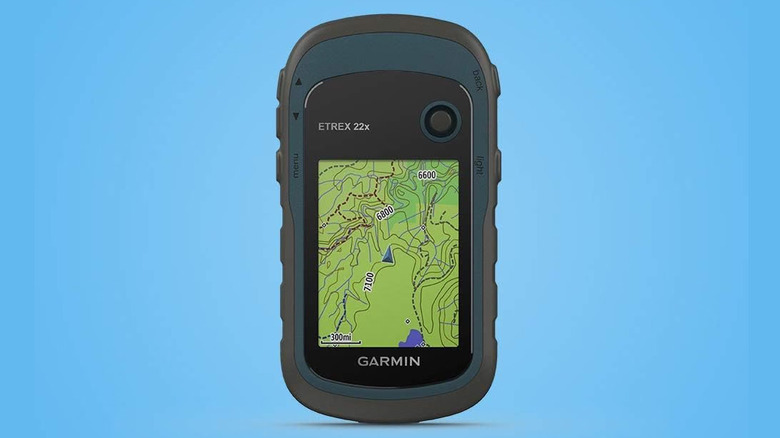
With your modern smartphone around, a capable GPS device in its own right, you might ask yourself why you'd need a handheld GPS at all. Why, in particular, would you need one like the Garmin eTrex 22x Rugged Handheld GPS, which costs $199? In an emergency, when you need a reliable navigation partner, you'll want to conserve your phone's battery. Since the eTrex 22x can provide up to 25 hours of run time, you can save your phone for when you need to communicate your exact coordinates to family members or rescue services.
The eTrex 22x comes with TopoActive maps, Garmin's preloaded topographic and routable maps that work offline. When you rely on your phone, you'll have to intentionally download the maps in apps like Google Maps and Apple Maps to use them offline, but you never know when an emergency will happen and where you'll be. You might not always have the time to download the maps.
The eTrex 22x works without cell service by connecting directly to GPS and GLONASS satellites. If you need additional maps, you can download and store them in the device's 8GB of internal memory. It also has a microSD slot if you run out of internal space for maps. The TopoActive maps also provide valuable information about the terrain, buildings, and international borders, making them extremely useful in unfamiliar territory.
Midland GXT1000VP4 Two-Way Radio
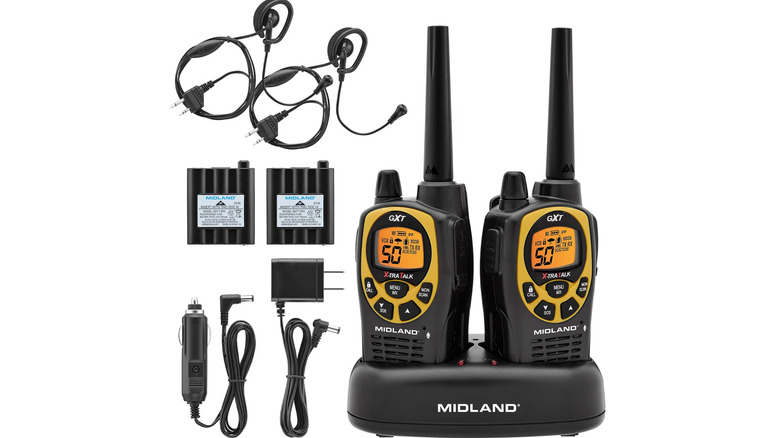
When cell towers go down, or you're in an area without coverage, phones can fail you if you're split into groups but still need to stay in touch. The Midland GXT1000VP4 Two-Way Radio can come in handy in these situations, and you can get two of these long-range radios for $99. It has a range of up to 57km and comes with a rechargeable battery pack that lasts up to eight hours, but it can also use four standard AA batteries (good backups in emergencies).
It has 50 General Mobile Radio Service (GMRS) channels within the 462 MHz to 467 MHz frequency range, ensuring that you can always find an uncongested channel to communicate with others. Even if your current channel is too busy, the radio has 142 privacy codes that let you filter out the noise. Combined with the channels, you have thousands of communication combinations at your disposal. The radio also has an SOS alarm and can function as a weather radio.
Keep in mind that GMRS is a licensed radio service, and you'll need a license from the Federal Communications Commission (FCC). The FCC regulates the service and issues only 10-year licenses. A license costs $35, and there are no exams involved. Once you register, any immediate family member can also use the radios under your license (friends, colleagues, and other acquaintances cannot).
Methodology
When picking these gadgets, we focused on those that provide specialized usefulness in an emergency. That is why we have gadgets for strong lighting, independent power, offline navigation, and long-range communication. We also made sure that the gadgets are available on Amazon, where we can review opinions from verified purchases.
We didn't want to pick items that cost hundreds of dollars, so you can see how affordable adding these gadgets to an emergency kit can be. So we capped the costs at $200 per item. We also made sure they have thousands of ratings and at least four out of five stars. We also ensured that they don't have the "Frequently Returned Item" label on Amazon, considering these are meant to be used in an emergency.