

5 Powerful Smartwatches That Can Replace Your Galaxy Watch
We may receive a commission on purchases made from links.
For Android phone owners, defaulting to the latest Samsung Galaxy Watch can be tempting. After all, Samsung makes quality smartwatches, but it's worth remembering that plenty of other brands offer viable alternatives. Google, Xiaomi, OnePlus, and Garmin all have great options, with the first three offering a familiar Wear OS experience and Garmin featuring its fitness and outdoor-focused Garmin OS.
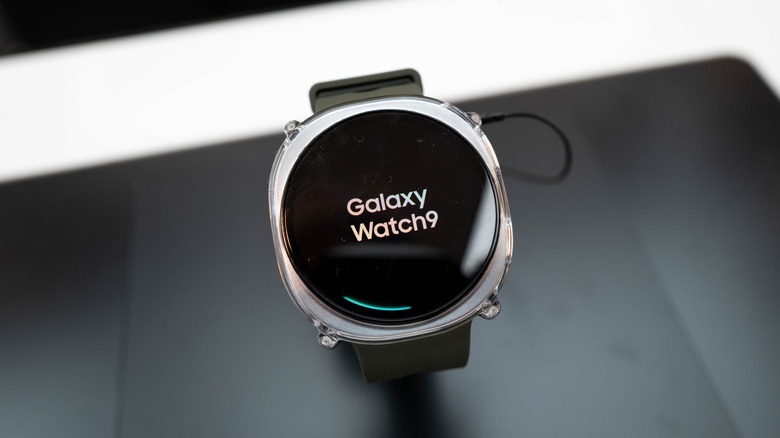
The best alternative can be subjective, so when comparing brands to the latest Samsung offering, the Galaxy Watch 9, I'm considering battery life, fitness features, and price. Tackling the smartwatch market methodically like this turned up choices for nearly anyone looking for a Samsung alternative, with at least one of the aforementioned criteria outperforming the Galaxy Watch 9.
Some people have more than one smartwatch for various reasons, which for me feels wrong. I've made sure to research each alternative so no stone is unturned, making sure buyers buy the right smartwatch for them. Buyers shouldn't have to buy one smartwatch for exercise, one for messaging, and another one for a night out. For those who like the Samsung Galaxy Watch vibe, most of the alternatives here run Wear OS and should, for the most part, feel familiar.
Google Pixel Watch 4
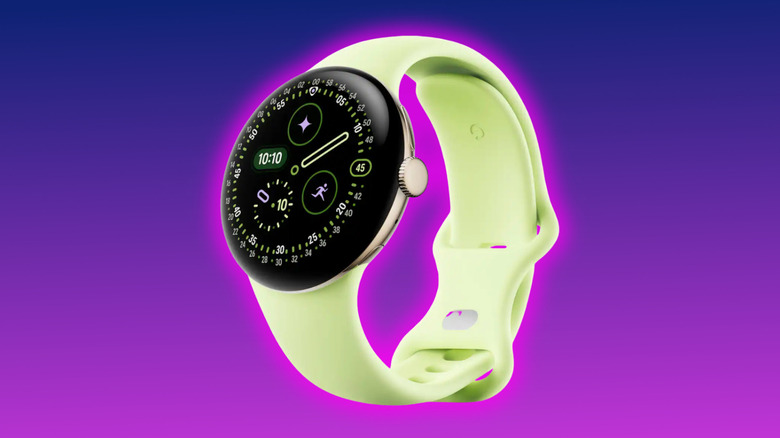
Google's Pixel Watch 4 is a polished Wear OS all-rounder, even though it's now a generation old. It features a clean install of Wear OS 6, the curved display that has become a staple of the lineup, and Fitbit health tracking starting from $329.99 for the 41mm LTE model.
Breaking down the specs, the display is a 1.4-inch LTPO AMOLED curved "Actua 360" domed glass with up to 3,000 nits peak brightness, which is 1,000 nits higher than the Pixel Watch 3 and a 10% larger screen. It also features a Qualcomm Snapdragon W5 Gen 2 processor, 32GB of internal storage, and 2GB of RAM.
It's tough, too. The domed screen is protected by Gorilla Glass 5 and an aluminum frame. It comes in 41mm and 45mm sizes, which weigh 31 grams and 36.7 grams, respectively. Battery life is solid at roughly 2 days with light use, it can fast charge to 50% in 15 minutes, and it reaches 100% in around 45 minutes to one hour. The side-rotating crown and side button combo is back, which can be a bit too small and stiff to operate. Other minor nitpicks would be the proprietary strap connectors and Pixel Watch 4 needing the Fitbit and Google Pixel Watch app to function properly.
Google Pixel Watch 5
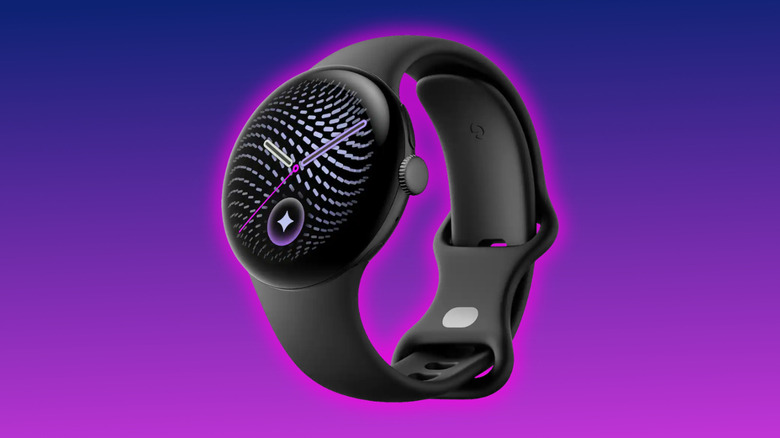
The Google Pixel Watch 5 keeps the same design as the previous generation, but packs double the storage, offline Gemini functionality, better GPS and heart rate accuracy, and Health Guardian. That will run you an extra $100 over the Pixel Watch 4 for the 45 mm Bluetooth model at $429.99, or $200 more for the LTE model at $529.99.
Depending on how much users value higher specifications, the Pixel Watch 5 is a big leap over the last generation. It has double the storage at 64GB, 3GB of RAM, and around a 12% CPU gain with an upgraded Snapdragon W5 Gen 2 Accelerated chip. One notable exclusive feature is the ability to run Gemini offline on the Pixel Watch 5. For now, it only handles small tasks like setting timers, turning on the flashlight, and basic fitness commands like starting and finishing a workout.
Health Guardian is a big bonus, however. It has loss-of-pulse detection, breathing-emergency recognition, and blood-pressure tracking, and insulin-resistance trend tracking is coming later this year pending FDA approval. The battery life is closer to just over 24 hours this time around, but it can fast charge to 100% in under 45 minutes as well. The Pixel Watch 5 ships with Wear OS 7 out of the box, featuring better device controls and more Gemini features dropping at a later date.
Xiaomi Watch 5
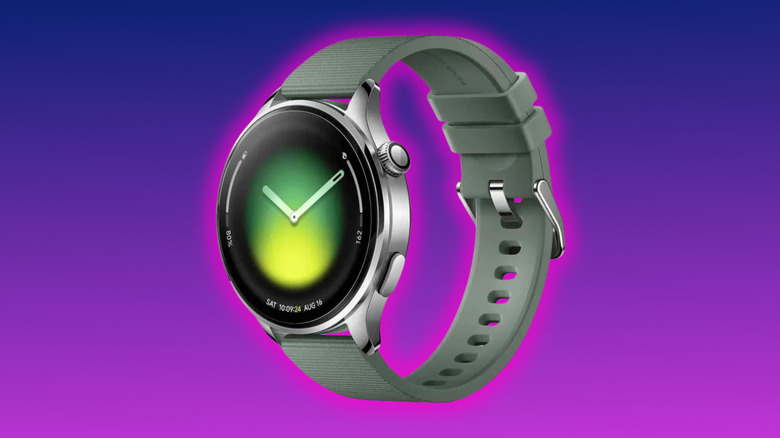
For buyers looking for the best battery life without sacrificing on general specifications, Xiaomi Watch 5 is a great pick. Its battery is a 930 mAh Si-C, which means it's a stacked cell that has roughly 10% silicon-carbon. This translates into roughly five full days of battery life in Smart mode with heavy use, and nearly two weeks in power-save mode, which is leaps and bounds over Galaxy Watches 24-hour battery with moderate use.
This powers a dual chipset configuration, specifically a Snapdragon W5 Gen 1 paired with a BES2800 co-processor. This combination allows the Xiaomi Watch 5 to support dual operating system, Wear OS 6 for smart mode and Xiaomi Vela OS for power-save mode. Switching from one to the other requires a reboot, but this it's such a great idea, especially for the very competitive $260.99 price point ($334.60 MSRP).
The screen is a 1.54-inch AMOLED with a sapphire glass front and back, which has a Mohs scale rating of 9 out of 10, second only to diamond. It's going to take a lot of damage to get a scratch on this glass. It weighs 56 g, has a 316L stainless steel body, rotating crown, shortcut key, and fits 22 mm standard straps. The only downsides here are no LTE, ECG or HRV support on the international version, but for the price point and solid features where they count, you may forgive the missing features.
OnePlus Watch 4
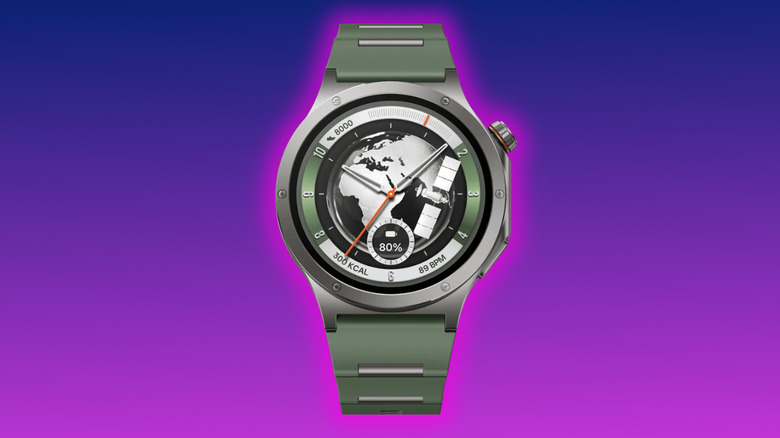
The OnePlus Watch 4 is the answer to Xiaomi Watch 5's shortcomings while sporting similar specifications and technology, but it's price is more in-line with the Samsung Galaxy Watch9 at $429 MSRP. The OnePlus Watch 4 is roughly $30 cheaper than the 44 mm LTE model, but only supports Bluetooth connectivity. For most people, this isn't an issue as their smartphones are never far away, but for buyers who plan on linking a smartwatch with their network provider, this isn't a great choice.
The battery is a 646 mAh Si-C battery, which is slightly less than Xiaomi Watch 5, but still features a similarly long battery life of 5 days in smart mode and up to 16 days in power save mode. The dual chipset configuration is a Snapdragon W5 SoC running Wear OS 7 for Smart mode, combined with a low power BES2800 co-processor running OxygenOS Watch 8 for Power Save mode.
It features a 1.5-inch LTPO AMOLED sapphire crystal screen that's housed in a titanium alloy frame that puts out 3,000 nits peak. It's lighter than the previous generation, weighing in at 43 g alongside a better strap design that now lies flat on a user's wrist. It's built to last with 5ATM and IP68/IP69 ratings, which means a user could jet wash this watch, and it would be okay. I would advise against doing this, but for any readers that do it anyway please let me know how it goes.
Garmin Venu 4
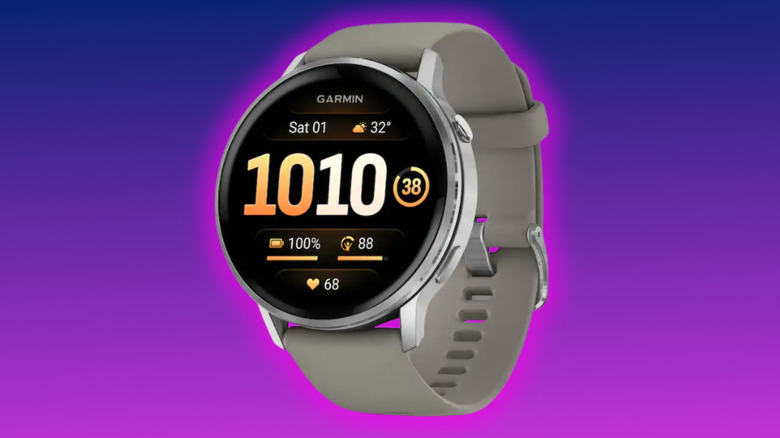
For buyers wanting a fitness-focused smartwatch over the usual features found in a smartwatch, the Garmin Venu 4 won't disappoint at $499.99 (MSRP $549.99). The battery lasts around 10 days on the 41 mm model, with a 25 day battery saver mode, around 4 days with always-on display, and lasting for around 20 hours in GPS-only mode.
The fitness features in this smartwatch are impressive. Multi-band GPS, Body Battery, Training Readiness, HRV status, suggested workouts, ECG app, Pulse Ox, sleep coach, and a dedicated LED flashlight should keep gym and running buffs happy during darker nights. The screen isn't as tough as other smartwatches in this article, but it's still a 1.4-inch AMOLED Gorilla Glass 3 screen housed in a stainless steel case. The quick release bands are also industry standard at 22 mm, so it's easy to switch out styles when needed.
Other smart features include notifications, Garmin pay, music storage, voice assistant, and calls from the Garmin Venu 4 directly. The user interface doesn't hold a candle to the well-optimized Wear OS, so if buyers are bothered about the fitness features and solid GPS capabilities, this isn't going to be a good buy. But Garmin's long support window for its smartwatches might turn some heads.
Methodology
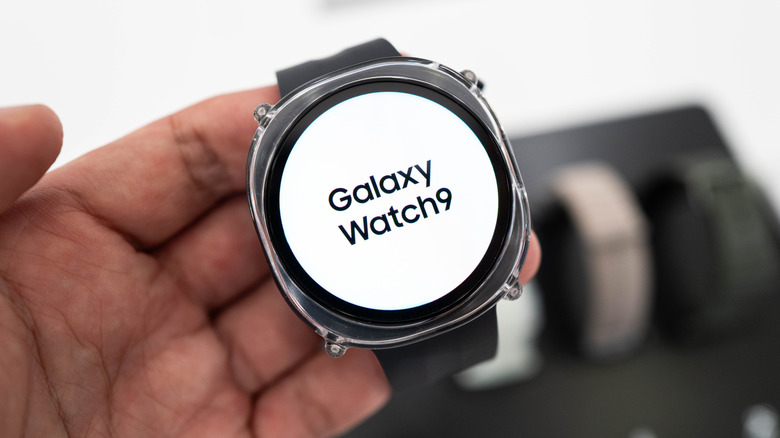
I picked these five Samsung Galaxy Watch alternatives because each one has a feature that knocks the Galaxy Watch 9 out of the water in a meaningful way. Together they cover the full range of what a smartwatch buyer might prioritize; battery life, fitness, ecosystem, build, and value.
Every pick, bar the fitness and GPS-focused Garmin Venu 4, runs Wear OS, which is one of the main features to compare with Galaxy Watch, and are all 2025/2026 models with U.S. availability. Research consisted of gathering various reviews and first impressions from GSMArena and CNET while cross referencing with consumer reviews and official specifications.
Despite common smartwatch myths readers might have heard, there's no solid answer to the best smartwatch alternative to the Samsung Galaxy Watch. It all hangs on the priorities of the user; Google Pixel Watch 4/5 offers the best version of Wear OS, Xiaomi/OnePlus is for battery life, and Garmin is for fitness. Smartwatches all cater to different use cases, so it's a good idea to think about how a smartwatch would be used in your day-to-day life, then go for a make and model that will fit best. For example, I'd be most interested in a feature set that allows smartwatches to operate just like a smartphone over fitness advantages, so my Google Pixel Watch 3 suits my needs, but yours may differ.