

Samsung Galaxy Watch Ultra 2 Review: Samsung's Best Smartwatch Yet
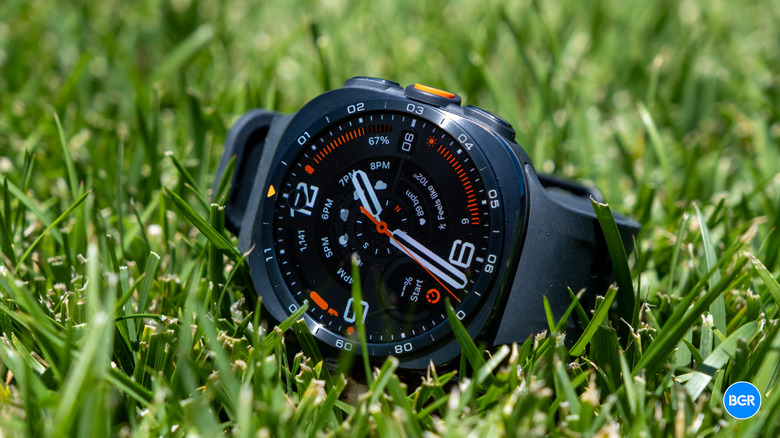
The Ultra variant of the Samsung Galaxy Watch is designed for those who want something a little bulkier and more advanced and are willing to pay for it. The latest model is the Samsung Galaxy Watch Ultra 2, and there are a few things that make the new device better than the previous generation, according to Samsung. For starters, it has a better battery life, a faster processor, and a similarly durable design.
It is, however, a little more expensive than last year's Galaxy Watch Ultra, with the 2026 model retailing for $700 compared to the 2025 model's $650 price tag. That's already a pretty high price for a smartwatch, especially when compared to Samsung's cheaper Galaxy Watch models or other Android smartwatches. Plus, it has to go head to head with a number of existing Ultra-class models, like the Apple Watch Ultra. Is the Samsung Galaxy Watch Ultra 2 worth buying, or should you look elsewhere? I've been using the new device to find out.
Design
Obviously, one of the main reasons people are drawn to a device like this is its design. It's not as subtle or sleek as other Galaxy Watch models, but it's not supposed to be. The Ultra 2 has the same cushion-style 47mm case as the original, and if you liked the first Ultra's squared-off look, you'll like this. If you found it bulky, you'll still probably find this one bulky too — though Samsung says the new device is around 12% thinner than the original. I didn't notice a dramatic difference, but I didn't have the original on hand to compare side-by-side.
The build materials are solid as well. The case is titanium — available in Titanium Silver and Titanium Gray colorways — and the display is covered in scratch-resistant sapphire crystal. I found both held up well in daily use, though I wasn't able to use the device for a long stretch of time for this review, and it's possible that it will pick up scratches and dents over months of use.
The Galaxy Watch Ultra 2 also upgrades from the original's IP68 rating to IP69K, which covers high-pressure and high-temperature water jets, and it retains 10 ATM water resistance alongside MIL-STD-810H certification for temperature, shock, and vibration. New this generation is EN13319 certification for recreational diving down to 40 meters — the same standard Apple carries on its Watch Ultra line. In other words, this is now a watch you can legitimately take diving, not just swimming.
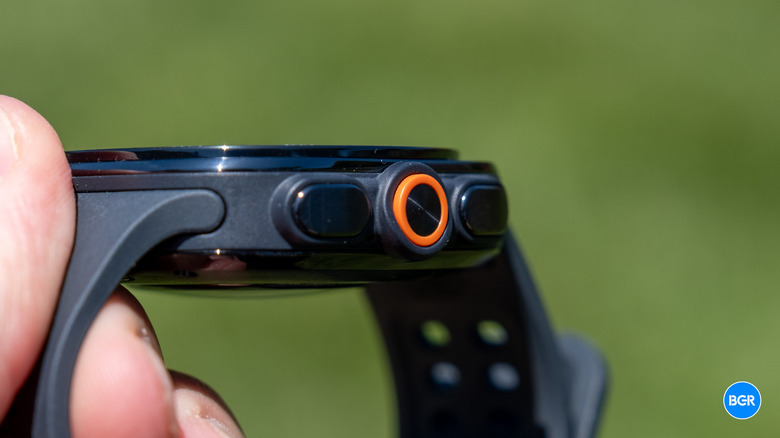
Controls are handled by three side buttons, including a textured orange Quick Button that you can customize to launch workouts or other shortcuts. The color and texture make it easy to find by feel, which matters when you're mid-run with sweaty hands and don't want to fight a touchscreen. Samsung bundles the watch with a perforated Marine Band that uses an internal Air Pocket pattern to let water drain and sweat dry after swims. I found that the band stayed comfortable through long wear.
Display
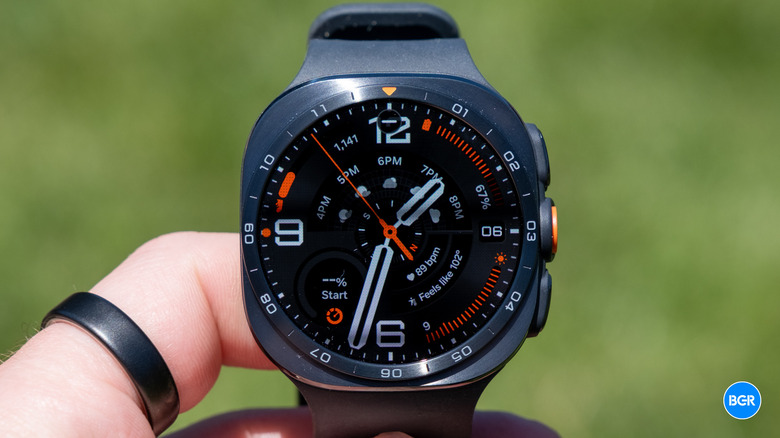
The display on the Samsung Galaxy Watch Ultra 2 looks great. It's a 1.52-inch Super AMOLED panel at 498 x 498 pixels, slightly larger than the last-generation model's, with a peak brightness of 5,000 nits. That's a full 2,000 nits brighter than the first Ultra, and it comfortably outruns the Apple Watch Ultra 3's 3,000-nit peak — which was itself considered class-leading not long ago. Samsung calls it the brightest smartwatch display available. Whether or not that's true, under intense, direct sunlight, everything on the screen stays vividly legible. You don't have to constantly shade it or squint at it, which is very helpful.
The high dynamic range of the panel helps just as much as the raw brightness. Wear OS leans on dark backgrounds, and against them, text and colored metrics stay crisp and easy to parse at a glance. Even information-dense watch faces remain readable without any extra effort.
The always-on display is well handled, too. It shows simplified watch faces in a low-power state, and at the other end of the scale, the minimum brightness dims low enough that the watch never disturbed my sleep. For a device Samsung expects you to wear around the clock, both extremes matter, and both are executed expertly.
Battery and charging
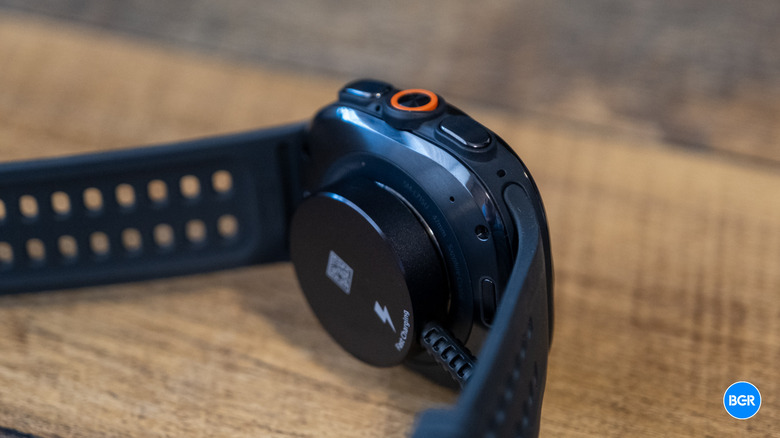
One of the most notable improvements of the new Galaxy Watch Ultra 2 is that you won't have to charge it as often. The Ultra 2 has an 800mAh silicon-carbon battery — 35 percent larger than the 590mAh cell in the original Ultra. Samsung rates it at 60 hours with the always-on display enabled. In my experience, it may well be pretty close to that. With AOD on, I easily got through a few days of use, often nearing three days. I'm not quite sure I got to the full 60 hours, but I certainly came close, and I could see myself being able to stretch it that far with more conservative use.
Charging speeds are another highlight. The watch reaches about 40% battery life in roughly 30 minutes. I'm pretty good at remembering to charge my watch — I charge it in the morning when I shower. A 20-minute charge every morning should keep the device more or less completely topped up. If you prefer to wait until it's completely out of juice, you'll be able to get it up to 100% in around two hours or so.
Of course, this is multi-day battery life measured in days, not weeks. A Garmin Fenix or Epix with a transflective display will still run for multiple weeks and make the Ultra 2 look weak by comparison. But for a full-featured smartwatch with an always-on AMOLED display this bright, three days is very impressive, and it can change how the watch fits into your life.
Performance
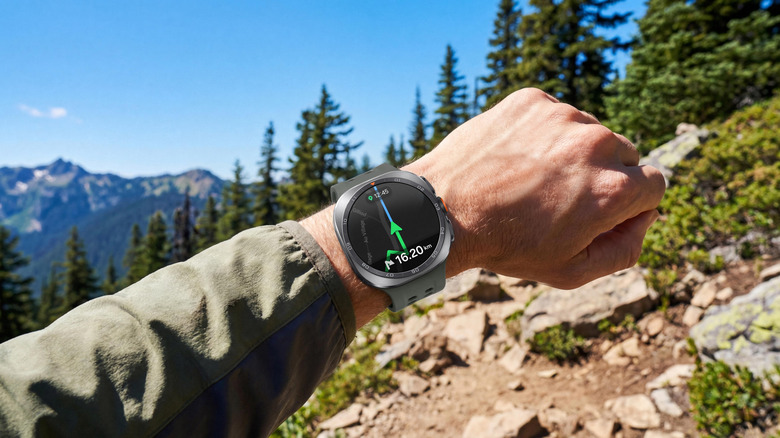
Inside, Samsung has swapped the original Ultra's Exynos W1000 for Qualcomm's Snapdragon Wear Elite platform, built on a 3nm process. The watch certainly feels quick. Apps open instantly, scrolling is smooth, and I never caught the interface stuttering, even during demanding multitasking like navigating with maps while streaming music mid-run.
Like everything else in 2026, AI is part of the conversation here. The device has an integrated AI engine, which can run models up to two billion parameters locally on the watch. Right now, that mostly powers Samsung's health features behind the scenes, but it also gives the Ultra 2 headroom for future software.
Apart from that, you'll get 2GB of RAM and 64GB of internal storage for apps, offline maps, and music caching. That matches the 2025 Ultra but doubles the storage of the 2024 launch model. LTE connectivity enables standalone calls, messaging, and streaming when you leave your phone behind.
Health tracking
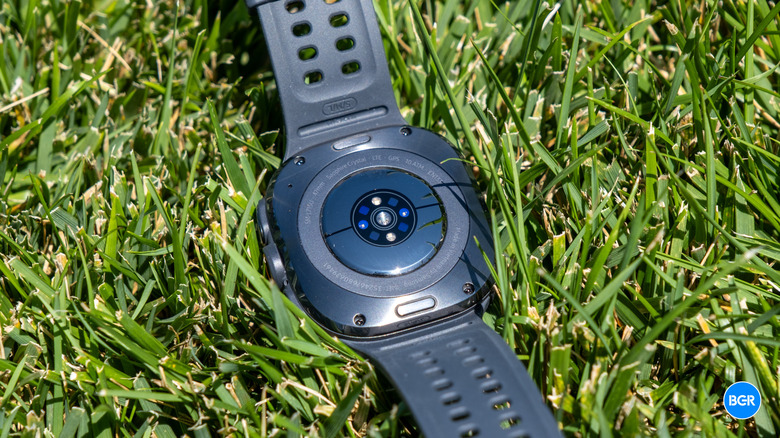
The Ultra 2's health story starts with Samsung's BioActive sensor array, which covers optical heart rate, ECG, and BIA body composition, supplemented by skin temperature, accelerometer, barometer, gyroscope, and ambient light sensors. On top of that sits dual-frequency Global Navigation Satellite System, aka GNSS (L1 and L5). The Apple Watch Ultra 3 matches the dual-frequency GPS and the EN13319 dive tracking, so neither watch has an edge on that front.
There are features on the Galaxy Watch Ultra 2 that aren't really widely available elsewhere. For example, the device offers blood pressure monitoring and body composition on top of the standard heart rate monitoring and sleep tracking. These are features that are becoming more common but still aren't ubiquitous.
Sleep tracking also performs admirably. The device has all the basic metrics you would expect, including total duration, heart-rate trends, and more. It's a little hard to tell if sleep stages are all that accurate, though — and at times, they weren't completely the same as the data from an Apple Watch and an Oura Ring 5 I was using simultaneously.
For the most part, the device seemed to be quite accurate, especially when it came to heart-rate accuracy. It also seemed to mostly match the Apple Watch Ultra 3 I was also using, which has been known to be pretty accurate all around.
I did appreciate the data that was available in Samsung Health. After a workout, you'll get a suggestion on how much water to drink, for example, and the information presented in the graphs is pretty thorough and detailed. Again, for the most part, the actual information was pretty similar to what was tracked by the Oura Ring 5 and the Apple Watch Ultra, though, so this won't be a deciding factor for switching if you already own one of those devices.
There are, of course, additional AI features related to health tracking on the device. In the Samsung Health app, you'll get things like an AI overview of your performance and metrics, and you'll be able to "Ask coach" for more information. Sleep apnea detection, vitals monitoring, heart health score, daily cardio load, fitness index, and hearing protection all come standard, too, and they're built around personalized baselines rather than fixed thresholds — so the watch alerts you when a metric actually deviates from your normal. For athletes specifically, the dedicated Trail Run mode provides real-time elevation, climbing progress, and terrain impact metrics, and the Nutrition Alert and Sweat Loss features calculate hydration needs during long activities.
As a whole, there's nothing missing from the health tracking features on the Galaxy Watch Ultra 2. I wouldn't say that the device is far and away ahead of anything else, though. So if you were hoping that the Ultra moniker meant that you would get dramatically more from health tracking, then you may be disappointed.
Software
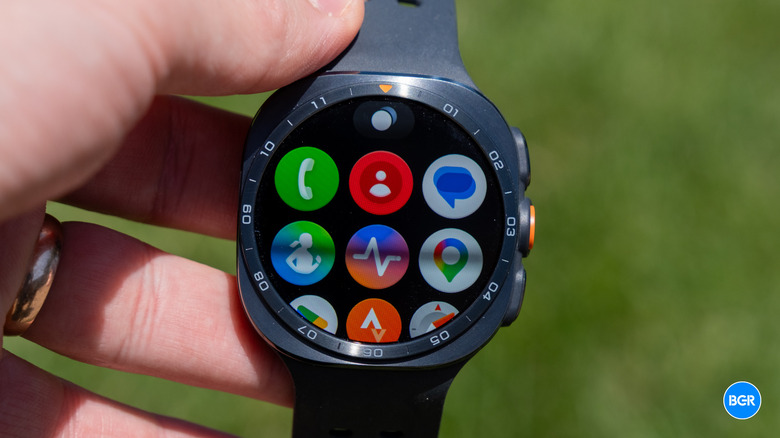
The Ultra 2 runs Wear OS 7 layered with Samsung's One UI 9 Watch interface, and overall, I found the interface to be intuitive and easy to navigate. It certainly looks like a Samsung operating system, tying in much more closely with Samsung's smartphone One UI than it did a few years ago, when the smartwatch OS was much more Google-focused. That said, that's not necessarily a bad thing, especially for those who are already in Samsung's ecosystem and want to stay there.
You'll also get full access to the Google Play Store, Google Maps, Google Assistant, and YouTube Music, alongside deep integration with Samsung Health and Samsung Wallet. The Galaxy Watch Ultra 2 is only compatible with Android devices running Android 13 or later with at least 1.5 GB of RAM. There is no iOS compatibility, as expected. If you're an iPhone user, you'll probably want to stick with the Apple Watch Ultra 3.
Samsung bundles a 60-day free trial for Strava and a two-month subscription to iFIT, which are nice ways to explore the watch's training capabilities. More importantly, the advanced native health metrics and AI insights don't require any additional subscription — everything from Heart Health Score to Daily Cardio Load works out of the box, for free. Given how many competitors are quietly moving advanced metrics behind paywalls, that's worth calling out as a real point in Samsung's favor.
Conclusions
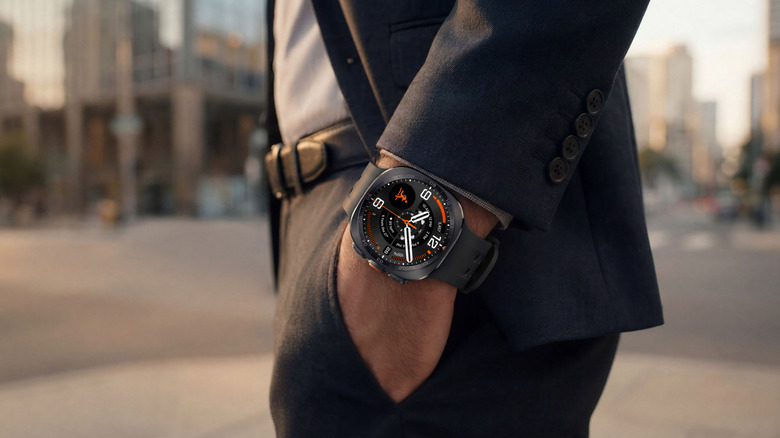
The Galaxy Watch Ultra 2 is a robust, high-quality flagship that fixes the two things holding the original back — battery life and processing power — while adding a display that has no equal and a health-tracking suite that mostly delivers on its ambitions. For Android users who want a serious outdoor watch, this is the best one Samsung has ever made, and arguably the best one anyone has made for the platform.
That said, of course, it's not for everyone. It's big, it's $700, and much of what makes it special — dive certification, 5,000 nits brightness, three-day battery life — aren't necessary for many users. If you have smaller wrists or your fitness needs top out at step counting and the occasional gym session, this watch is overkill, and you'll be happier with something smaller and cheaper.
The competition
The Apple Watch Ultra 3 is the strict alternative for iPhone users, and it holds real advantages in satellite SOS and UWB connectivity — but it falls behind on peak brightness and standard always-on display battery life.
For Android users who don't need multi-day battery or recreational dive features, the standard Galaxy Watch 9 offers a better ergonomic fit at a lower price. At the other extreme, Garmin's Fenix and Epix models are vastly superior for multi-week ultra-endurance battery life, though they lack the rich app ecosystem and smartwatch integrations that make the Ultra 2 pleasant to live with day to day.
Then there's the last-generation Galaxy Watch Ultra, particularly the 64GB 2025 refresh, which remains highly capable. If you already own one, there's little incentive to upgrade unless the thinner case or the dive certification is strictly necessary for you — the core experience just hasn't changed that much.
Should I buy the Galaxy Watch Ultra 2?
Yes, if you like the design and want a high-performance, robust, Android-based smartwatch with great health-tracking.