

4 Reasons Why Some People Regret Buying A 3D Printer
If you're even tangentially interested in crafting projects, you've probably toyed with the idea of purchasing a 3D printer. On paper, they sound almost too good to be true; you can create virtually anything from storage hooks to figurines and everything is infinitely customizable. The reality, however, isn't so rosy.
Although 3D printers are great for prototyping and lowering your carbon footprint (since you can now print some things you'd otherwise have delivered), they're not for the faint of heart. Nearly every aspect of the printing process, from setting up to removing the finished item has a learning curve, and gaining experience often involves wasting time and possibly materials. Ideally, you'd view a printer as a long-term educational experience rather than something you can master immediately.
As long as you know what you're getting into ahead of time, you should be fine. That said, a quick look online shows that plenty of people regret buying their 3D printer. Let's break down the most common reasons for buyer's remorse so you don't make the same mistakes.
They bought without fully understanding the hardware
Deciding which 3D printer to buy can be tricky. There are several types to choose from, with each type, brand, and model having its own quirks. For instance, a disadvantage of open-frame 3D printers is that they're more prone to warping due to temperature fluctuations. Resin printers, on the other hand, require you to wear protective gear and work in a well-ventilated area due to the toxic fumes released during the printing process. Buying expensive gadgets without a solid understanding of their limitations and what day-to-day usage looks like almost guarantees you'll soon regret your purchase.
Instead, if there's a printer that you're interested in, dedicate some time to reading up on the basics. Key things you should know before buying a 3D printer include which materials it's compatible with, how large its build volume is, and its maximum print speed. Compare these specifications to other printers in the same price range. You may even find one that offers the same (or better) performance for less money. Don't stop there, though: it's always a good idea to check out user reviews and see how people who bought the printer actually feel about it.
Buyers underestimated the running costs
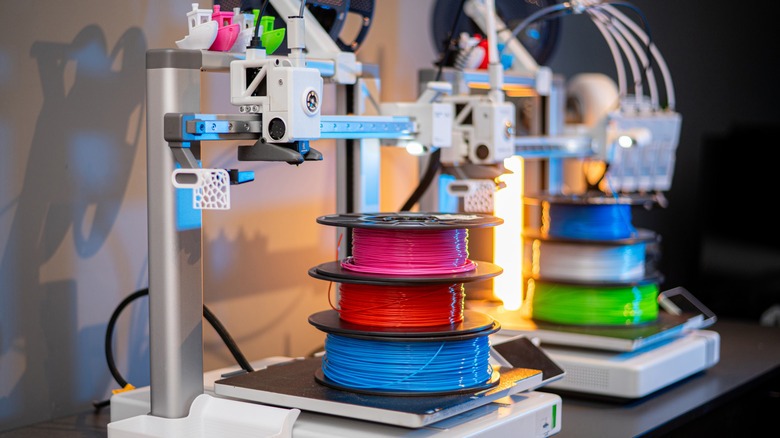
Entry-level printers tend to cost around $200; however, it's not just the initial investment you'll have to consider; these devices have relatively high running costs too. This obviously depends on how often you print and which materials you use, but for context, a 2.2-lb spool of basic PLA filament costs around $15. That doesn't mean you'll get 2.2 lbs worth of usable prints out of it –- there's always a chance of a failed print and often, some filament is used as scaffolding, providing structural support for overhanging areas of the model.
As your comfort level grows, you may want to upgrade your printer with an enclosure, a camera for monitoring progress, or nozzles of varying sizes and materials. Further, after enough usage, the printer's parts (typically the nozzle, extruder gears, and build plate) will eventually become less effective and have to be replaced. You may even outgrow your first printer entirely and decide to switch to a device that's larger, more reliable, or capable of printing in multiple colors simultaneously.
They didn't realize how much time is required
There is nothing quick about 3D printing. Assembling the printer for the first time can take anywhere from 20 minutes up to an hour and the initial calibration can easily take twice that. Then there's the regular pre-printing tasks which include leveling the bed and waiting for the nozzle to heat up. Some devices, like the Creality Ender-3 V3 Plus, save time by automating parts of this process, but even these models take around 11 minutes to complete a self-check. Still, the reduced effort required is a large factor in why self-leveling beds are a non-negotiable feature in modern 3D printers.
Then there's the printing time to consider. A simple 48-mm-tall Benchy model (the boat used to benchmark 3D printers) usually takes around an hour to print. This time increases if you want to create smooth surfaces, print a larger model, or increase infill density. Adding complexity also results in a higher time commitment. For example, bypassing build volume limitations by creating segmented parts that snap together requires multiple separate prints, thus taking longer.
Everything mentioned so far assumes you're using a ready-to-print model. Learning to create your own is an entirely separate challenge. CAD programs are often difficult to get the hang of initially, and not everything you design will translate well when printed. It takes research and persistence, as well as trial and error, to find what works for your printer and what doesn't.
They wanted to monetize their 3D printer
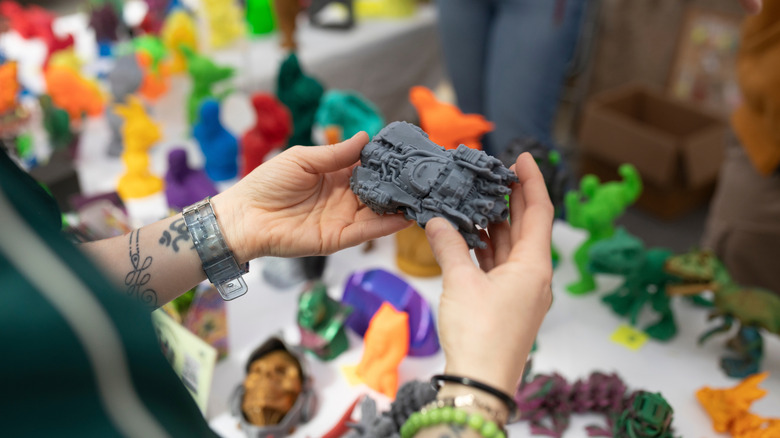
3D printers, like commercially available laser cutters and engravers, can seem like a low-effort way to make high-quality, personalized products. This makes them, at first glance, an appealing investment for anyone looking to start a small business or side hustle. Unfortunately, a quick look at Etsy, AliExpress, or eBay reveals dozens of identical 3D-printed products, so there's clearly no shortage of competition. In-person events aren't necessarily better, either, with these goods becoming increasingly common sights at conventions, craft fairs, and local markets.
If everyone is selling the same products, the only ways to stand out are to create something new (which takes time and effort) or to change the materials/colors (which increases costs). Either way, 3D printing isn't likely to be the quick money maker buyers might expect. Without a proper plan, any printer you buy for this purpose is likely to end up simply gathering dust.
Hopefully, at this point, you haven't been completely discouraged. 3D printers can be extremely worthwhile and a great way to resolve everyday problems, so long as you understand that there are substantial barriers to entry. If you're someone who loves to learn or tinker with machinery, you may well find 3D printing to be a fulfilling, practical hobby. On the other hand, if you have limited free time or are easily frustrated, it might be better to think twice about this purchase.