

Don't Be Surprised If TVs Get More Expensive This Fall - Here's Why
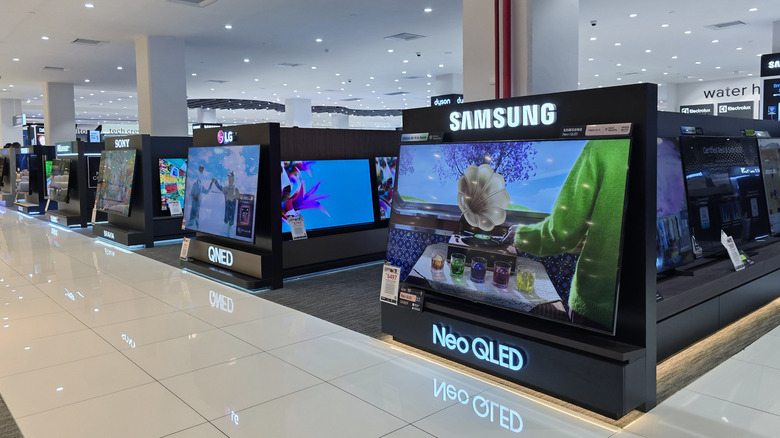
With 2026 already shaping up to be one of the most expensive years in tech, recent reports suggest users shouldn't be surprised if LCD TVs don't get more expensive this year. This is likely because panel makers in China dominate the industry and plan to raise prices. Television manufacturers like LG Electronics, Sony, and Samsung Electronics are already receiving notices that certain LCD panel companies are preparing for price increases.
Display manufacturers such as TCL CSOT and HKC are already planning new price levels starting this September (per South Korea's The Elec), while a company like BOE will begin setting new prices in the fourth quarter of 2026. Worse, it's postulated that these companies aren't raising display prices because of a component shortage, but because they're limiting production to prevent oversupply. This is possible because China has a dominant hand in LCD panel manufacturing.
With the holidays right around the corner, TV manufacturers are in an interesting position: they have less leverage to negotiate as they try to buy panels for one of the largest shopping seasons (assuming they need to). Those trying to save serious money on their next PC likely won't be surprised by the news of rising component prices, though it may be troublesome for consumers already feeling the squeeze of rising costs.
Will TV prices go down in 2026?
Recent news of panel makers in China seeking to raise LCD panel prices suggests folks should brace for higher prices. It also doesn't help that many smart TVs rely on components similar to those in tablets, computers, and other electronics, which are also feeling pressure from rising component costs and tariffs. In terms of display panels specifically, China seems to have a dominating hand in this industry, which may create further problems for consumers.
According to market research company Omdia, Chinese manufacturers like BOE, HKC, and TCL CSOT have crafted an oligarchy of sorts in this industry. For example, manufacturers in China can account for anywhere between 70% and 80% of panels between 65- and 85-inch sizes. Surprisingly, China has even more of a stranglehold on "ultra-large-size" panels (100 inches or larger). Right now, however, many suppliers in China are lowering production numbers to help defend current prices.
China may have gained its dominance in the LCD panel industry due to suppliers in Japan and South Korea ending LCD production due to past oversupply issues. For example, both South Korean companies LG Display and Samsung Display ended LCD panel manufacturing, allowing more companies to rely on parts from market-dominating China. Display manufacturers may just decide to take these rising costs on themselves, but it also wouldn't be too surprising to see the costs passed on to the consumer. On the bright side, at least smartphones have moved away from LCD panels.
What this means for the future
Right now, people seem conflicted about whether rising TV panel costs will affect consumers during the 2026 holiday season. Unfortunately, it will depend on whether manufacturers have already placed display orders to cover the holiday season. If so, consumers may not see costs rise until the start of 2027. However, companies that need to buy panels now may already be facing the new costs.
Though some reports claim that TV prices haven't risen for consumers in 2026, other reports cite the rising cost of RAM alongside tariffs as potential issues for consumers to look out for. BGR has also been warning since the start of January 2026 that consumers should expect smart TV prices to rise due to chip shortages. In this case, component costs have been rising due to the technology shift toward artificial intelligence.
With TV companies potentially able to absorb these costs because advertising is a strong revenue source, time will tell whether rising panel costs will affect consumers' wallets. There's also the issue that LCD panels are often ubiquitous, found in other televisions like RGB LED TVs and Mini-LED displays. It's likely going to be a complicated issue, though unfortunately, one that's likely to be highly frustrating for consumers.