

The Honor Magic9 Pro Max Has A Cool New Camera Feature Up Its Sleeve
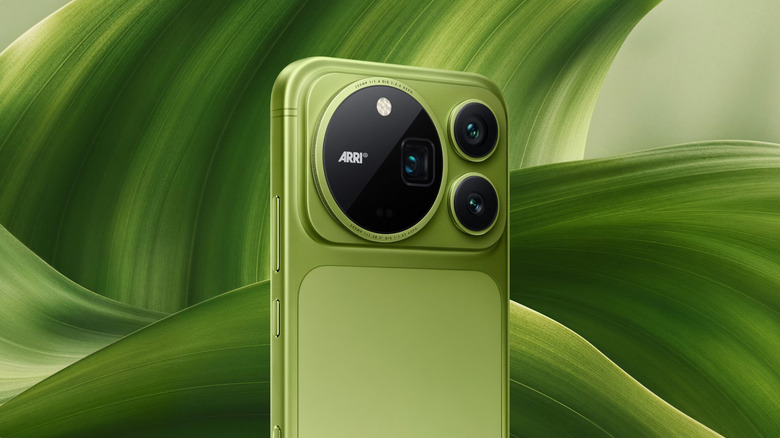
Honor launched its latest flagship smartphone, the Magic9 Pro Max, centered around a triple camera system made in partnership with Arri, a German cinema camera company whose rigs are used to shoot Hollywood films. Honor says the partnership includes calibration of the actual image sensors, color management, and live previews with color filters. The camera island is actually based on the three-lens turret on Arriflex cameras from 1937. Two more affordable devices arrive alongside it: the Magic9 and the Magic9 Super Edition, all going on sale beginning September 28, 2026.
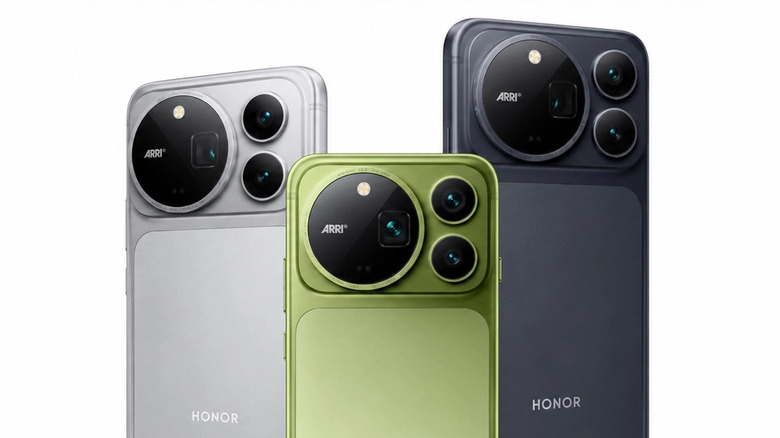
The Magic9 Pro Max retails in China for 6,499 yuan (approximately $968) for the version with 12GB of RAM and 256GB of storage, but configurations go up to 16GB/1TB. It comes in a range of colors: Shadow Black, Glacier Silver, and Moss Green. Global availability across Europe, the Middle East and Africa, and Southeast Asia will likely be announced in January 2027, if the Magic8 Pro's launch is anything to go by. Honor doesn't sell phones in the U.S. due to national security concerns, so the Magic9 Pro Max joins the long list of Chinese flagship phones you can't buy in America.
Two 200MP cameras and Arri color profiles
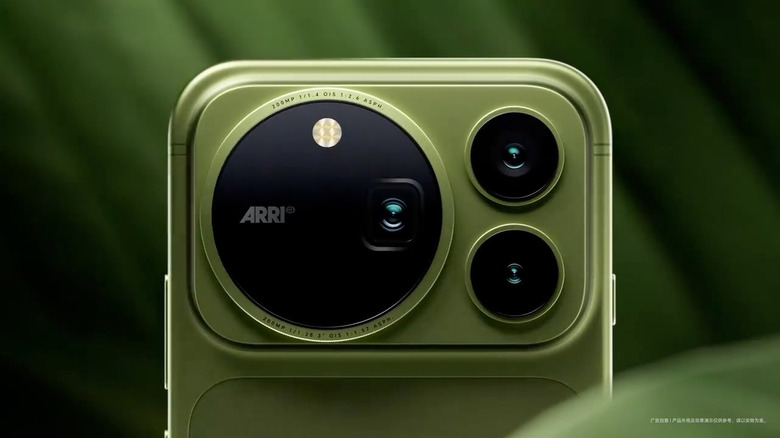
The Magic9 Pro Max comes with a triple camera system on its rear. The main snapper uses a 1/1.28-inch sensor with an f/1.57 aperture, optical stabilization, and what Honor calls 3-degree "gimbal-level" stabilization. The 200MP telephoto lens offers 3.5x optical zoom with a 1/1.4-inch sensor and an f/2.6 aperture. That megapixel count should mean that zoom shots look better in poor lighting conditions. The third lens is a 50MP ultrawide at f/2.0, and the selfie camera is a 55MP square front sensor that lets you take photos in either vertical or horizontal orientation, just like the one Apple introduced on the iPhone 17.
The cameras are handled by Honor's new dedicated imaging chip called the H1. It's a 6 nm chip that powered features like AI noise reduction on RAW files before the usual image processing starts. Honor's testing claims up to 14 stops of dynamic range, though we'll have to test how this holds up when we get our hands on the device.
The Arri collaboration is a big deal for videographers. The Arri Cinema mode can shoot footage up to 4K at 60 fps in 10-bit using the LogC3 curve and Arri Wide Gamut 3. It's a deliberately washed-out profile that keeps highlight and shadow information for you to grade later. The phone comes with 14 Arri Looks (which are essentially filters) preloaded so you can preview the color-graded footage while you're filming. A new feature called Cinematic LiveVideo can capture a three-second clip at up to 4K when you hold down the shutter button. However, the 60 fps video restriction for the Cinema mode is an odd choice when you consider the more affordable Magic9 Super Edition can record in 4K at 120fps.
An 8,800mAh battery and a 10,000-nit screen
Inside the Magic9 Pro Max, you'll find the Snapdragon 8 Elite Extreme Gen 6 chipset, the more powerful of Qualcomm's latest mobile chipsets. It gets the best of Qualcomm's new gaming, video, and on-device AI capabilities. My own testing of devices with the new Snapdragon chip showed that it does run rather hot, so Honor's heat handling will be very important considering this is a phone that will spend a lot of time running the camera.
The silicon-carbon battery is rated at 8,800 mAh, with 100W wired and 80W wireless charging. The display uses a 6.8-inch LTPO OLED panel that Honor rates at 1.5% reflectance thanks to a new anti-reflective coating, alongside a peak brightness claim of 10,000 nits. That brightness claim is a lot of marketing talk, and while technically true, only 1% of the screen can get that bright at once. Still, it should handle direct sunlight just fine regardless. The anti-glare coating is something you'll likely notice more in daily use. The Magic9 Pro Max's dust- and water-resistance ratings cover IP68, IP69, and IP69K, which means it can withstand considers submersion, high-pressure water, and hot water.
The Magic9 Pro Max offers an aluminum unibody design and features a raised camera section like Apple's iPhone 18 Pro. Honor claims it raised the camera module to stop your fingers creeping into the frame while filming. It ships with the company's MagicOS 11 software, which runs on top of Android 17. That means it offers a few Honor-exclusive features, such as the company's YOYO AI assistant, one-touch highlight clips pulled out of longer videos, and file transfer with iOS, macOS, Android, and Windows machines.
The Magic9 and Magic9 Super Edition
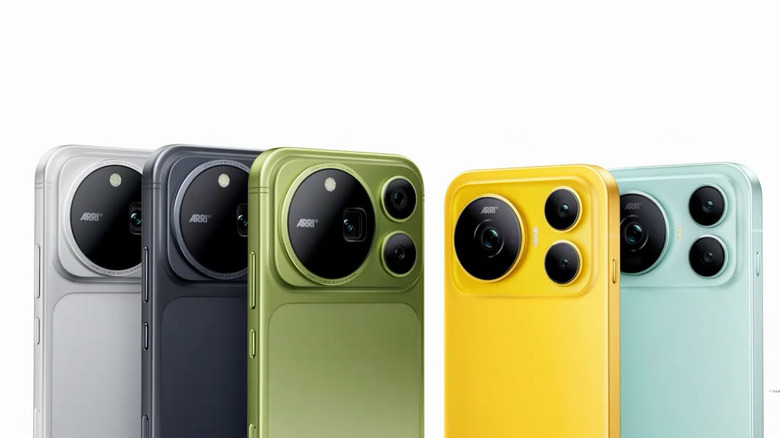
Alongside the Magic9 Pro Max, Honor launched two more affordable handsets. The standard Magic9 is the most compact of the three, with a 6.37-inch 120 Hz OLED display at 1,236 x 2,664 resolution. It's slightly smaller than the 6.58-inch panel on last year's model, which is great news for anyone that loves smaller handsets, as there aren't many to pick from in 2026. Despite its size, Honor still managed to squeeze in an 8,000 mAh battery with 80W wired and 50W wireless charging. It offers a similar camera system to the Pro Max, with a 200MP main snapper on a 1/1.4-inch sensor with an f/1.9 lens, a 200MP periscope telephoto lens on a 1/1.56-inch sensor, plus a 50MP ultrawide, and the same 55MP square selfie camera. The Magic9 starts at 5,000 yuan in China, which is approximately $745.
The Super Edition focuses more on battery life than the camera system. It offers a 6.81-inch display and an 11,000 mAh battery, which is even larger than the one in the Magic9 Pro Max. Honor managed to make that fit in a body that's 8.1-millimeters thick and 227g, and while it's not one of the slimmest phones around, it's impressive nonetheless. Keeping the device cool is a vapor chamber plus a 30,000 rpm fan, which can shift 12W of heat. That may be overkill for this handset since both the Magic9 and the Super Edition pack last year's Snapdragon 8 Elite Gen 5 chip, but hopefully Honor is using a similar cooling system in the Pro Max. It offers a 200MP main camera on a smaller 1/1.55-inch sensor, a 50MP 3x telephoto lens, and a 12MP ultrawide. The Super Edition starts at 4,500 yuan, or roughly $670.