

iPhone 18 Pro Review: The Best Camera Smartphone Of 2026
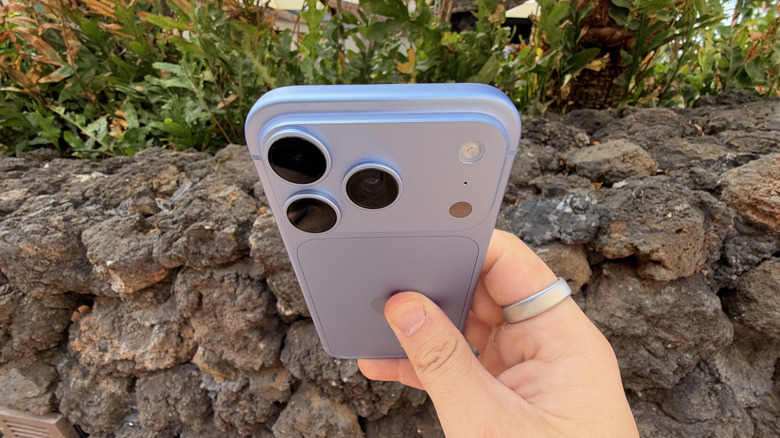
The iPhone 18 Pro is Apple's flagship smartphone launch for 2026, and it starts at $1,199, which is $100 more than the iPhone 17 Pro it replaces. Meanwhile, the larger iPhone 18 Pro Max starts at $1,299. I've spent about a week with a 512 GB iPhone 18 Pro in Glacier and a 512 GB iPhone 18 Pro Max in Burgundy, using both at home in London and on a trip to Maui, after a year with an iPhone 17 Pro Max.
Apart from new colors, this year's flagship iPhone looks almost identical to last year's. All of Apple's improvements to the phone sit inside, including the 2nm A20 Pro chip (which is attached to a larger vapor chamber for better heat dissipation), a main camera with a new variable aperture, a smaller Dynamic Island, and more battery life than ever before.
I expected to finish this review by recommending interested consumers to buy a discounted iPhone 17 Pro Max, but after a week of using this phone to take photos at night and getting through long travel days without a charger, I had to reassess my recommendation for anyone coming from an iPhone 16 Pro or older. Although, if you already own a 17 Pro, you can probably skip this one.
Design
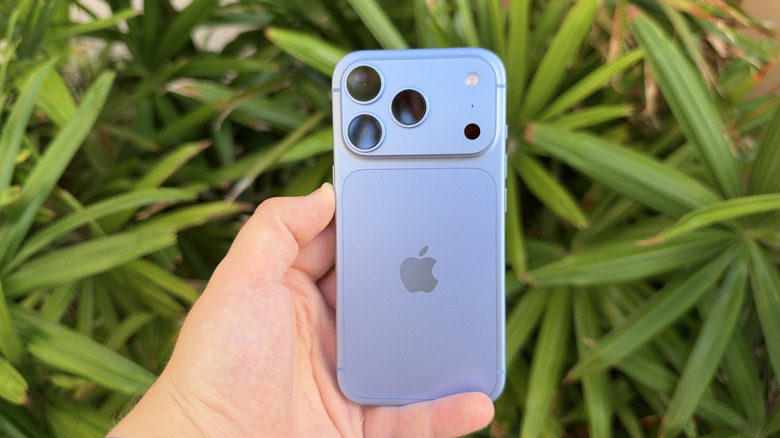
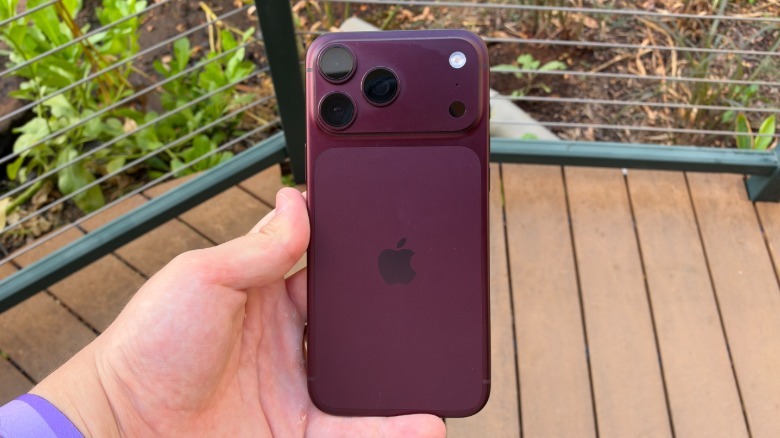
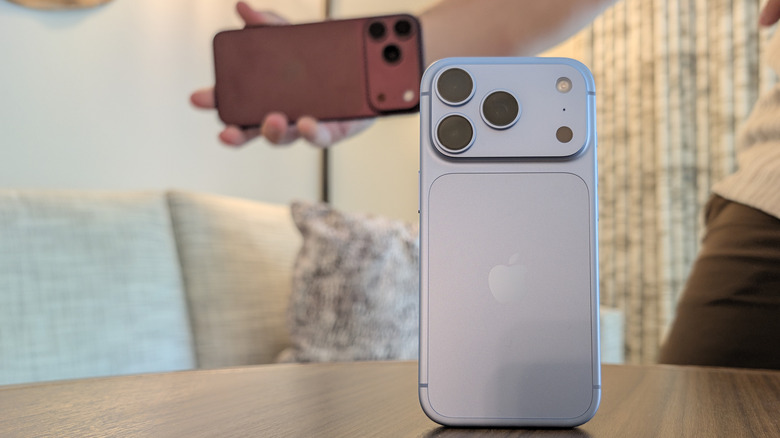
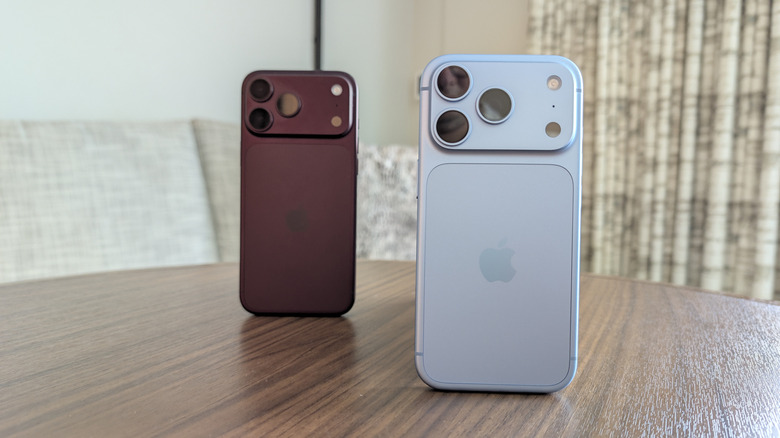
The Glacier colorway is technically blue, though it's a pale, cool shade that I watched a shopper in an Apple Store mistake for white after pre-ordering online, so it's worth seeing in person before you order. Apple sells both the 18 Pro and 18 Pro Max in Black, Silver, Glacier, and Burgundy. Burgundy is my favorite of the four. It's a deep red that's almost similar to a Bordeaux wine, though it picks up fingerprints on the glass back and aluminum frame quite easily, while Glacier barely shows them.
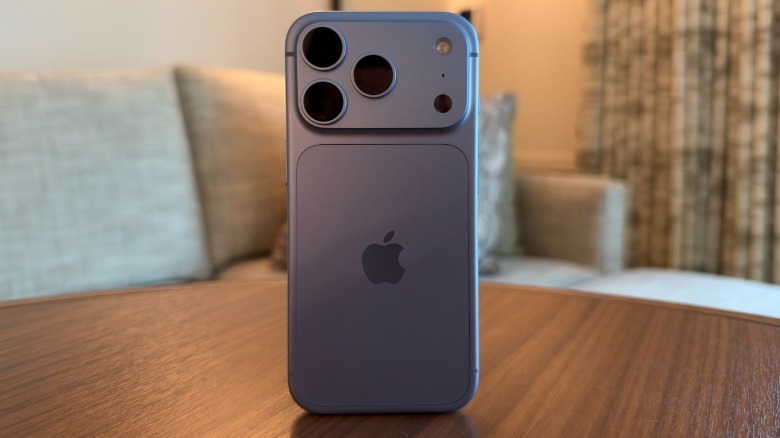
Every color looks better from the back this year. The glass panel sits much closer in tone to the aluminum surrounding it, which cleans up the two-tone look the iPhone 17 Pro had. Both phones also feel significantly less slippery than the 17 Pro did, which should help you avoid dropping them — and that's particularly important for these aluminum-framed phones.
 Connor Jewiss/BGR
The iPhone 18 Pro weighs 211g, which is 5g more than the iPhone 17 Pro's 206g, while the 18 Pro Max comes in at 249g. On paper, both are technically heavier than last year's devices, though I couldn't feel any difference in my hand, especially comparing the 18 Pro Max to my 17 Pro Max. I have fairly large hands, so both sizes were comfortable to use one-handed. If you're worried about using these new handsets with just one hand, the 18 Pro is likely the better buy for you.
I've used both phones without a case, and neither has a mark on it. The front display has Ceramic Shield 2 again, and my 17 Pro Max went the full year without a single scratch or dent on its screen. The aluminum unibody, however, is slightly less forgiving. My 17 Pro Max picked up dings from a few drops over the year I had it, and the 18 Pro uses the same material, so expect the same if you go caseless. Both are rated IP68 for water and dust resistance, though I didn't put this to the test myself.
The Camera Control button (which is not technically called a button, but essentially is) is still here, and I still don't use it. I never touched it once on my 17 Pro Max outside of reviewing it, and I doubt I'll do any differently this year. The stereo speakers on the 18 Pro are among the best on any phone you can buy in 2026 and are maybe slightly louder than last year's, though. Headphones are still the right choice if you care about audio quality.
Display
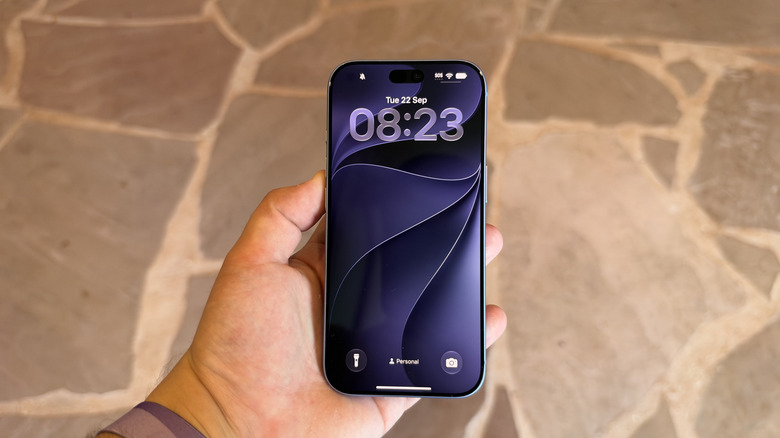
The iPhone 18 Pro display hasn't changed on paper. It's a 6.3-inch OLED panel at 2,622 x 1,206 resolution, while the Pro Max has a 6.9-inch panel at 2,868 x 1,320 resolution. Both displays run at 460 pixels per inch with ProMotion up to 120 Hz, always-on mode, and up to 3,000 nits of peak brightness outdoors. Those figures match the iPhone 17 Pro and 17 Pro Max exactly. If you're coming from an iPhone 16 Pro, however, the anti-reflective coating that cuts reflectivity by 35% and 2x better outdoor contrast that arrived last year will be new to you.
The iPhone 18 Pro's display is still the best display on any phone I've used this year. The Pixel 11 Pro XL is brighter on paper, with a 3,600 nit peak brightness, but the iPhone's panel looks better to me in everyday use. While I didn't measure brightness, I could read the screen perfectly in direct sunlight. Brightness behaved all the time, and I didn't notice any flickering or tinting at low brightness levels. I use the always-on display at all times, just as I did on the 17 Pro Max, and it didn't noticeably affect battery life.
Dynamic Island and Face ID
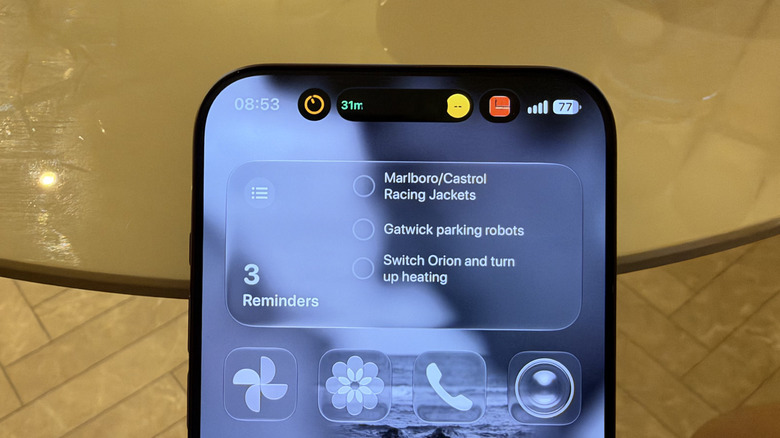
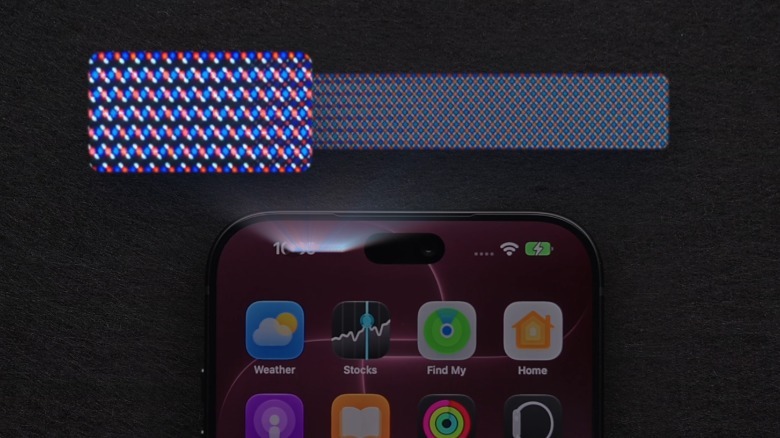
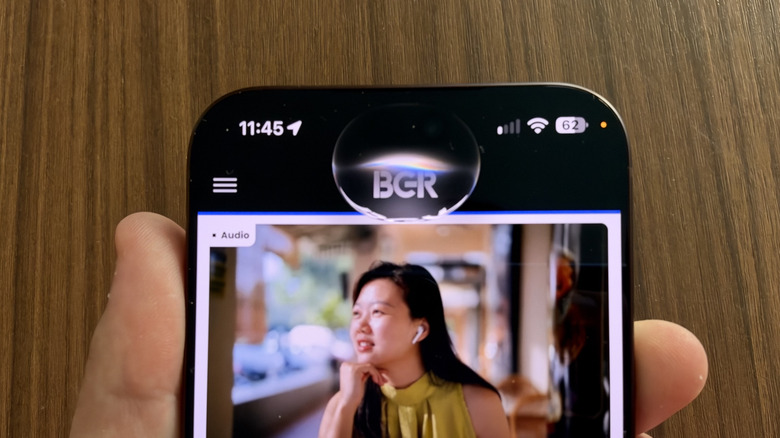
The Dynamic Island is the one visible display change from the 17 Pro to the 18 Pro. Apple shrunk it by moving Face ID's infrared camera under the top-left corner of the display, which frees up space at the top of the screen. The pixels above that sensor are less dense to allow for light to shine through to the sensor — which you can see under a microscope — but I never notice the pixels above that sensor during normal use. Occasionally, you can spot where it sits when the screen is off and catches a reflection, but it certainly isn't going to affect how you use the phone.
Despite the new sensor, Face ID worked as normal almost all of the time. It failed every now and again in the dark, at awkward angles, or when my iPhone sat on a wireless charger and I leaned over towards it, all of which are situations where my 17 Pro Max would have unlocked.
The Dynamic Island can also now show three live activities at once, which was handy while traveling with a flight tracked in Flighty and music playing alongside everything else. Once again, not enough of a change to warrant a rushing out to buy a new phone, but a nice upgrade for those who do.
Performance
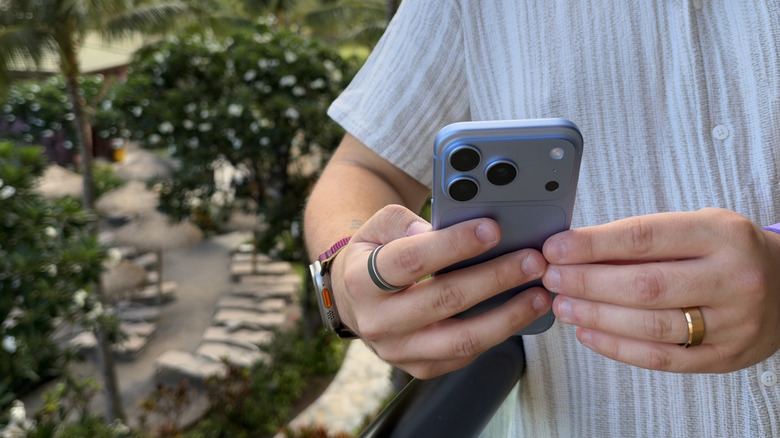
Apple's new A20 Pro chipset is built on a 2nm process and pairs a 6-core CPU (made up of 2 super cores and 4 efficiency cores) with a 7-core GPU that Apple says is up to 40% faster than last year's A19 Pro chip in the iPhone 17 Pro. It also has a dual 16-core neural engine for on-device AI tasks, which pairs very nicely with the new Siri AI in iOS 27.
I ran Geekbench 7 on the iPhone 18 Pro, and it scored 4,735 in the single-core test and 12,545 in the multi-core test. For context, the M2 MacBook Air averages 2,356 and 9,694 in the same benchmark test. Qualcomm's new Snapdragon 8 Elite Extreme Gen 6 chipset, announced at Snapdragon Summit 2026, scored 4,327 and 12,873 in both tests, so the A20 Pro leads in single-core and trails slightly in multi-core performance.
 Connor Jewiss/BGR
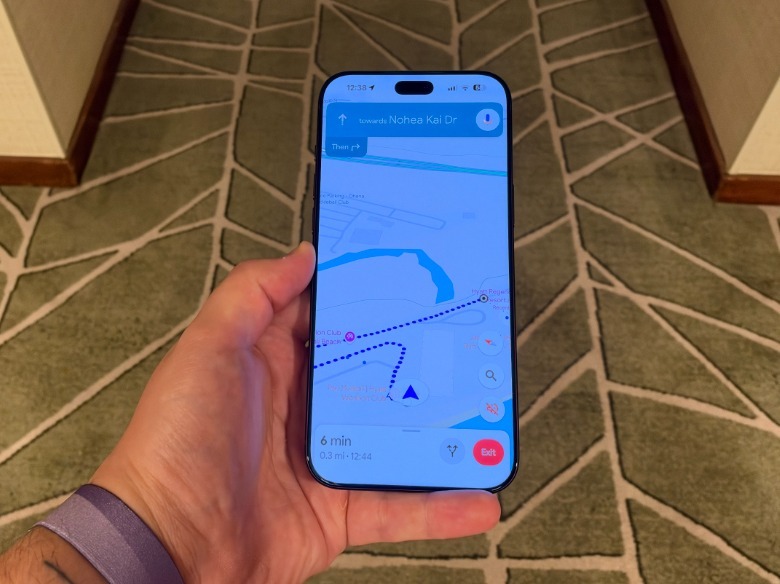
During a week of editing photos, shooting video, and navigating maps, I didn't see a single dropped frame, an app reload, or any stuttering. There isn't a task I can throw at the iPhone 18 Pro that it would struggle with. It also runs cooler than my 17 Pro Max did in daily use, and the 18 Pro takes more work to make it warm in the first place. Mrwhosetheboss's testing shows it can run slightly hotter than the 17 Pro Max under peak loads, as a larger vapor chamber pulls heat away from the chip and into the frame. But this is what it is designed to do.
Apple's new homemade C2 modem seemed to give me an extra bar of service in places where I previously only had one. Wi-Fi 7 remains fast, and it's a useful inclusion on the Pro iPhones.
Battery and charging
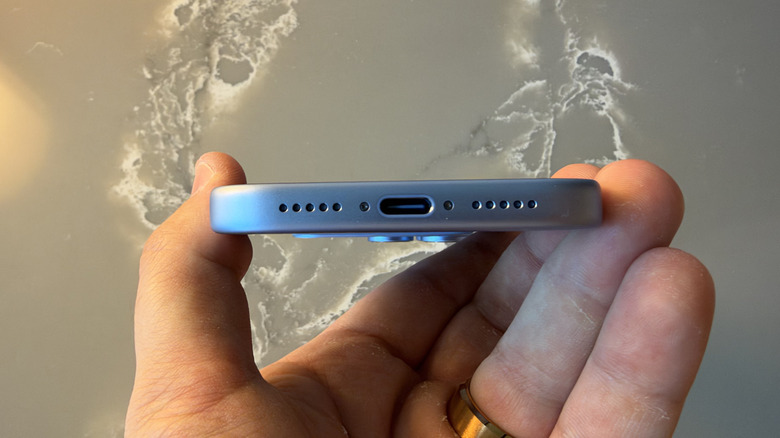
Apple rates the iPhone 18 Pro for up to 36 hours of video playback and 24 hours of typical use, and the 18 Pro Max for up to 45 hours and 30 hours, respectively. Those figures are for the eSIM-only U.S. models. SIM tray versions like mine carry slightly smaller cells, and Apple says eSIM-only models get 2 additional hours of video playback, so U.S. buyers should do a little better than I did. While Apple doesn't list the battery capacity, the European listings have them available. They put the SIM-tray iPhone 18 Pro at 4,056 mAh and the Pro Max at 5,391 mAh, up 1.7% and 11.7% on their predecessors.
On a light day with the iPhone 18 Pro, including a couple hours each of CarPlay and Personal Hotspot usage, plus scrolling and taking photos, I went to bed with around 50% left. I'd estimate around 7 to 8 hours of screen time, but I don't have the feature enabled. The 18 Pro lasts at least as long as my 17 Pro Max did, and possibly longer.
 Connor Jewiss/BGR
The 18 Pro Max manages to last slightly longer. On a 25-hour travel day to Hawaii with emails, social media, boarding passes, flight tracking, 3-4 hours of video watching, a 2-hour podcast, and a 30-minute video call, it arrived with 12% battery remaining after no top-ups. I charge it nightly out of habit, but most days, it likely would have reached at least halfway for a second day of use.
Apple quotes the 18 Pro and Pro Max will charge up to 50% in around 15 minutes with a 60 W adapter that supports adjustable voltage supply, so check our list of the best 60 W chargers for the iPhone 18 Pro. With my MacBook's USB-C adapter, both phones reached 50% in a little over 15 minutes. After 30 minutes, the 18 Pro sat near 80% charge, and the 18 Pro Max near 70%. MagSafe still tops out at 25 W, which is the same as last year.
Cameras
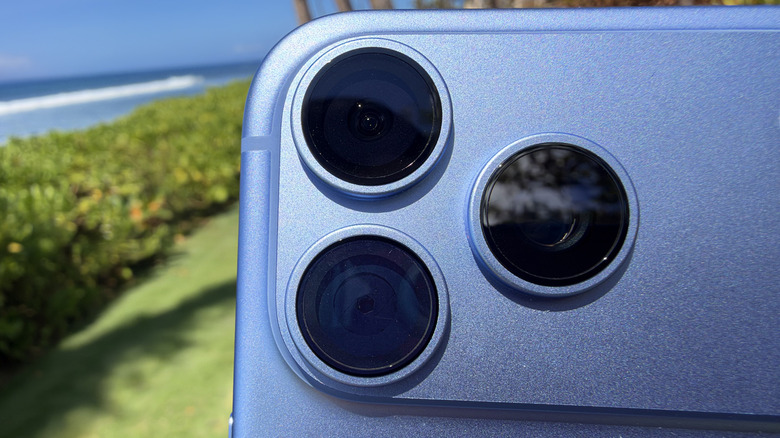
All three of the rear cameras are 48MP. The main camera has been updated with a variable aperture that switches between f/1.48, f/1.8, f/2.8, and f/4.0, while the ultra-wide and 4x telephoto lenses carry over from last year. This time around, both the 18 Pro and 18 Pro Max have identical cameras. The 18 MP Center Stage front selfie camera is unchanged, and it still lets you take a landscape selfie while holding the phone upright.
 Connor Jewiss/BGR
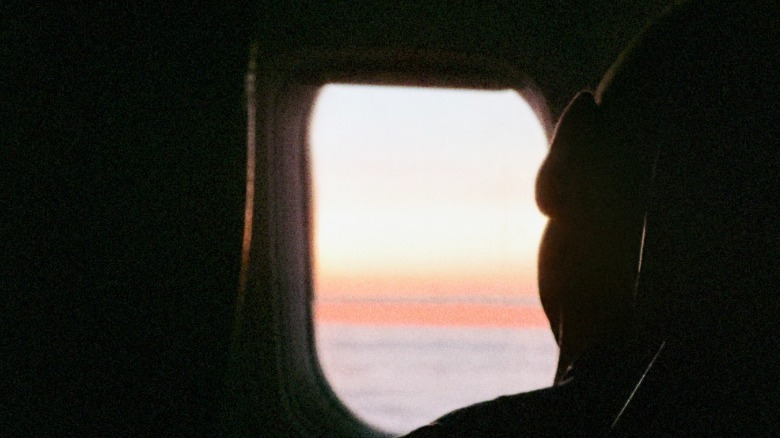
I shot photos in Maui, on the plane, around London, and at home. Colors look really natural and detail is strong, and the iPhone has some of my favorite image processing of any smartphone you can buy in 2026. In daylight, most of my shots look pretty similar to the ones my 17 Pro Max produced, and the difference between aperture settings isn't always visible. You can play around with the aperture settings to get a softer real background blur rather than a software created one, but this may not be noticeable in all shots.
 Connor Jewiss/BGR
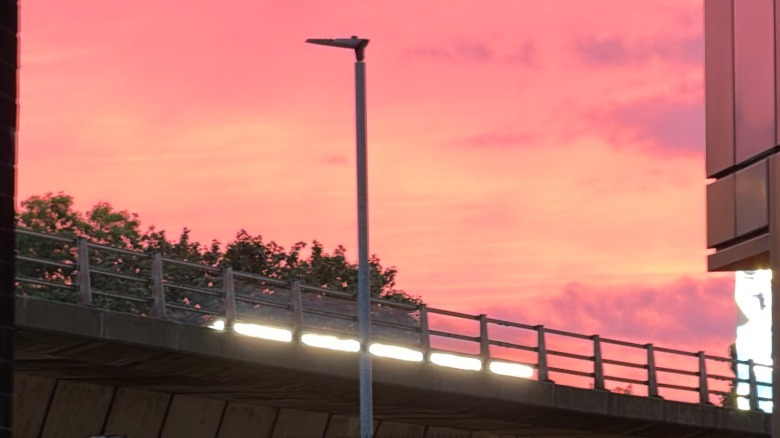
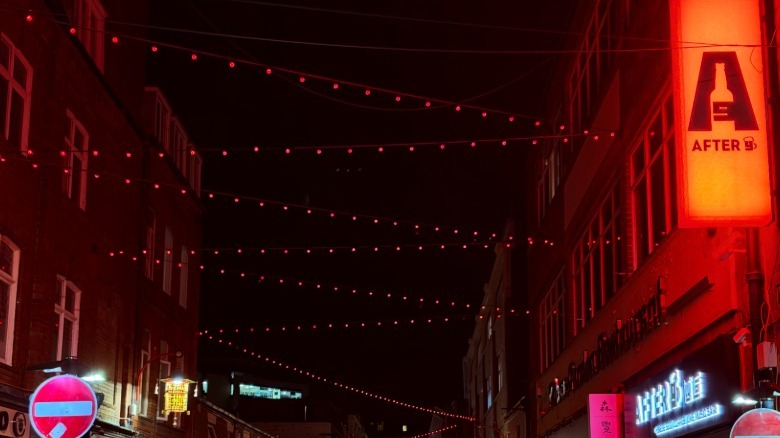
During low-light or nighttime shots, the 18 Pro's new camera pulls ahead. The wider f/1.48 setting lets in more light, which means less noise in shots and shorter night mode exposures. I managed to capture light trails and starbursts that I couldn't manage on the 17 Pro Max.
 Connor Jewiss/BGR
It also handles glare from bright light sources better in night photos and video. It still falls short of the Pixel 11 Pro XL in some scenarios, such as scenes with several light sources, and the Pixel is often quicker to capture photos with night mode enabled. But the iPhone wins on portraits and on nighttime shots taken without night mode.
 Connor Jewiss/BGR
Zoom is reliable up to around 20x. Beyond that, image quality drops off, and there's no AI reconstruction like Google offers on its Pixels.
 Connor Jewiss/BGR
Camera app
The new Pro controls, which are exclusive to the 18 Pro, let you set aperture, shutter speed, and white balance, among others, by hand, with a histogram also available to check exposure. I had fun experimenting with shutter speed, and it's much easier to use than the paid camera app I bought on a trip to San Francisco last year and couldn't figure out. The downside is that each setting takes several taps, which could be awkward if you're using the phone one-handed, and camera control can't adjust the aperture at all.
 Connor Jewiss/BGR
Smart Focus Tracking reliably follows moving subjects, though it's easy to switch on by accident by double-tapping when you're trying to lock focus. The new texture and grain options in Photographic Styles work well for daytime shots, but the film-style texture I was most excited about looks slightly less convincing during night shots. Some effects stay subtle even if their sliders are pushed all the way up.
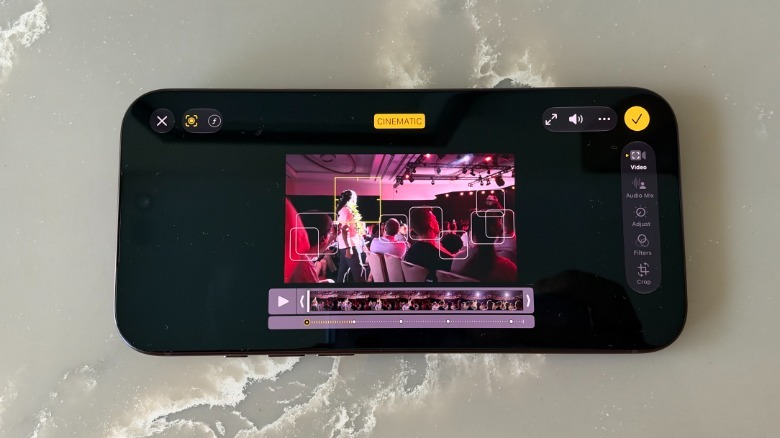
One of the other new camera features I used the most was applying cinematic effects to videos after recording them. I recorded in the regular video mode and added the cinematic effect later, which makes up for every single time I wish I'd used cinematic mode on my 17 Pro Max. It only works on footage shot with the new 18 Pro phones, though.
 Connor Jewiss/BGR
I didn't shoot in reference mode, the new setting that creates an unalterable reference copy of a photo to prove it hasn't been edited by AI. As much of a good idea as it is, it's opt-in and requires switching on a setting and then picking a dedicated camera mode, which is exactly why most people will never use it. It would make more sense running in the background on every shot, the way Live Photos does.
Software
The iPhone 18 Pro ships with iOS 27, and the headline feature is Siri AI, which is rolling out in beta. I have used the beta software on my iPhone 17 Pro Max for months, so this isn't new to me, but it does feel fast on the 18 Pro thanks to the A20 Pro chipset. I now send it questions I usually take to Google or ChatGPT, and it's excellent at pulling details out of my email and messages. I used it to recall my wife's passport number more than once when I'd forgotten it.
Siri mode in the camera app identified a plant for me at a garden center while I was out with my mum. I've also used Notify Me in Safari, which watches a web page and alerts you when it changes, as well as spatial reframing, which lets you adjust the angle of a photo after taking it. iOS 27 and Siri AI will also reach older iPhones, as we covered in our full iOS 27 review, so this shouldn't be a reason to upgrade to the 18 Pro.
Moving to the 18 Pro from my 17 Pro Max was quick. Really quick. I used the wireless transfer rather than an iCloud backup, since I don't have one, and it finished much faster than I expected — just a few minutes rather than an hour, as it's taken in the past. I'm not sure if this is down to the new A20 Pro chip or Apple's software improvements. I haven't run into any notable bugs while using iOS 27 on the iPhone 18 Pro either. I haven't had the chance to test iPhone Handoff yet, which lets you switch between two iPhones on the same number, since it only works with T-Mobile in the U.S. for now.
Conclusions
The iPhone 18 Pro may be an iterative update on the outside, but it's a substantial one inside. The variable aperture makes a visible difference at night, Pro controls turn Apple's camera app into something photographers will actually enjoy using, the A20 Pro chip can handle anything you throw at it, and the 18 Pro Max's battery life is the best I've seen on any phone. That's not to say this phone is perfect. Reference Image is a good idea but buried behind a setting and dedicated camera mode that many users likely won't touch. Night mode still isn't quite as good as the Pixel 11 Pro XL in busy mixed lighting conditions. Camera control remains an awkward apendage, and it doesn't even map to the new aperture control, which is the 18 Pro's biggest new feature.
If you still own an iPhone 17 Pro, you almost certainly don't need to upgrade unless you're a professional photographer or videographer. Everyday photos look similar. The design and display are the same, and iOS 27 brings Siri AI to your older phone anyway. I've broken down whether the iPhone 18 Pro is worth upgrading to from an iPhone 17 Pro in more detail.
The biggest competition to the iPhone 18 Pro is the iPhone 17 Pro, which launched at $1,099 and is now discounted at third-party retailers. You get the same design, display, ultrawide and telephoto cameras, but a fixed-aperture main camera, no Pro controls, and less battery life. The Pixel 11 Pro XL costs $1,299, the same as the iPhone 18 Pro Max. Its night mode is faster and sometimes more consistent in mixed lighting conditions, and its AI-assisted zoom reaches much further. The Samsung Galaxy S26 Ultra, meanwhile, starts at $1,300 and keeps the built-in S Pen, which makes it the one to pick if you want to use a stylus.
Price is one of the biggest compromises if you're considering the iPhone 18 Pro. The base models are $100 more than last year, and the 512 GB configurations I tested cost $1,399 for the Pro and $1,499 for the Pro Max. If you're on an iPhone 16 Pro or older, the upgrade is probably worthwhile, and photographers and power users will get enough from the new camera and battery to justify paying more than they would for a discounted iPhone 17 Pro. For everyone else, a discounted 17 Pro from a third-party retailer is still a sensible purchase.