

Google Pixel 11 Pro XL Review: The Best, With An Asterisk
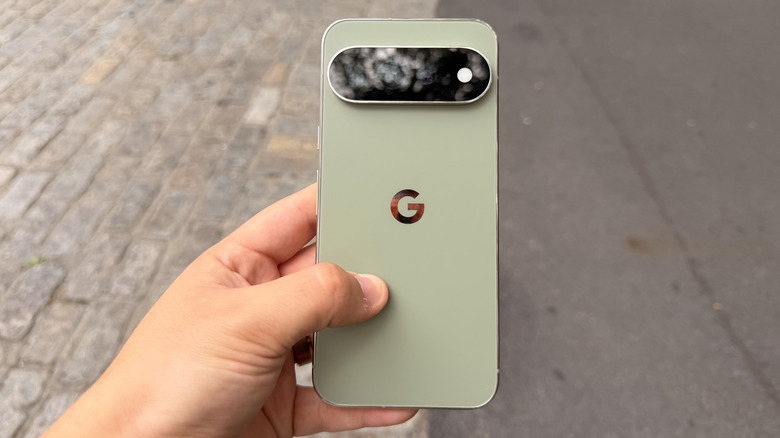
Google's most premium Pixel smartphone now starts at $1,299, which is $100 more than the Pixel 10 Pro XL was listed for when it launched last year. The base configuration drops from 16GB of RAM to just 12GB, and the 5,115 mAh battery is slightly smaller than the 5,200 mAh cell in last year's handset. Those are unusual trade-offs to ask for at the top of a lineup, and I think they set the tone for everything that follows in this Pixel phone.
It's not all doom and gloom, however. There's a new 50 MP main camera sensor, a redesigned 48 MP telephoto lens with a larger sensor, an AI-enhanced Pro Zoom that can reach 120x zoom, a 6.8-inch Super Actua display rated for 3,600 nits at its peak in direct sunlight, and the Tensor G6 chipset built on a 2nm process. Google is also offering HiLight as one of the flagship features on the Pixel 11 Pro XL — a ring of colored LEDs that replace the temperature sensor and rear flash.
I've spent about two weeks with the Pixel 11 Pro XL as my main phone, coming from an iPhone 17 Pro Max. During my time with the Pixel, I went on a trip to New York, where I did plenty of camera shooting, followed by a shorter trip to London, also with lots of photos. This is Google's best camera phone by a comfortable margin, and it's the best mainstream Android camera I've ever used. Overall, it's a modest generational upgrade to the Pixel series, and one that isn't necessarily worthy of the higher price tag it carries.
Design
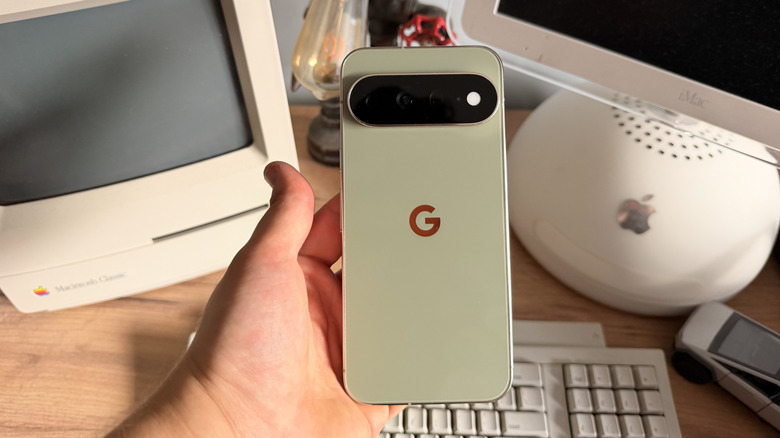
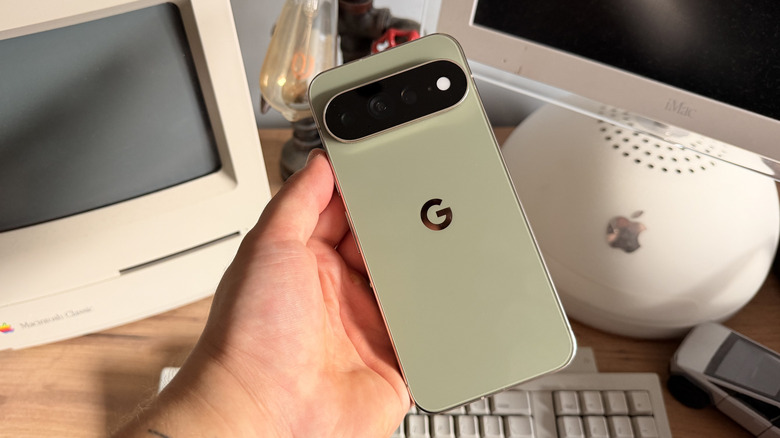
The Pixel 11 Pro XL looks very similar to Google's recent Pixel handsets. That being said, the tech giant has reduced the camera bar's thickness by about 40%. Because of this, the phone will now sit bumpless in one of Google's official, Made By Google cases. I've been using the device without a case, so I can't confirm the wobble-free claim, but the camera bar is noticeably less prominent than the slab of glass on the back of last year's Pixel 10 Pro XL.
My Pixel 11 Pro XL came in the Olive finish, which I think is the best option of the Pixel 11 offerings. The matte back glass feels great and doesn't show fingerprints, though the polished aluminum rails collect them constantly. At 6.4 inches tall, 3 inches wide, and 226 grams, this is a large phone. It's also not a light phone, though it is well-balanced, and it feels substantial rather than heavy, which is what you want from a phone at this price. It's the same aluminum-and-glass construction Google has used for a few generations now. I have fairly large hands, which makes one-handed use just fine for me; though anyone with smaller hands should look at the 6.3-inch Pixel 11 Pro instead.
Two weeks in, and there are no scratches or scuffs on the phone at all, despite it living in my pocket without a case. I've even chucked it in my backpack, and still it hasn't seen any damage. Google claims a new anti-scratch display coating more than doubles the scratch resistance compared to the previous generation. It's IP68 water-resistant, and it survived an afternoon rain shower without any problems, just as you'd expect.
While there is an under-display fingerprint sensor, Face Unlock is the standout for me. It's quick and reliable enough that the phone is usually unlocked before my thumb even reaches the fingerprint sensor. One hardware annoyance I found is the flashlight, which is much dimmer than I'd expect on a flagship phone and noticeably dimmer compared to last year's Pixel 10 Pro XL. The HiLight LEDs appear to have cost the flash some brightness, and if you use your phone's flashlight regularly, you'll notice the difference.
Display
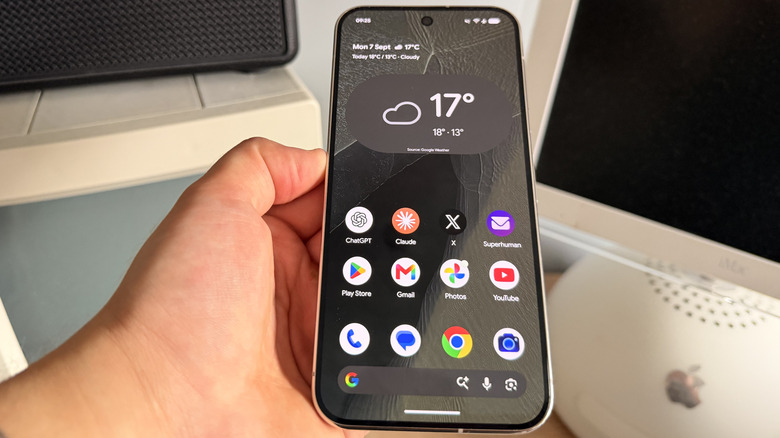
The Pixel 11 Pro XL's 6.8-inch Super Actua panel is rather excellent. It runs at 1,334 x 2,992 resolution with LTPO scaling from 1 Hz to 120 Hz. Google rates it at up to 2,400 nits in HDR and 3,600 nits at peak brightness in direct sunlight. While I have no way to measure the peak brightness, this does match with my experience; outdoors in direct sunlight, the phone gets brighter than I can force it to indoors. When this happens, nothing washes out, and the colors on the display remain vibrant.
While I've been using the phone, auto-brightness has been rather well-behaved, which is not something I can say for every Android phone I've tested. I also didn't notice any PWM flicker, which has been a concern on other devices. I don't use the always-on display, so I can't speak to what it costs in terms of battery life, but the LTPO panel has never felt like a battery hog.
At 486 pixels per inch, text remains crisp at the small sizes apps like Gmail and Slack default to, and the 20:9 aspect ratio means the phone shows a useful amount of a web page without the letterboxing that wider panels can introduce. Video is the obvious win, though. HDR content on a 6.8-inch panel this bright is the closest the phone gets to feeling like it was designed for watching content. It's one of the few reasons to pick the XL over the 6.3-inch Pixel 11 Pro.
Performance
The Tensor G6 chipset is where the Pixel 11 Pro XL gets a little more complicated, as has historically been the case with Pixel phones. In fact, it may be one of the reasons to skip the Pixel 11. Google's focus is efficiency and on-device AI rather than raw speed, with 50% more TPU compute and a claimed 3.5 times faster on-device AI processing. Day-to-day, those claims seem to hold up. Gemini answers questions faster than on any other handset I've used, and image processing — including some of the Pixel's more complex offerings — feels noticeably faster than before. Apps open quickly, animations are smooth, and using the phone doesn't feel slow. Usually.
Push the Pixel 11 Pro XL to its limits, though, and the gaps start to show. In New York, I had Google Maps navigating, music playing, and an email open while cross-referencing a photo from earlier in the trip in the Google Photos library. The phone began to visibly struggle; frames dropped, the keyboard lagged behind my typing, the apps I was using hung, and the back panel got rather hot. To the Pixel 11 Pro XL's credit, that only happened a handful of times over the two weeks I was using the device rather than being a daily occurrence. My iPhone 17 Pro Max has run hotter in more demanding scenarios once in a blue moon as well, but a $1,299 smartphone shouldn't be experiencing these problems on a semi-regular basis.
The new Tensor G6 chip only scores 2,739 points in single-core performance and 7,586 points in multi-core performance when tested through Geekbench 6. Compare that to the 3,756 and 9,727 scores in single-core and multi-core Geekbench 6 tests for the iPhone 17 Pro Max's A19 Pro chipset, and you can see how underpowered the Pixel 11 Pro XL is. You can see a similar variance when comparing the Pixel to top-tier Android handsets as well. Qualcomm's Snapdragon 8 Elite Gen 5 — found in many of 2026's Android flagship phones — has scored as high as 3,840 and 12,400 in Geekbench 6's single-core and multi-core tests.
While I don't often game on smartphones, the Pixel 11 Pro XL falls even further behind in this area. 3DMark's Wildlife Extreme test produced a top score of 3,338 for the Tensor G6, which is less than half of what the Snapdragon 8 Elite Gen 5 manages. If gaming is anywhere near the top of your priority list for a smartphone, buy a Snapdragon-powered device instead. Finally, the 12GB of RAM in the base configuration is worth bringing up again. Going backward on RAM while raising the price of the device puts the device's value in question.
Battery and charging
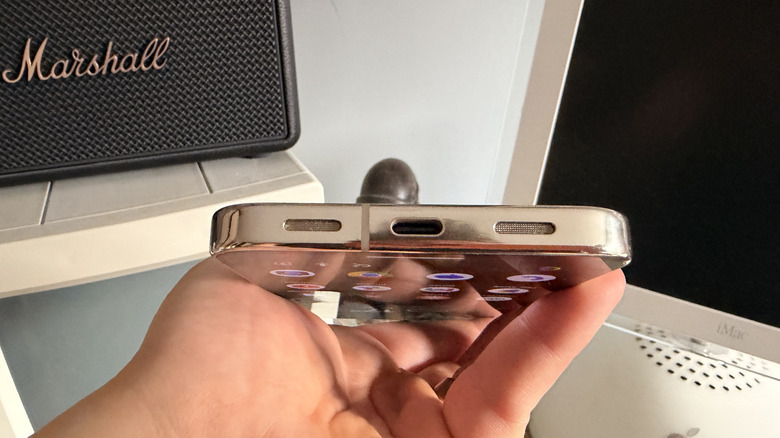
Battery life on the Pixel 11 Pro XL is solid rather than impressive. On a normal day, which means taking a few photos and videos, tethering a hotspot, using navigation apps, listening to music or podcasts, sending emails, and watching a couple of YouTube videos, the phone comfortably lasted for around seven hours of screen time and reached bedtime with charge to spare.
With the device in Airplane Mode on a recent trip, using it mostly as a camera with no SIM, it lasted the better part of four days. While a good result from the new Pixel, it's also essentially the same sort of battery life the Pixel 10 Pro XL delivered. The Tensor G6 chipset seems to prioritize maintaining battery life on a slightly smaller cell rather than extending it. HiLight's effect on battery life, for what it's worth, is negligible.
Wired charging is rated at 45 W via USB-C, with Google claiming up to 75% of charge in 30 minutes, up from the 70% figure quoted for the Pixel 10 Pro XL. I didn't time how long it took for my Pixel 11 Pro XL to charge, but top-ups are quick enough that 20 minutes on the charger before heading out for the day gives the device well above 50% of battery life.
Pixelsnap is still one of my favorite recent Pixel features. The magnets are built in, just like Apple's MagSafe. Wireless charging is Qi 2.2 certified at up to 25 W, and the MagSafe accessories I use every day with my iPhone snap on and hold firmly. Coming from an iPhone, this is one of the best parts of the Pixel experience and one of those quality-of-life features that would help convince an iPhone user to make the switch.
Camera
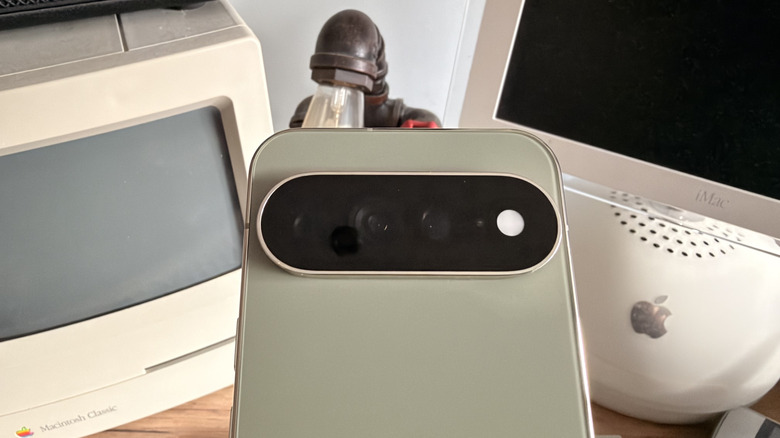
The camera experience is still why many people buy Pixel phones. The Pixel 11 Pro XL offers a 50 MP main camera with a 1/1.3-inch sensor, a 48 MP ultra-wide with autofocus, and a 48 MP 5x telephoto lens that Google redesigned with a larger sensor and 30% more light sensitivity. I have shot mostly cityscapes, buildings, and objects in New York and London, with very few people-focused shots and almost no selfies — beyond testing the camera's capabilities.
 Connor Jewiss/BGR
The main camera might just be the best I've used on any Android phone. Detail is superb, and images have a film-like quality that I rather like. The camera processing can be a weak point for some, however. Colors can come out muted in a way that reads as a software decision rather than a sensor limitation. I'd like the option to turn that dial back. For others, this may be a welcome change over Google's infamously over-processed photo look. Against the Galaxy S26 Ultra, the Pixel takes the better stills. Against the iPhone 17 Pro Max, stills are roughly on par with different processing choices, and I do prefer the iPhone's look. However, video still isn't a contest, and the iPhone wins again, just as it has for years.
 Connor Jewiss/BGR
The Pixel 11 Pro XL's zoom capabilities are even more interesting. The 5x telephoto lens is the furthest optical zoom goes, and the camera app's next default option is a digitally cropped 10x. The new sensor is noticeable, providing additional detail to zoomed shots when compared to the Pixel 10 Pro XL and producing zoomed low-light shots that previous Pixels simply couldn't. But the new Pixel can zoom in a lot further than 10x — up to 120x, in fact, thanks to Pro Zoom.
 Connor Jewiss/BGR
The AI-assisted Pro Zoom is the Pixel feature that's probably the most like Marmite — you're either going to love it or hate it. At times, it's outright impressive; other times, it feels more like a flawed experiment. Using Pro Zoom, you can read text on menus and signs from across a room impressively well. It also, at full stretch, put the head on a stag statue backwards.
That's generative AI doing what generative AI does, and it's a strange thing to find in a camera that you would otherwise rely on. In my experience, results stop being reliable past about 80x zoom. Below that, the phone produces results that more closely resemble real photos. I'd rather Google experiment with some of the bolt-on lenses that some Chinese rivals offer for even better zoom shots, but that's unlikely to happen, as Google remains focused on the masses.
 Connor Jewiss/BGR
Night Sight is now up to 4.5 times faster than before, and the speed increase is very noticeable. It still over-brightens slightly, and some shots still need to hold still for a second or two longer than the interface implies, but the trade-off favors most people — I would rather that over-brightening than having to stand still for up to 10 seconds. Portrait Mode at 5x is new, and the couple of test shots I took came out well, helped by Google's reliably impressive object detection, which remains among the best in the business. The 42 MP selfie camera is a step up on paper, but not an obvious one in day-to-day use. I'd take the iPhone 17's front camera for the simple reason that it can shoot landscape without you having to physically turn the phone.
 Connor Jewiss/BGR
While the Pixel 11 Pro XL's camera was pretty good overall, a couple things bothered me. The camera app has an intermittent focus bug on launch that leaves the viewfinder blurry. Closing and reopening the app fixes it, but it happened multiple times a day when I was testing the camera. It's the kind of thing that a software update should've fixed before launch.
 Connor Jewiss/BGR
Then there's Magic Capture, pitched as the headline camera feature for the Pixel 11 series. It records the moment around you and then uses AI to pick out the best still frames for you to keep as photos. I tried it repeatedly on photos of my mom's dog and got one decent shot and one blurry one at a resolution noticeably worse than a normal photo. I'd rather record a video and snag stills from it while it rolls. Camera Looks, meanwhile, are fun and customizable, but I never use them because I'd rather edit photos after taking them than apply the same processing to every shot.
Software
The Pixel 11 Pro XL ships with Android 17 and seven years of OS, security, and Pixel Drop updates, which remains among the strongest support commitments in the industry. Google's build of Android remains the cleanest around, and it's still my favorite. There's no bloatware and no ads that I've spotted, unless you count the Discover feed swiped to the left, which has been there for years and can be turned off.
Google's AI push, however, is harder to love (or avoid). Trying to search on Google from the home screen widget now means rooting around Gemini or AI mode, which is where Google clearly wants you to end up, but it isn't where I want it to be. Gemini itself is fast and useful, but being nudged into it when I wanted a regular search page with blue links is rather irritating, and it's one of the most noticeable changes in how this phone functions on a daily basis compared to previous Pixels.
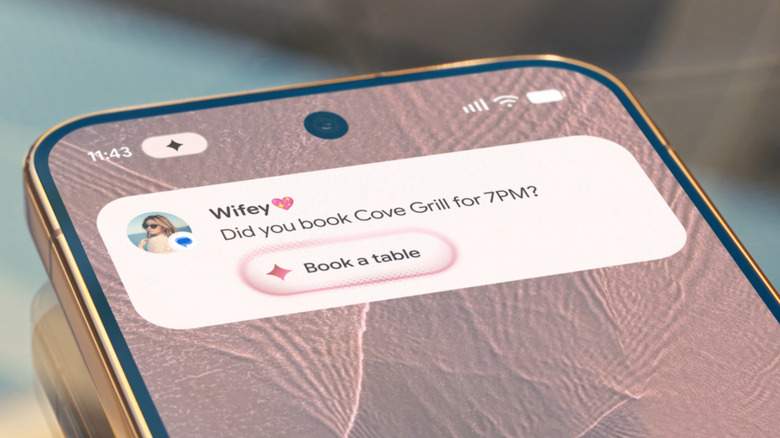
Google's Proactive Assistance AI features are a mess of naming and geography. On the Pixel 11, Magic Cue has been rebranded as Proactive Assistance, which now comes with a richer interface. Google's support documentation makes it clear that Pixel 11 devices outside the U.S. won't get the new feature, which leaves U.K. users like me stuck with Magic Cue. Either way, it never surfaced anything useful in the two weeks I was using the device. Whether that's the nature of my messages or the feature simply being not that great, I can't say, but after two weeks, I've stopped waiting to find out.
HiLight is perhaps the Pixel 11 Pro XL's biggest disappointment, especially as it's the phone's flagship feature. As shipped, the LED light signals incoming calls from contacts you've favorited and assigned colors to, and it glows while Gemini listens, thinks, and responds. That's it. Unless you want to talk to Gemini with your phone facedown or propped up across the room, which is a job the $49 Nest Mini has done better for years, it adds very little. There is a third-party app you can sideload to turn it into a proper notification light for every app, but the process is far beyond what a normal person should have to do. There's no technical limitation for HiLight — rather, Google just shipped a half-finished feature and is promising more later.
The Creator Suite also isn't for me, though I can see the appeal for anyone making short-form video. Circle to Search also still works fine on screenshots, as it has for a few years now. Beyond the camera focus bug, I had no crashes or other problems worth mentioning.
Should you buy the Pixel 11 Pro XL?
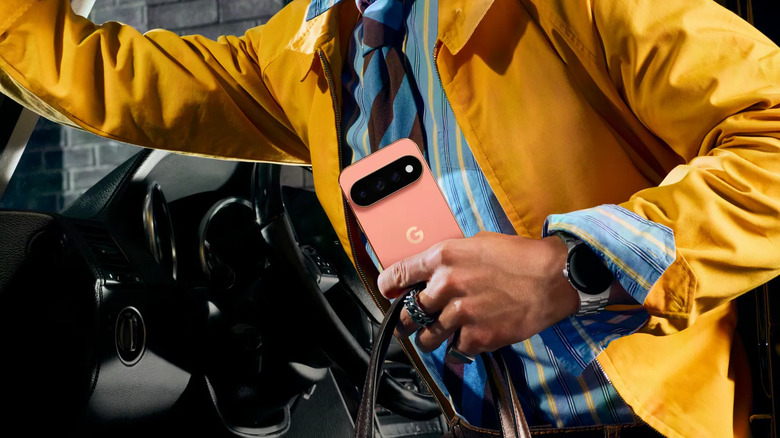
The Pixel 11 Pro XL is an excellent daily driver, a superb all-rounder, and it has the best camera on any Android phone I have tested. The display is flagship-tier, the battery lasts all day, the software is clean, and the support commitment remains top-tier. If you want the best point-and-shoot experience available on Android, this is it.
However, some of Google's more ambitious additions aren't quite ready yet. Using Pro Zoom past 80x invents details or simply messes images up; Magic Capture picks worse photos than I would have; HiLight does almost nothing; and the proactive AI features either aren't available or never show up. Plus, performance only holds up until you attempt true multitasking.
The most obvious alternative to the Pixel 11 Pro XL is Google's own. The Pixel 11 starts at $899 and the Pixel 11 Pro at $1,099, and unless you specifically want the 6.8-inch screen and the largest battery in the lineup, the savings are difficult to ignore. Last year's Pixel 10 Pro XL is also still worth a look, since it launched at $1,199 with 16 GB of RAM and a larger 5,200 mAh battery, and it will now be heavily discounted by most third-party retailers.
Outside of Google's offerings, the iPhone 17 Pro Max starts at $1,199 and remains the better phone for video and sustained performance, though the iPhone 18 Pro series is fast approaching. The Galaxy S26 Ultra matches the Pixel at $1,299 but comes with an S Pen, a 200 MP main camera, and far stronger silicon inside for gaming. Both offer comparable (or even slightly better) camera performance to the Pixel 11 Pro XL but can handle a heavy multitasking day more gracefully.
What makes the $100 price increase over last year's Pixel 10 Pro XL hard to justify is that the phone underneath it is still only a modest generational upgrade that comes with less RAM and a slightly smaller battery than last year's model. I suspect most people asking whether to spend $1,299 here will be better served by the $899 Pixel 11, which shares the same Tensor G6 chip, the same software, and most of the camera experience.