

UGREEN's New Local AI Hub Wants To Keep Your Smart Home Data Out Of The Cloud
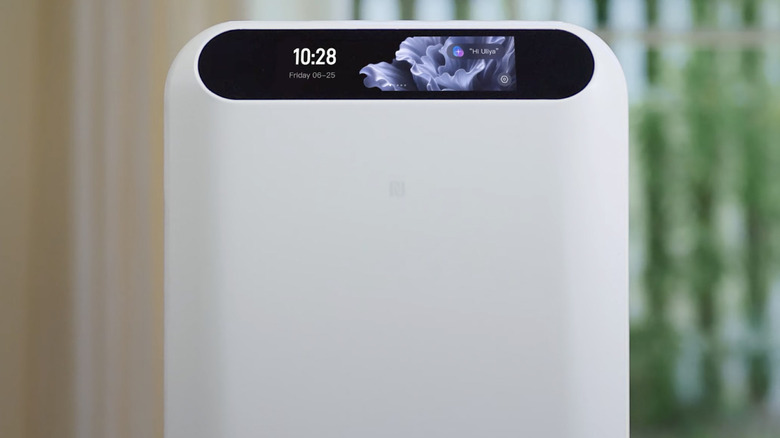
When creating a comprehensive and reliable smart home ecosystem, a traditional smart home hub with basic automations won't do. These days, AI-powered hubs do the bulk of their work by handling the connecting, communication, and coordination of your smart home. With machine learning, they even learn from the connected devices to improve efficiency, convenience, and security. But the problem with most AI hubs is that they process their commands through the cloud instead of processing them locally.
UGREEN, which is a Chinese accessories and electronics brand, also manufactures a number of smart devices. Now they have taken a step further into the home automation space with the UGREEN HomeAgent, a standalone home hub with a built-in local large language model (LLM) called Uliya. HomeAgent uses the Matter, Thread, and Wi-Fi protocols to communicate with and connect to a wide range of smart gadgets from brands like Philips Hue, Aqara, SwitchBot, Nanoleaf, and Govee. It can run routines between different connected devices, including smart cameras, speakers, photo frames, locks, sensors, lights, and blinds, without sending a single command to the cloud.
HomeAgent begins crowdfunding on Kickstarter in October 2026, starting at $899 for the base HA100 model with 16 gigabytes of RAM, 26 teraops (TOPS) of AI processing power, and 64 gigabytes of eMMC (storage). However, this is the Super Early Bird price that you'd have to reserve for $50. Otherwise, the retail price starts at $1799. Shipping begins in late January 2027.
Local LLMs are expensive but can be worth it
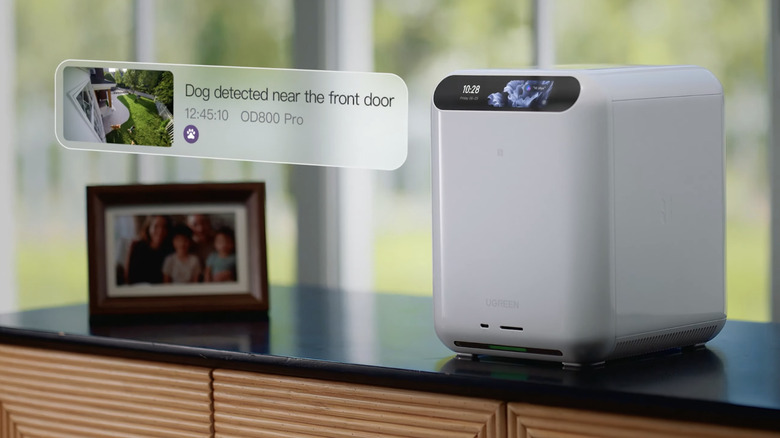
Cloud-based AI, whether it's on your computer, smartphone, or smart hub, has to process your commands over the internet. That means it sends your data to the cloud provider's servers since it doesn't have the necessary computing power and memory bandwidth to run those AI commands locally. HomeAgent has a Neural Processing Unit (NPU) integrated into the processor, which functions as Uliya's brain. Your data remains within your home and not on third-party servers, where it might be used to train AI.
Furthermore, since you don't need the internet, you save on bandwidth costs. You also don't ever have to worry about what will happen if the cloud servers go offline or if they get hacked. However, since your data is with you, its security is in your hands, which means keeping the AI smart hub updated will be of paramount importance. Be sure to keep your router updated as well, since hackers can attack the smart hub and other IoT devices through that device.
Smart home hubs with cloud-based AI usually charge a subscription for features that require AI. These include AI event summaries, threat detection, keyword searches, or back-and-forth natural conversation, with better features locked behind more expensive plans. An example is the Google Nest Hub, which requires a Google Home Premium subscription starting at $10 per month to use Gemini AI. With local LLMs like Uliya, there are no monthly costs or hidden fees ... even though the upfront costs are substantial.
HomeAgent's NAS features help you create a private cloud
Although the HomeAgent comes with its own internal storage, it also has three SATA 3.0 bays. Two of them are network-attached storage (NAS) bays where you can connect SATA solid-state drives (SSDs) or hard disk drives (HDDs) to expand its storage. The third one is a Network Video Recorder (NVR) bay, which is strictly for camera footage. It also has an M.2 NVMe slot for faster NVMe SSDs. All this is to say that you can turn the HomeAgent into a functional cloud storage where your memories, entertainment, and security footage remain local and private.
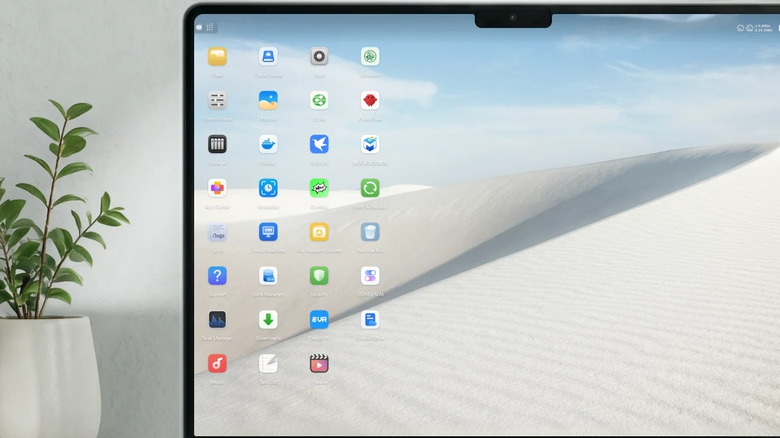
The NAS uses UGREEN's UGOS Pro cloud operating system. It allows you to access your files, manage your drives, and stream music, movies, and photos. It can even run apps, smart home services, and AI tools all from your phone or computer. UGOS Pro can be accessed remotely and can sync files between your devices. It's essentially a fully-featured private cloud. It also has real-time protection, file version history and restoration, and a vault that protects your sensitive information with strong encryption. And the best part is that none of it is sent to some corporation's remote servers, ensuring that you have complete control and access without limitations. You can also connect online cloud storage services like Google Drive, OneDrive, and Dropbox to the device if you need extra storage space. However, that is your choice.