

5 Tech Finds Worth Adding To Your DIY PC Kit
We may receive a commission on purchases made from links.
Building and maintaining your own desktop can be a satisfying experience, especially for those who like do-it-yourself (DIY) projects and want more control over the hardware they own. But even someone building a PC from scratch for the first time realizes that having the right tools is important. That is because having them can help make the entire process simpler and less stressful.
Of course, for many people, a screwdriver is usually more than enough for much of the assembly and disassembly of a PC, but some processes require slightly more specific equipment. There are some tiny screws in certain areas, for example, so if you need to perform a deeper inspection of your build, it is important to have these tools with you. For that reason, keeping some extra accessories in your kit makes both upgrades and possible repairs easier.
The good news is that many of these PC tools are relatively inexpensive, costing a fraction of what you paid for many of your computer components. In the list below, we've gathered tools that serve a broad spectrum of needs, from simple cleaning to testing and repairing internal PC components. Depending on your needs, at least some of these gadgets are worth adding to your DIY PC kit.
Corsair PC DIY Precision Toolkit
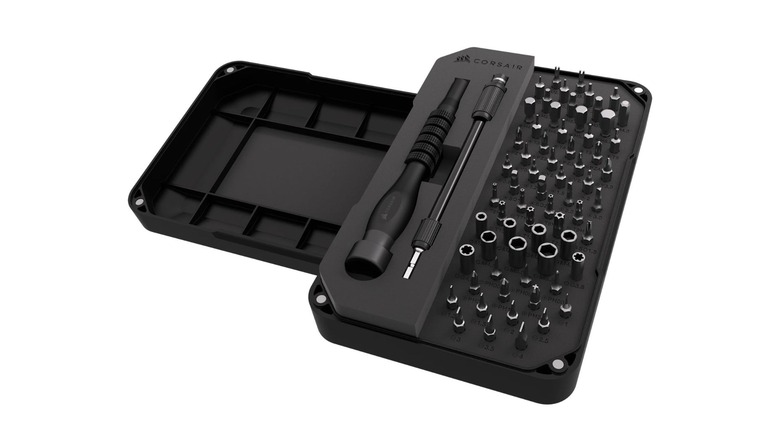
If you have ever done more extensive maintenance on your PC, you probably noticed that opening certain parts eventually requires dealing with smaller screws throughout the structure. A regular screwdriver makes that process difficult or downright impossible. Luckily, the Corsair PC DIY Precision Toolkit brings almost everything together in a single box for anyone who wants to keep the best useful PC tools close at hand.
The kit comes with a magnetic screwdriver and 65 nickel-coated bits, covering standards such as Phillips, Torx, Hex, Pentalobe, and other formats used in computers and electronic devices. So, for anyone who wants to install an M.2 SSD (solid-state drive), open another electronic device, or even completely disassemble the PC, Corsair's kit works well. In addition, there is a flexible extension shaft, which is useful for reaching screws in awkward or tight areas where your hand can't easily reach.
Available for $35, the kit also has some practical details built into the box itself. The lid is magnetic, so you have an easy surface to place where you can place the screws you remove from the PC without worrying about losing them later, while also helping you keep your work area more organized. The set is also compatible with other electronics, so if you have consoles, for example, you can use the tools in the same way.
Sabrent EC-SNVE
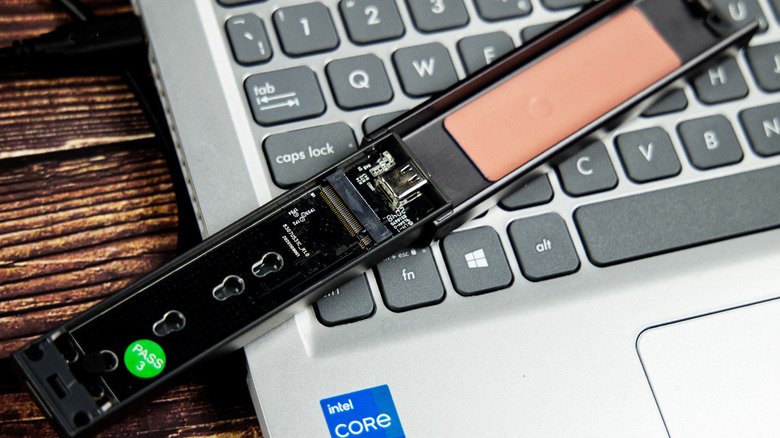
The Sabrent EC-SNVE is an external enclosure that converts M.2 SSDs into portable USB-C drives. It supports NVMe and SATA SSDs in 2230, 2242, 2260, and 2280 sizes, and installation can be done without tools. The accessory, which is available for $29.99 on Amazon, uses a USB 3.2 interface that can reach transfer speeds of up to 10 gigabits per second (Gbps), depending on the installed drive and the port used.
Having a tool like this in your kit can be very useful, especially during upgrades. An older SSD can be connected externally to transfer files to a new drive, recover data from a different computer, or even gain new life as a portable storage device. The EC-SNVE also supports UASP and TRIM for enhanced garbage collection and data transfer speeds, and its construction combines aluminum and ABS (Acrylonitrile Butadiene Styrene). A USB-C-to-USB-C cable is included, and because it takes up little space, it is easy to store with your other maintenance tools.
iFixit FixMat
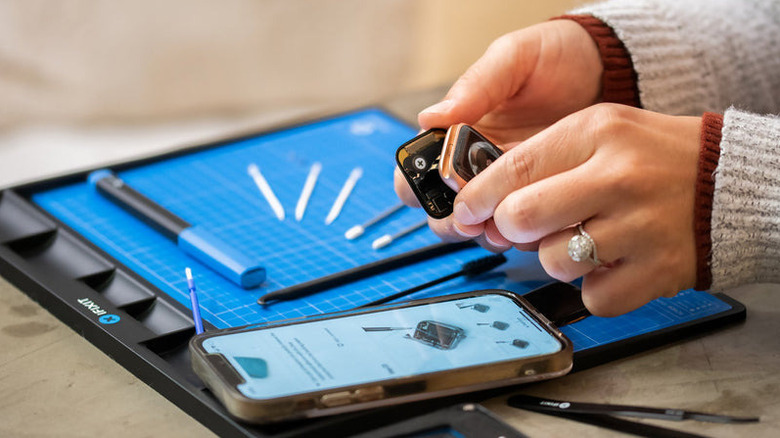
When assembling and disassembling a PC, it is common to have to deal with where to leave the screws. Because they are small parts, any draft or bump against the table can easily knock them down and make the task even harder, since you need to find them afterward. The good news is that there are some magnetic options available to help with this frustration, such as the iFixit FixMat, which costs around $37 and keeps all the screws secured in one place.
The surface even comes with a grid that lets you separate and organize the screws better, either by step or by component, as well as a compartment for larger parts. The FixMat also comes with an erasable pen for taking notes while you work, and the accessory was designed to be ESD (electrostatic discharge)-safe, so it reduces the effects of static electricity on your components while you work with them.
For simpler tasks, having a magnetic mat may seem excessive, but it often ends up being useful for more complex work inside the case. To replace the processor, which usually involves removing several screws, knowing where each screw came from reduces the chance that, after you finish assembling everything, you discover that you have one (or more!) left over.
XPOWER A-2 Airrow Pro
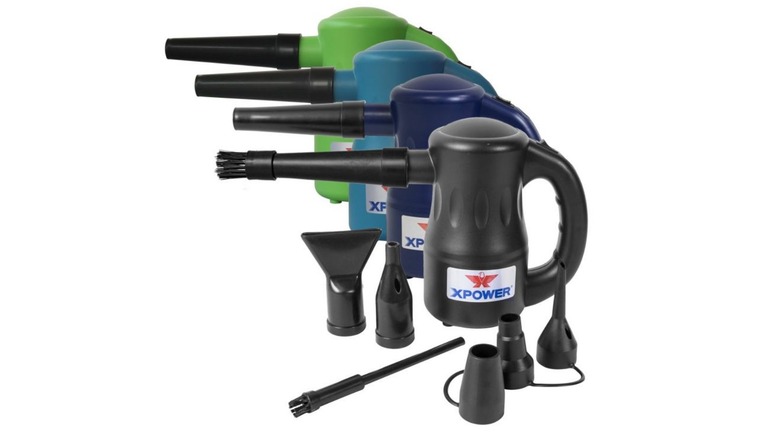
Dust is one of the most common problems for anyone who owns a desktop or laptop, something that can get much worse if you have pets at home or live in a place more prone to accumulating various types of airborne debris. This dust can block filters and fans, hurting your PC's airflow and causing overheating problems, which is why the XPOWER A-2 Airrow is an item worth considering. It works as an alternative to compressed air cans for anyone who needs to clean their desktop often, removing dirt from hard-to-reach spots in their setups.
Selling for $65, the device uses a 500-watt motor to deliver airflow of up to 90 cubic feet per minute(CFM) and offers two speeds. It also has nine nozzles for different tasks you need to perform on the PC, a washable filter, and a cable. For anyone who wants to keep the PC free of dust, having a tool like this around is excellent, and you can also use it to maintain other devices, especially keyboards or consoles, since models like the PlayStation 5 also tend to suffer from this buildup of dirt.
Thermaltake Dr. Power III
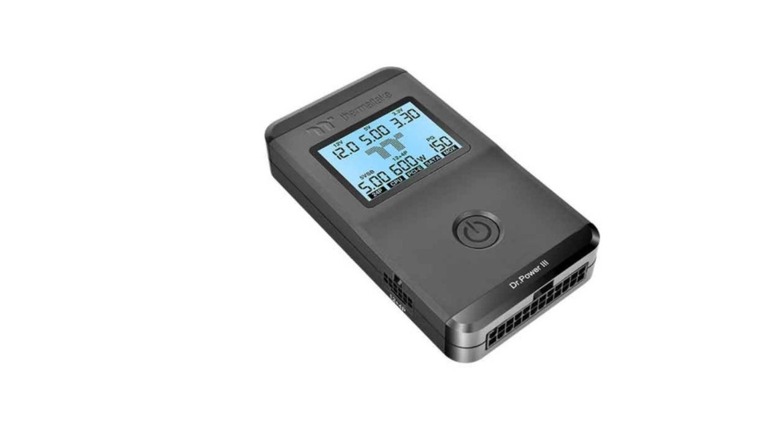
If your PC stops turning on or starts shutting down for no reason, the Thermaltake Dr. Power III can help simplify testing, hitting multiple components with one tool. It can directly check the operation of your power supply, accepting 24-pin, CPU, PCIe, Molex, and SATA connectors, and it also shows voltage readings and signal timing on the display, making it easier to see whether they are within the expected values.
This type of tool is especially useful because these problems can be confused with faults in another component, including the motherboard. So, before disassembling everything to test each part one by one or buying a new computer or parts, you can rule out one sign that your PC is about to fail during diagnosis. The Dr. Power III also issues alerts when it detects abnormal readings and supports ATX 3.1-compatible power supplies, including the PCIe 12+4-pin connector. It is a small tool, but it can save a lot of time when identifying problems with your desktop.
How we chose these DIY PC kit essentials
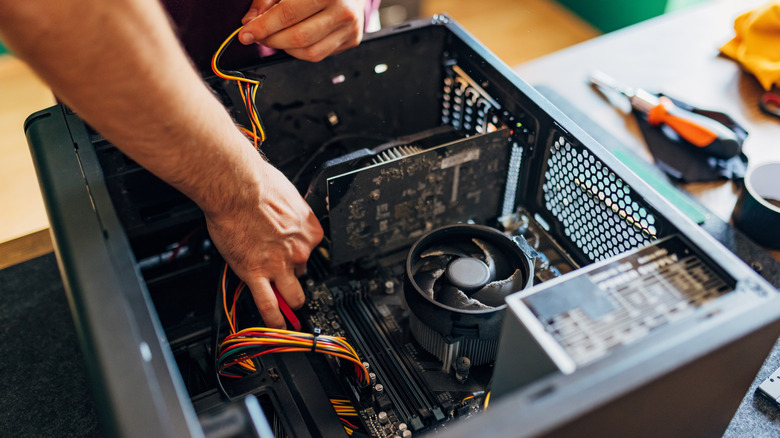
To put together this list, we mainly considered how useful each product could be in a DIY PC kit and tried to avoid recommending more than one tool that serves the same purpose. So, the idea was to include some simple items for anyone who wants less difficulty when cleaning a PC or disassembling a part, but also tools with more complex functions, such as diagnosing a faulty power supply or reusing an old SSD. This way, we were able to cover several stages of the process, from organization to possible upgrades.
We also considered factors such as ease of use, size, reusability, and availability in stores. Some products make more sense for anyone who opens their own computer often, while others will be more useful for enthusiasts who perform repairs or work with several machines. In the end, these accessories are some options that can complement a basic kit and make it more versatile when needed.