

Robot Vacuums Have A Big Problem With Privacy
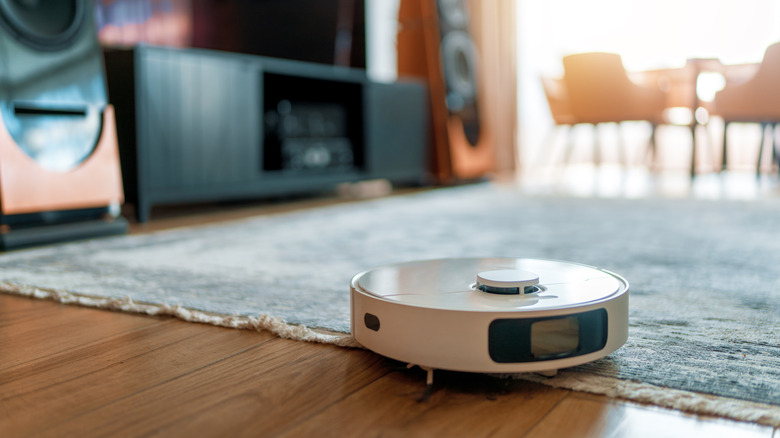
Twenty years ago, saying the sentence "your vacuum may be spying on you" would have made you look like a tin-foil-hat conspiracy theorist, but it's a genuine concern in 2026. For years now, there have been plenty of stories about Wi-Fi-enabled robot vacuums capturing and sharing images without user consent, with one particularly disturbing example that involved pictures of a woman using the restroom ending up online.
Privacy isn't the only reason why robot vacuums may not be worth the cost, but it's a major one. Robot vacuums have always had sensors for navigation, but newer ones often use GPS and (on higher-end models) cameras to map out your home, identify obstacles, and collect usage data. Connecting your vacuum to Wi-Fi means all of that data could potentially be uploaded to the cloud and, as with other smart home devices, is vulnerable to hackers. That puts sensitive information like the layout of your home and your daily routine at risk alongside potentially identifying images of your family and furniture.
Somehow, though, it gets worse. In a 2020 study, researchers from the National University of Singapore and the University of Maryland revealed that it's possible to manipulate a robot vacuum's sensor so it captures sounds through vibrations, essentially turning it into a microphone that could be used to eavesdrop on you. That's why even the most dedicated smart home users should think twice before adding one to their home.
Robot vacuums have a history of privacy concerns
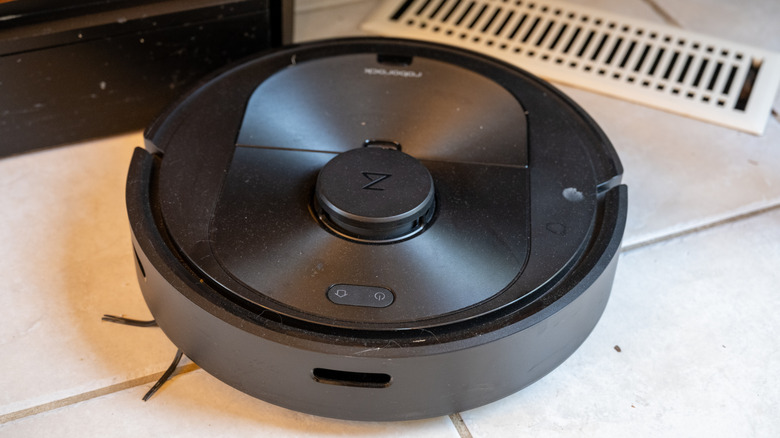
In the aforementioned case where a robot vacuum captured images of a woman on the toilet, manufacturer iRobot claims the user was part of a development test and had consented to data collection, sharing, and use for AI training by an outside company. However, iRobot has refused to share the exact terms of the agreement, and regardless of what those were, it seems likely the end result wasn't what the woman expected. The images were subsequently posted in a private Facebook group by either an iRobot employee or a contractor from the AI company.
Perhaps more worrying, though, is an incident in which a software engineer was able to access audio, maps, and even live camera feeds from around 7,000 DJI Romo vacuums using a PlayStation 5 controller and help from an AI coding assistant. After stumbling upon the massive security vulnerability, the man shared his findings with The Verge, but both of these privacy breaches exemplify the issues with things like robot vacuums and other Internet of Things devices.
When you set up smart home devices, you're not only giving the companies behind your gadgets your info. It stands to reason that, if it's possible for someone to accidentally hack thousands of devices, then it's also possible for malicious actors to get their hands on it. If you're lucky, it ends up with someone who alerts the media to pressure the manufacturer to fix it. If you're not so lucky, you could literally end up on the Internet with your pants down.
Are any robot vacuums safe?
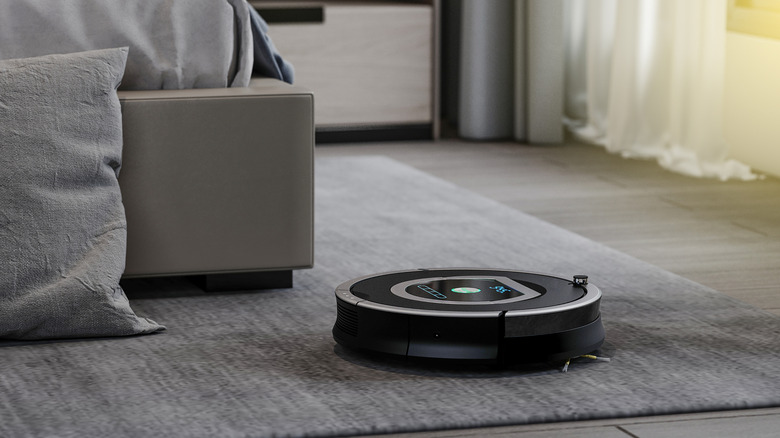
If you still want a robot vacuum, there are some safer ones out there, though options are dwindling. According to Consumer Reports, iRobot has the most robust security measures in place, including regular updates, a bug reporting program, and (likely the result of its earlier issues) policies surrounding employee access to user data. However, the company went bankrupt in late 2025 and was purchased by Shenzhen Picea Robotics, previously a key manufacturing partner. iRobot CEO Gary Cohen has tried to assure consumers that their data is fully encrypted and kept on US-based servers, but its Bug Bounty program hasn't been updated since 2025, which isn't an encouraging sign.
While there is still understandable skepticism around iRobot right now, lesser-known brand Matic has put data security at the center of its branding, calling privacy "a Fundamental, Non-negotiable Right." Matic vacuums are not cheap, starting at $1,495, but they have received positive reviews from outlets like Wirecutter and Wired.
It's also important to mention that, earlier this year, the Federal Communications Commission (FCC) announced a ban on foreign-made robot vacuums and other robotic devices, which follows a similar ban on Internet routers. That hasn't really impacted availability yet, though, as models that have already been FCC-approved aren't impacted, and that reportedly includes some that have yet to be released.