

These New Liquid Cooled SSDs Might Be The Future Of Data Center Computing
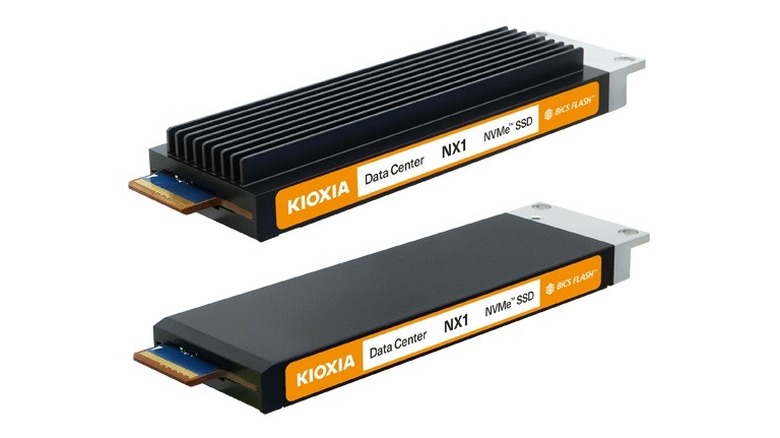
Liquid cooling is typically used to offset the heat caused by powerful processors and graphics cards. However, Kioxia, a Japanese company focusing on flash-memory and storage, is determined to change that. It recently announced a new, liquid-cooled drive called the NX1 that is specifically designed for use in AI data centers and hyperscale environments.
Kioxia's NX1 drives support PCIe 5.0 and NVMe 2.0, allowing for high-bandwidth, high-speed storage. They fit into server-specific E1.S slots on a server's motherboard and come in two form factors, 9.5 millimeters and 15 millimeters. Only the 9.5-millimeter drives support liquid cooling, while the 15-millimeter variant only supports air cooling. Kioxia claims that these solid state drives offer 38%-higher sequential write performance than the previous generation, which already provided an impressive 5.8 GB/s.
Capacity ranges from 1.92TB all the way up to 15.36TB and the drives are rated at 1 DWPD (Drive Writes Per Day), meaning users should be able to write the entire capacity of the drive daily without any problems, at least throughout the warranty period. Currently, NX1 drives are only available to some of Kioxia's hyperscale customers and no pricing information is available.
Why do SSDs need cooling in the first place?
Solid state drives don't have any moving parts, but they use electrical charges to read and write data. This means every action generates heat. At home this isn't a big deal, but in a data center where tens of thousands of drives process billions of transactions per second, temperature regulation quickly becomes a concern. To make matters worse, when drives get too hot, they start thermal throttling, meaning they limit performance to protect themselves from damage. In other words, subpar cooling has a tangible impact on data throughput. Excessive heat can also shortens a drive's lifespan.
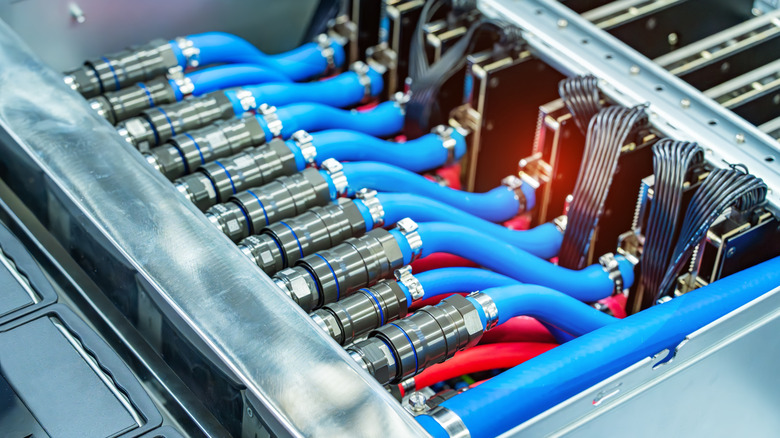
NX1 drives are compatible with direct liquid cooling, which passes coolant over a metal plate that's attached to the drive. Water collects the heat through convection, then is quickly moved to a radiator to cool down away from the drive. Many data centers already use this approach to keep their hardware at workable temperatures. This means they should be relatively easy to integrate into existing cooling systems, keeping costs down.
These systems consume water as part of the cooling process, though how much depends on the specific setup. Still, with data centers already under scrutiny for driving up energy prices and affecting water supplies, doubling down may require more than mere installation. Proponents have argued that datacenters use about as much water as a restaurant but that's unlikely to satisfy locals who rely on dwindling local reservoirs for power.
While better at dissipating heat than air, liquid cooling has its disadvantages too. Migrating to these systems can be expensive, and if the water loop springs a leak, other components could be damaged. That said, companies typically factor in the expenses associated with of expected failures into their operating costs.