

What's The Average Lifespan Of Record Players?

You'll often hear audiophiles swear that vinyl sounds better than digital audio, and while that's largely down to personal preference, there's no denying that the device you're using has a part to play. Although records can easily last 50+ years if they're well cared for, the actual player has to be replaced or serviced far more frequently if you want to ensure the best possible sound. To complicate things further, these devices don't have a widely agreed-upon lifespan. Rather, it depends on whether you're using a record player (which has built-in speakers) or a turntable (which doesn't), how often you use it, and how much effort you put into maintenance.
The parts of your record player that are most likely to break are the stylus, the cartridge, and the belt. Even so, under normal conditions, these should last years and are fairly easy to replace when their time is up. A well-maintained stylus can last for up to 3,000 hours before it needs replacing. Better still, unless you're searching for original components, these new parts will usually cost less than $50.
You could also opt to have a professional perform the repair, though naturally this will cost more (with prices typically starting around $25 for a stylus replacement or $50 for a new belt installation). Not every problem is so easily resolved, though. If your power supply fails, you accidentally fry the electronics, or the motor burns out, you might have trouble finding replacement parts. In these situations, it may even be cheaper to buy an entirely new turntable.
How to prolong your record player's lifespan
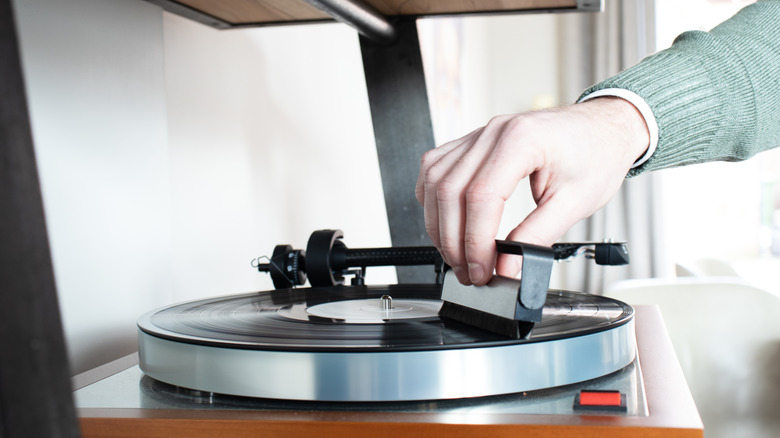
If your primary concern is longevity, remember that cheap record players are often made with cheap parts, meaning they're unlikely to last as long as more expensive models. It seems counterintuitive, but buying a higher-end turntable could actually save you money in the long run since you may not have to replace components as frequently. Thankfully, taking care of a record player is fairly straightforward.
Dust both the turntable and record before playing anything, cover them when they're not in use, and ensure the player is on a level surface — many have adjustable feet to help keep things stable. It's also important to make sure the tonearm is properly balanced. Too much pressure will cause wear and tear on your records, while not enough can cause the needle to skip ahead of its correct position.
Speaking of the stylus, this should be wiped regularly to ensure it doesn't accumulate tiny dust particles that could damage your vinyl or impact audio quality. You can either use a special brush, a liquid cleaner, or a small piece of dry magic eraser to remove buildup with ease. If you notice any problems, just remember that getting the turntable serviced in a timely fashion limits the damage and helps ensure your other components have the longest lifespans possible.