

Nothing Headphone (1) Pro Review: Form Over Function
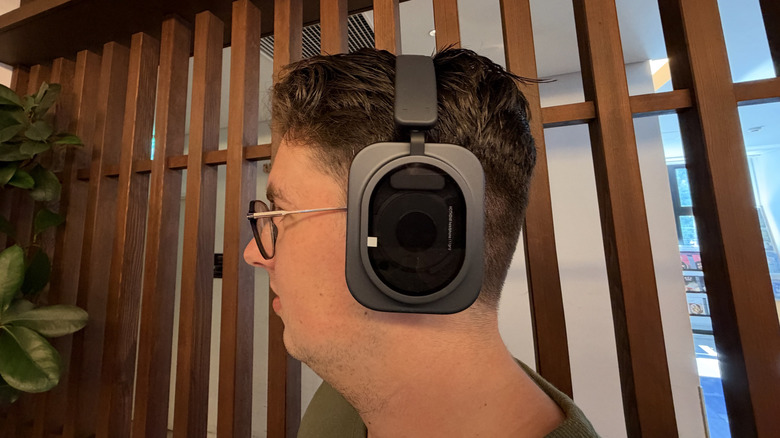
Nothing launched the Headphone (1) Pro on September 29 for $399. That price is $100 more than Nothing's standard Headphone (1), $50 cheaper than Sony's WH-1000XM6 headphones, and $150 below Apple's AirPods Max (USB-C). I've been listening to the headphones for around two weeks now, and they came with me on a long-haul flight to Japan, around the city on foot, and spent plenty of hours on my head while sat at home watching videos.
The hardware is easy to like. Available in black and white, the Headphone (1) Pro's build quality, comfort during long sessions, and physical controls are all excellent for a set of $399 headphones. Nothing quotes up to 46 dB of noise cancellation from a 10-mic array, along with Bluetooth 6.1, LDAC, USB-C lossless playback, and a physical switch that flips the audio tuning to a flat profile. Three drivers split the audio work, with a 40mm dynamic handling bass, a 13x8 mm precision driver covering the mids, and a solid-state xMEMS unit dedicated to treble.
But there are also some big mistakes. The carrying case is perhaps one of the worst I've ever seen for any wireless headphones, and the sound — which is the thing you're actually paying for at this price — falls short of what a $399 pair of headphones should deliver.
Design
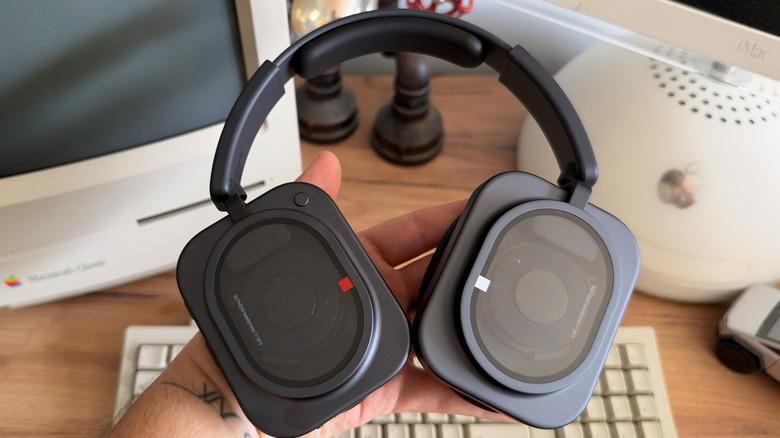
The Headphone (1) Pro looks expensive, which is something you might not expect from Nothing. They're made from aluminum, carved from a single block, and a glass window in each cup shows a hint of the driver stack behind it. The headband arms use a titanium alloy that Nothing says is 45% lighter than the ones on Headphone (1). The glass on the window is 9H Panda Glass — which is rated for scratch and shatter resistance — and the headphones carry an IP52 water and dust resistance rating that covers light dust and dripping water rather than rain or full submersion.
The button controls on these headphones deserve quite a bit of praise. I'm a big fan of the roller, which adjusts volume, and you can click it to pause tracks. There's also a paddle to skip tracks, a button to trigger voice assistance, and a new switch that flips between a flat EQ and the default tuning on the headphones (or any EQ you applied via the EQ in the Nothing X app). The roller is a faster and arguably more precise way to change the volume than swiping up or pressing a volume button, and a red dot marks which cup is for your right ear, so you can easily orient the headphones. There's also a proper on and off switch, which AirPods Max still, annoyingly, lacks after six years.
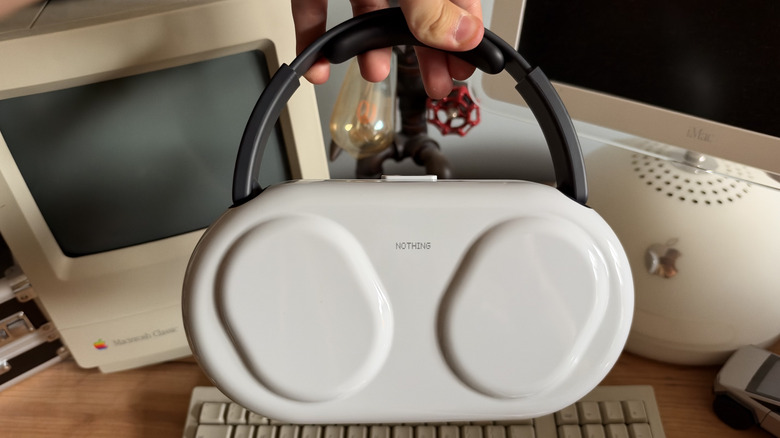
But then there is the case. It borrows the worst idea from AirPods Max. The headband sits exposed, the shell is plastic and bulky (so it feels rather cheap), and lining the cups up correctly without looking takes a few attempts sometimes. But, worst of all, the case is actually heavier than the headphones themselves at 383.5g compared to 327g. I actually don't know how Nothing allowed the case to ship. I'd have preferred a zip-up case like the regular Headphone (1), or better yet, that the headphones could fold up.
Comfort
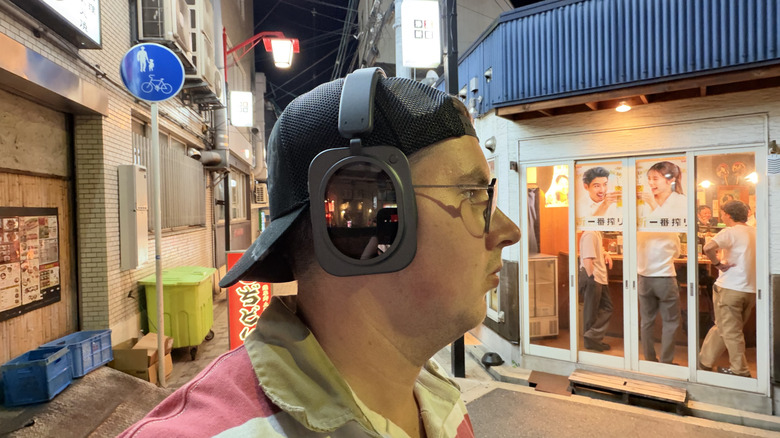
After using the Headphone (1) Pro for a couple of weeks, comfort is an area where they stand out. At 327g, Nothing's latest cans are 58g lighter than the 385g AirPods Max — which I also own — and that difference is most noticeable after about an hour or two of listening. But light is relative here, since the Sony WH-1000XM6 over-ears weigh around 254g, so there are lighter options out there. Factor in the case, and the Nothing Headphone (1) Pro weighs a total 710g in your bag. Still, I managed to sit through a 4-hour flight without having to constantly adjust or shift the headphones to make them more comfortable, which is more than I can say for Apple's premium pair.
Nothing puts this comfort down to the dual-layer ear cushions, which the brand describes as 50% softer than the ones on the regular Headphone (1). Alongside them is a headband that is 10% wider and has 12% thicker padding than the more affordable headphones in Nothing's lineup. Regardless of those numbers, the clamping force lands in a sensible place, and the headphones aren't all that heavy on your head.
The cups sit around my ears rather than on them, which I prefer, and the Headphone (1) Pros don't leave me with a dull ache on the top of my head, which many heavier headphones do. I wear glasses, and Nothing's claim that the cushions will adapt to frames seems to hold up. My frames are on the thin side, however, so those with thicker glasses may struggle in this department.
Features
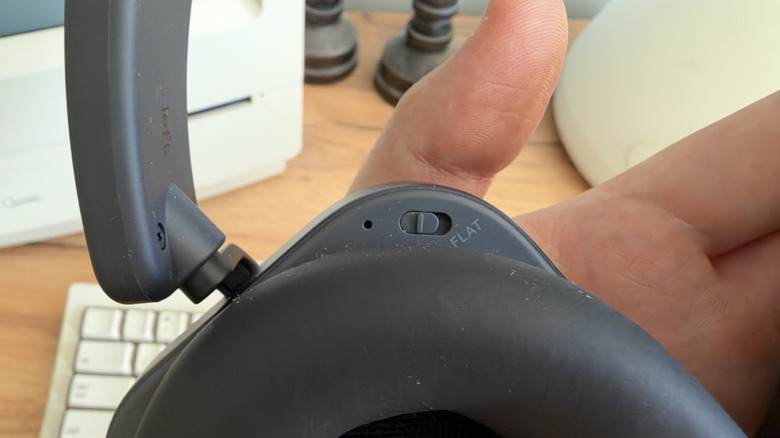
The built-in EQ switch is one of the most interesting features on the Nothing Headphone (1) Pro. Flicking it swaps the default Nothing EQ (or the one you've picked) for a flat profile tuned by engineers at Metropolis Studios in London — one of the leading recording studios for artists including Queen, the Foo Fighters, and even Taylor Swift. The flat mode is designed for those producing or mixing audio rather than for casual listening.
I'm not a recording artist, so I can't tell you exactly how useful this feature is, but I do notice the difference in sound profile when switching to flat mode. Having this switch instead of a buried toggle in the app is a smart call for the users Nothing wants to attract, and it's something I've not seen on another pair of wireless headphones like this.
Almost everything else is controlled through the Nothing X companion app, which offers a simple EQ, a full advanced EQ with driver controls, five presets built around music genres, and an additional personal sound profile that can adapt to your personal listening habits. I worked through the presets to find the one I liked best, and I recommend you do the same. Everyone's listening preference is different, after all. Spatial audio with head tracking is here too, which works about as well as it does on any non-Apple pair of headphones. AirPods are still the best headphones on the market for spatial audio.
Connectivity covers Bluetooth 6.1 with dual connection, LDAC, AAC, SBC, and Auracast broadcasting, which is worth understanding before your next headphone purchase. Calls were fine and nothing more, despite talk of a four-mic call algorithm. I would rate the mic as fairly average for a pair of wireless headphones, which is to say it's usable for a work call, but definitely not for recording anything. I haven't gotten around to using the USB-C lossless mode or 3.5mm wired mode, but they are there if you prefer to go wired.
Battery and charging
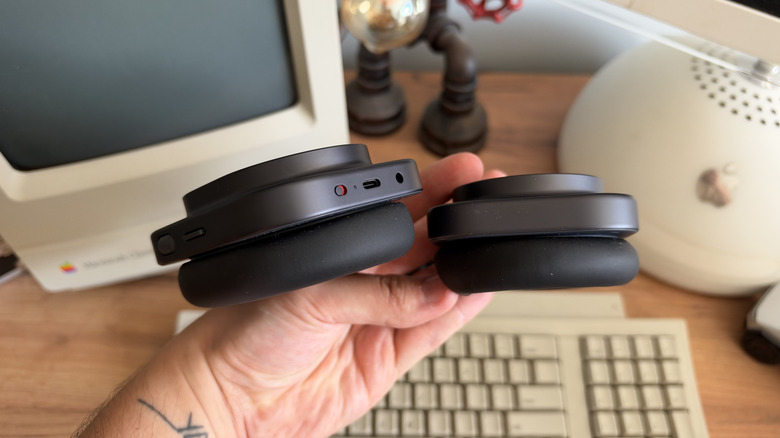
Nothing quotes up to 68 hours of playback with ANC switched off and just 30 hours with it switched on over AAC. That drops to 53 and 28 hours, respectively, if you switch to LDAC. The 30-hour figure is a step down from the 35 hours offered on the standard Headphone (1), which is the practical cost of running three drivers and ten microphones.
In practice, I'd say that 30-hour claim looks about right. Across a week that included a 4-hour flight with noise cancellation running, a fair amount of ANC-off listening while walking around airports and train stations, and video at home most evenings, I never had to plug them in. There's also some charge left at the end of that week, although I did not drain the headphones to find out exactly how much. Either way, these headphones will last you long enough.
Fast charging works as Nothing advertises. I topped the Headphone (1) Pro up for 5 minutes before running my sound tests and comfortably got through the session. That lines up with Nothing's claim of 4 hours of ANC-off playback from a 5-minute charge. I never ran a full cycle from empty, though Nothing claims 2 hours for a complete charge.
Noise cancellation
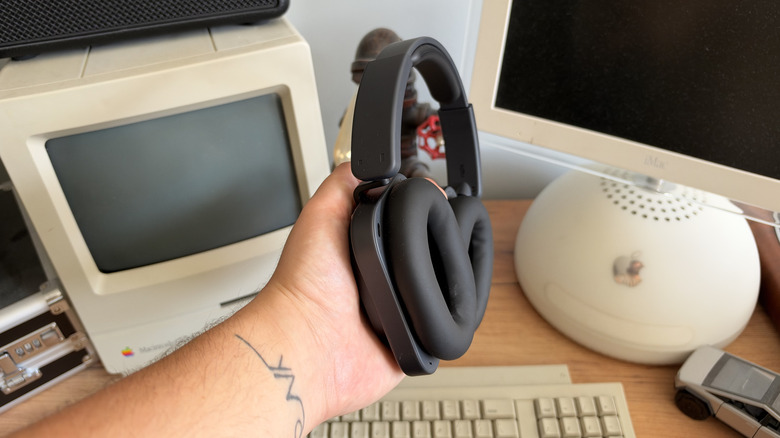
Nothing claims up to 46 dB from 10 microphones and a new 8mm silicone baffle wall inside the cushion. That's a lot of technical terminology to describe a theoretical lab maximum. In the real world, performance is good without reaching the top of this premium price category.
While on a plane, the engine drone dropped away cleanly and stayed muted. Around a city, traffic and station announcements were muted rather than erased, and I could still hear enough of a conversation next to me to be distracted by it. The USB-C AirPods Max I compared these against remain the stronger performer on raw cancellation, and the gap is fairly obvious when you swap between them in the same spot. Though, that's probably not something most people are going to do.
Nothing does do well on some of the more practical parts of noise cancellation. There is no hiss when cancellation kicks in, which is a criticism I would make for the new Beats 360 headphones since I first put them on, and there's no sensation of pressure on your ears, either. Some headphones trade silence for feeling like descending in an elevator, but these don't. Transparency mode is natural enough to hold a short conversation at a coffee shop counter without taking them off. If flights are your main reason for buying headphones, BGR's roundup of the best noise-canceling headphones for frequent flyers is worth reading before you commit to these, though.
Sound quality
After two weeks of listening, it's clear the Nothing Headphone (1) Pro has a very distinct sound. Whether that's a good thing or not will depend entirely on your preference. There is a lot of detail up top and plenty of energy with it, though the treble emphasis behind that is also what wears you down. Over a couple of tracks, the sound is impressively sharp, but after a full album, this emphasis can sound rather harsh. Vocals and instruments jump forward, the bass is present without much body behind it, and instruments smear together instead of separating out, so following individual parts of a mix is difficult. Rich and full-bodied are the last words I would reach for.
But you don't just have to take my word for it. I also ran a profile test on Nothing's newest headphones. I captured the Nothing Headphone (1) Pro in its default EQ mode and flat mode alongside the USB-C AirPods Max through a microphone. Admittedly, this is a rougher method than a technical lab test, but my findings are indicative of what I noticed while listening to the headphones.
In their default profile, Nothing's newest headphones are aggressively V-shaped. Bass punches around 60 to 120 Hz, the lower mids between 200 and 500 Hz fade away, and the curve climbs hard enough through the upper mids and treble, with the sharpest rise sitting around 4 to 10 kHz. That's exactly the region where smearing between the audio mix starts to bleed in, and a treble rise is what makes an hour of listening feel like hard work.
The flat mode pulls things closer to neutral. The change mostly affects the treble rather than the bass, so you get the same lower-mid dip and rise through roughly 1.5 to 3 kHz. The AirPods Max recording was the smoothest of the three, with bass extending further and with much better continuity into that 200 to 500 Hz region.
Conclusions
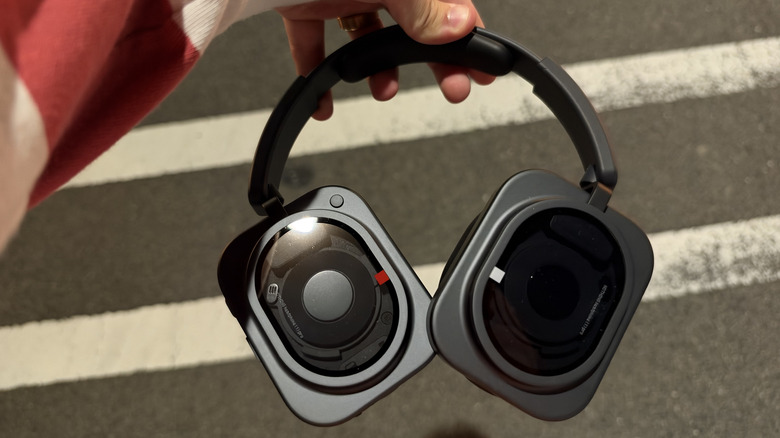
Nothing has built a good-looking and comfortable piece of hardware. The materials, controls, comfort, and battery all justify the premium asking price, and the noise cancellation is competitive enough without beating its competitors. All of that is great, but sound is the one thing that a brand has to get right in a $399 pair of headphones, but it's the one thing Nothing got wrong. Three drivers and a studio partnership should have produced something fuller and much more natural than this.
The competition does not help the Nothing Headphone (1) Pro make its case. Sony's WH-1000XM6 retails for $450 and sound much better. In fact, BGR picked them over Apple's AirPods Max USB-C in a head-to-head. Bose's second-generation QuietComfort Ultra headphones retail for $449, with the strongest noise cancellation in this category. The USB-C AirPods Max I tested against sounded much fuller than Nothing's latest, with a high dynamic range amplifier on top of the $549 price. That price, however, can drop below $450 towards $400 during sales events.
Nothing's own $299 Headphone (1) is still on sale and can often be found for much less than MSRP while offering similar audio quality. BGR compared Nothing's over-ears against Apple's if the cheaper route appeals. Meanwhile, if design, comfort, and physical controls matter more to you than sound quality, the Nothing (1) Pro is certainly worth trying on yourself, but in this premium price range, the competition might be too stiff.