

5 Hit Sci-Fi TV Shows That Were Adapted From Great Movies
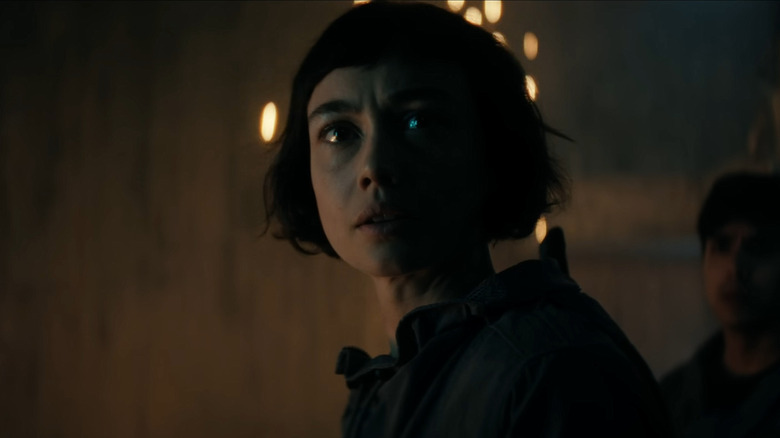
Science fiction has long served as a genre to escape to, for decades offering audiences the chance to get lost in imaginary worlds through the pages of novels and comic books. But as filmmaking tools took hold throughout the early 20th century, movies became regular entertainment outlets and vehicles for sci-fi worlds of their own. With the rise of computers came the increased use of special effects, and movies became as capable as ever of creating shared imaginary spaces.
But in many ways, the television format offers even more room to explore the possibilities within the worlds of science fiction. The serial nature allows storytellers to use each season as essentially a long-form movie, or to hop from one narrative to another with each new episode. Audiences, too, can find just as much to enjoy in sci-fi TV shows as they do in their two-hour movie counterparts, especially with the rise of streaming services and binge-watching access to entire seasons. While many great sci-fi movies inspired one or multiple movie sequels, there are several hit TV shows that have been adapted from such movies as well.
Westworld
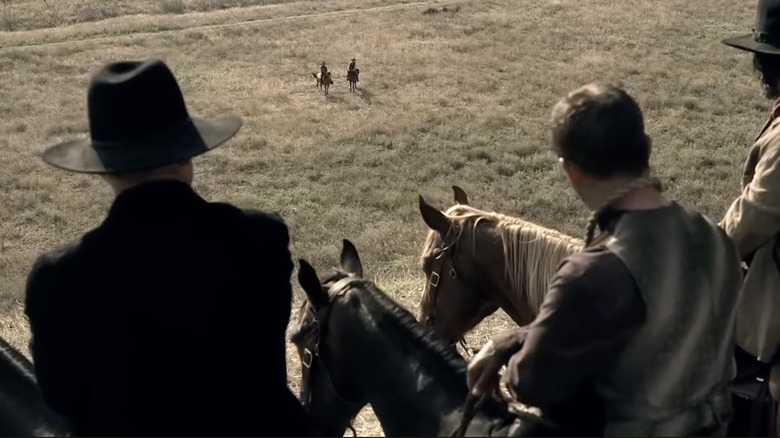
In 1973 a film called "Westworld" became the first live-action movie to use CGI. It featured a robot gunslinger played by Yul Brynner and was both written and directed by Michael Crichton, who got the idea after seeing the animated figures at Disneyland. The storyline revolves around a theme park of lifelike robots who turn on park visitors after a computer breakdown occurs. It was produced by MGM for just $1.3 million and became the studio's top-grossing film of the year.
While a sequel series aired in the 1980s, it wasn't until HBO's 2016 reboot that "Westworld" finally took off on the small screen. The show ran for four seasons from 2016 through 2022, tallying 36 episodes along the way. It starred Anthony Hopkins as theme park founder Dr. Robert Ford, as well as Evan Rachel Wood, Jeffrey Wright, Thandiwe Newton, and Ed Harris. Where the movie sticks almost entirely to telling the story through the eyes of theme park visitors, the TV show dives into narratives involving the robots as well.
The TV show was hit with a somewhat abrupt cancellation, though a new "Westworld" film is currently in the works. The theme park plot structure is one Michael Crichton would return to with "Jurassic Park." David Koepp, who adapted that novel for Steven Spielberg's legendary film adaptation, is writing the script for the new "Westworld" movie, which is set to be a remake of the original 1973 film. For those who missed out on the TV show during its run, "Westworld" is often available to watch on free streaming services like Tubi.
Planet of the Apes
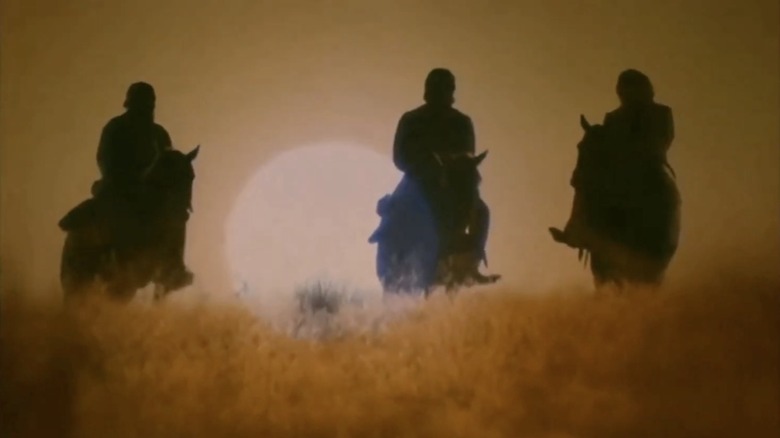
"Planet of the Apes" is one of the darkest sci-fi universes, with a narrative playing out across numerous movies that sees the fall of man and the rise of apes. The movie that kicked it all off starred Charlton Heston in one of his most famous roles and hit theaters in 1968. It was a massive financial success, costing under $6 million to produce, earning more than $32 million, and spawning four sequels from 1970 to 1973.
The original film centered around astronauts crash-landing on an ape-ruled planet, with Heston's lead character remaining suspicious of things throughout. In hopes of capitalizing on the cultural and financial success of both it and its sequel films, in 1974, CBS premiered the "Planet of the Apes" TV show. The show is more of a spin-off than a continuation of the movies' narratives. It focuses on two all-new astronauts who crash-land on a planet ruled by apes, played by Ron Harper and James Naughton.
CBS backed the show with a massive budget of about $250,000 per episode. This was likely what led to it being canceled after just one season, as ratings didn't keep up with the costs. The show is still somewhat well regarded today, with most of its episodes receiving an IMDb rating of more than 7.0, which is where the show rates overall as well. As for the original 1968 film, it has an 8.0 IMDb rating and its ending remains one of the most famous twists in sci-fi history.
12 Monkeys
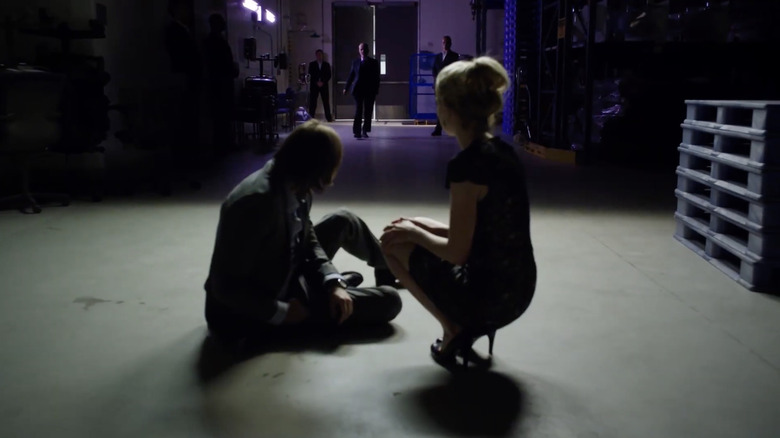
The movie "12 Monkeys" was a bit of a surprise success when it was released in 1995. Starring Bruce Willis as a time-traveler sent back to find the origins of a virus that kills off much of mankind in the future, its dystopian feel wasn't necessarily meant to reach the masses. But it managed to earn back double its budget domestically and acted as a vehicle for Brad Pitt, with mental patient Jeffrey Goines being his breakout role. He would win a Golden Globe and receive an Oscar nomination for the part, and through the direction of Terry Gilliam, the film became one of the most rewatchable of the 1990s.
The "12 Monkeys" series was a reimagining of the movie rather than any kind of continuation. It utilized the same narrative setup, centering around a man from a future devastated by disease sent back in time to stop the outbreak. It ran on SyFy for 47 episodes across four seasons, starring Aaron Stanford in the Bruce Willis time-traveling role and Emily Hampshire as Jennifer Goines, a new take on Brad Pitt's iconic character. By the time it reached season three, "12 Monkeys" had grown beyond the original film. SyFy aired the entirety of season three in one weekend as a thank you to the show's fans, and gave one more season to wrap up the narrative organically.
Stargate SG-1

Before Roland Emmerich directed the massive hit "Independence Day," and before he became known for other disaster movies like "2012," he directed a blockbuster movie called "Stargate." It starred Kurt Russell and James Spader, with a plot driven by the idea that ancient Egyptian gods were really aliens. Russell plays a hard-nosed colonel, and Spader, an Egyptologist. They are paired up to go through a gateway found in Egypt, which winds up leading to a planet whose inhabitants closely resemble the ancient Egyptians of Earth. The film was a commercial success, costing $55 million to make and earning $196 million at the global box office.
The financial success of "Stargate" led to the TV series "Stargate SG-1." The show picks up after the film and follows a team called SG-1, which is one of many military teams sent through the gate to both explore other worlds and protect Earth. The team is made up of characters played by Richard Dean Anderson, Michael Shanks, Amanda Tapping, and Christopher Judge. Part of the film's success was in its focused narrative, while the TV show saw success through giving its characters new worlds to explore with each episode. "Stargate SG-1" was incredibly successful, running on Showtime for five seasons and on Sci Fi Channel for five more, reaching a total of 213 episodes. It holds an 8.4 rating on IMDb.
Alien: Earth
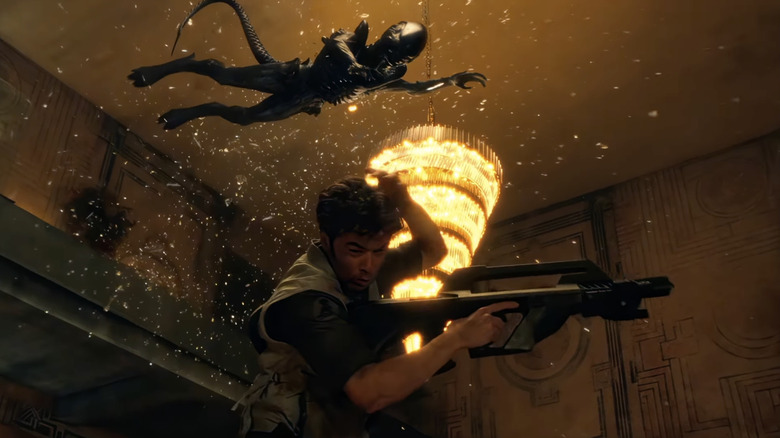
Largely considered not only a brilliant work of science fiction storytelling but a cinematic masterpiece, "Alien" was directed by Ridley Scott and released in 1979. It follows the crew of a space cargo ship as it encounters an aggressive and, as they soon find, quite deadly life form. Actors filling out the crew include Sigourney Weaver in her legendary role as Ripley, as well as Tom Skerritt, John Hurt, Ian Holm, and Harry Dean Stanton. Released just a couple of years after "Star Wars," Scott's "Alien" was something that stood as a juxtaposition to the space hero adventure. Known for some smart visual tricks, the film is dark, tense, and as much a horror flick as it is a piece of sci-fi.
The movie sparked numerous sequels, including "Alien 3," which was the feature film directorial debut of David Fincher. But most recently has come "Alien: Earth," a prequel series brought to life by FX. It was created by Noah Hawley, the writer behind the network's hit show "Fargo," and is set two years before the events of the original film. The cast comprised mostly fresh faces and up-and-comers, but the show's premiere still drew 9.2 million viewers across Hulu, FX, and Disney+. The eight-episode first season holds a 94% critic approval rating on Rotten Tomatoes as well, and FX has ordered a second season of "Alien: Earth."